

Maintenance Free Driveway Gates Explained

Maintenance Free Driveway Gates Explained

A driveway gate that looks smart in year one but needs sanding, repainting or rust treatment by year three soon stops feeling like a good investment. That is why maintenance free driveway gates have become such a popular choice for homeowners, developers and commercial buyers across the UK. The appeal is straightforward – you want a gate that improves security and kerb appeal without creating another job to manage.

The phrase itself can be slightly misleading, though. No external gate is completely exempt from care. Anything exposed to British weather will benefit from occasional cleaning and basic checks. What most buyers really mean by maintenance free is low upkeep, long-lasting performance and no regular painting, staining or corrosion treatment. That distinction matters when you are comparing materials and deciding what will work best for your property.

What makes driveway gates maintenance free?

In practical terms, maintenance free driveway gates are built from materials and finishes that are designed to resist the usual causes of deterioration. Rain, frost, coastal air, pollution and general wear can all take a toll. A truly low-maintenance gate should cope well with those conditions without demanding frequent repair or refinishing.

For most UK properties, aluminium stands out because it does not rust in the way steel can and it does not absorb moisture like timber. When powder coated properly, it offers a durable finish that holds its appearance well over time. That means you are not dealing with flaking paint, swelling boards or the repeated cycle of preparation and repainting that often comes with traditional materials.

The construction method also plays a part. A well-made gate should be designed for strength without excessive weight, with quality fixings, dependable hinges and a finish suited to outdoor use. Maintenance is not just about the surface – it is also about how well the gate performs year after year.

Why aluminium maintenance free driveway gates are in demand

For many buyers, aluminium offers the most balanced answer to the maintenance question. It is lightweight compared with wrought iron or heavy steel, which can help reduce strain on posts, hinges and automation systems. At the same time, it remains strong enough for residential and many commercial applications.

That lighter weight has a practical knock-on effect. Swing gates and sliding gates both rely on smooth, reliable movement. If the gate is unnecessarily heavy, you may see more wear on hardware and motors over time. A lighter but strong material can support easier operation and more efficient automation, particularly on wider openings.

There is also the appearance to consider. Aluminium gates are available in a wide range of styles, from contemporary slatted designs to more traditional and ornate looks. For buyers who want the visual warmth of timber without timber upkeep, wood-effect aluminium can be especially appealing. You get the style without signing up for annual treatment.

Cost is part of the conversation as well. Aluminium may not always be the cheapest option at the point of purchase, but whole-life value is often stronger. If you remove the cost of repainting, repairs and replacement cycles, a quality aluminium gate can make more financial sense over the longer term.

The trade-offs buyers should understand

Low maintenance does not mean no decision-making. The right gate depends on your opening width, access needs, ground conditions, privacy preference and whether automation is planned now or later.

Timber, for example, still appeals to many homeowners for its natural character. On some period properties, it may suit the architecture well. The trade-off is upkeep. Even pressure-treated timber generally needs ongoing attention to preserve appearance and performance. If you are happy to put in that effort, it can still be a valid choice. If you want a fit-and-forget approach, it usually is not.

Steel can provide a very solid feel and may suit certain security-focused applications. However, if the protective finish is damaged and corrosion begins, maintenance demands can increase quickly. Galvanising and coating improve performance, but steel still tends to require more vigilance than aluminium.

Even with aluminium, quality varies. A cheaper gate that looks similar in photographs may use inferior coating, weaker components or less refined fabrication. The result can be disappointing alignment, reduced finish life or poor long-term reliability. The lesson is simple – low maintenance only works when the gate is properly made.

Choosing the right style for your property

A maintenance-friendly gate should still suit the building it protects. Buyers often begin with material, but design deserves equal attention because the gate will shape first impressions every day.

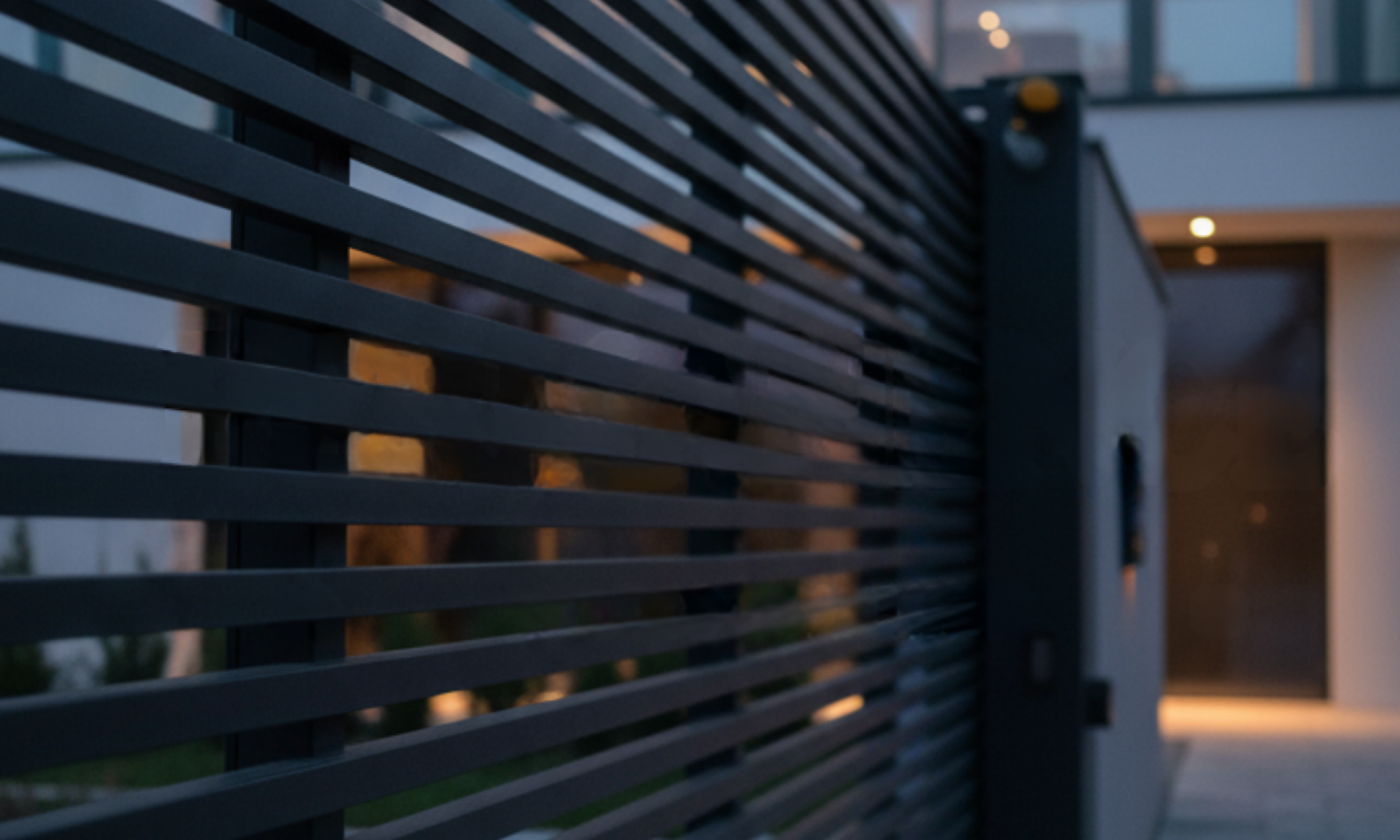
For modern homes, horizontal slatted aluminium gates remain a popular option. They offer a clean, architectural look and can be adjusted for more privacy or a more open frontage. For traditional homes, vertical bar styles, arched tops or decorative detailing may sit more comfortably with the surrounding architecture.

Privacy is another point worth thinking through. Solid or closely spaced designs can screen vehicles and improve seclusion, which many homeowners value on busy roads. More open designs can feel lighter visually and may be better where you want to preserve sightlines or avoid an imposing entrance.

Commercial and multi-occupancy settings often place more emphasis on function. Here, the best solution may prioritise access control, durability and ease of operation over decorative detail. That does not mean appearance is irrelevant. A smart, well-specified gate still contributes to site presentation and can improve how a property or development is perceived.

Automation and access control matter too

Many buyers looking at maintenance free driveway gates are also planning automation. This is where material choice becomes even more important. A gate that is strong but not excessively heavy is generally easier to automate effectively, and it can help support smoother long-term operation.

If you expect frequent daily use, speak to a supplier early about motor suitability, opening method and site layout. Swing gates need space to open inward or outward, depending on the design and site constraints. Sliding gates are often a better fit where driveway depth is limited, although they require enough lateral run-back.

Intercom systems, keypad entry, fobs and app-based controls can all be integrated depending on the project. Residential customers may be focused on convenience and security. Commercial buyers may need more structured access management. Either way, the gate should be specified as part of the wider access solution rather than treated as a standalone item.

What to ask before you buy

The safest way to choose well is to look beyond the headline claim of maintenance free and ask how that promise is supported. Find out what material grade is being used, how the finish is applied and whether the gate is made to measure or supplied in a fixed size range. Ask about automation compatibility, available colours and what support is offered with installation.

It is also sensible to ask what routine care is actually recommended. With aluminium, this is usually simple – occasional washing to remove dirt and environmental residue, plus periodic checks of moving parts and automation components. That level of upkeep is very different from sanding and repainting, but it is still worth understanding from the outset.

For bespoke projects, design flexibility can make a major difference. A gate that is tailored to your opening, style preference and access needs is more likely to perform properly and look right on the property. Readymade options can be a strong choice where speed and budget are priorities, provided the dimensions and specification are suitable.

Finding a gate that stays easy to own

The best maintenance free driveway gates are not just attractive on installation day. They remain straightforward to live with in five, ten and fifteen years’ time. That means choosing a material that resists weathering, a design that suits your property and a specification that matches the way the gate will actually be used.

For many UK buyers, aluminium provides that balance of durability, appearance and low upkeep better than the usual alternatives. It is not about making a gate maintenance-proof. It is about reducing the burden of ownership without compromising on security or style.

At Aluminium Gates Direct, that is usually where the most successful projects begin – not with the cheapest gate on paper, but with the right one for the property, the budget and the long term. If you approach the decision that way, the result is far more likely to feel like a lasting upgrade rather than another exterior feature that needs constant attention.

A good driveway gate should add value to your property and take work off your list, not add to it.

What Gate Size Do I Need for My Property?

What Gate Size Do I Need for My Property?

A gate that looks right on paper can feel completely wrong once it is installed. Too narrow, and daily access becomes awkward. Too wide, and the gate may look out of proportion, need more space to operate, or add unnecessary cost. If you are asking what gate size do I need, the answer starts with one thing – how the gate will actually be used.

That matters whether you are replacing an old timber gate, planning a new driveway entrance, or specifying a secure access point for a development or commercial site. The correct size is not just about the gap between posts. It is about vehicle clearance, pedestrian use, opening space, ground levels and the style of gate you want to install.

What gate size do I need? Start with the opening

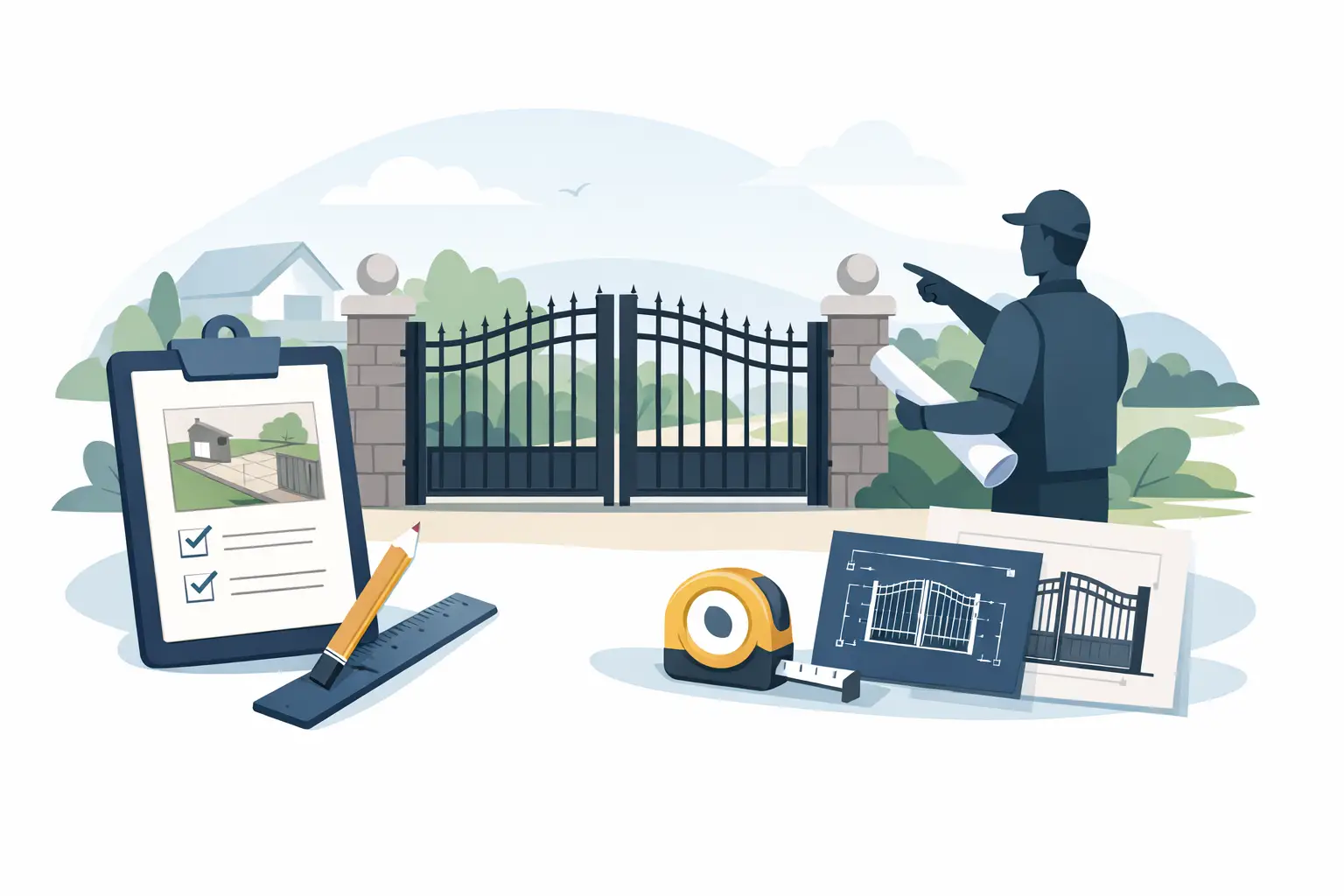
The most useful measurement is the clear opening width. This is the distance between the inside faces of the posts, pillars or walls where the gate will sit. If there are no existing posts yet, you need to work from the finished opening you want to create rather than estimating by eye.

For most projects, width comes first and height follows. A gate that fits the opening but is too low may not provide enough privacy or security. A gate that is too tall may not suit the property or could be restricted by planning considerations in some locations.

As a general guide, pedestrian and garden gates are often around 900mm to 1200mm wide. Side access gates can be similar, though some need extra width for bins, bikes or garden equipment. Driveway gates vary much more. A single vehicle entrance may be around 3000mm, while many double driveway gates are sized from roughly 3000mm to 4000mm and above, depending on the property and turning requirements.

These are starting points, not rules. The right answer depends on how much usable clearance you need in real life, not just what looks standard.

Measuring the right gate size for different uses

A front garden gate is usually quite straightforward. You need enough room for comfortable walking access, prams if relevant, and perhaps occasional movement of tools or bins. If the opening is tight, a made-to-measure gate can avoid awkward filler gaps and give a cleaner finish.

Side gates often catch people out. They may need to accommodate wheelie bins, lawnmowers, bikes or building materials. A narrow side path can still benefit from the widest practical gate opening, especially if access is limited elsewhere on the property.

Driveway gates need more thought. The gate must allow the vehicle through comfortably, but also account for mirrors, turning angle and whether the entrance sits on a busy road. If drivers need to enter at an angle rather than straight on, a wider opening is often the safer choice.

Commercial and shared-access gates usually require an even more careful approach. Delivery vehicles, multiple users, automation equipment and site security all affect the final size. In these settings, getting the specification right early can prevent delays and costly changes later.

Single gates vs pair of gates

A single gate uses one leaf and opens in one direction. This can work well for smaller openings, side access and some pedestrian entrances. It is simple and practical, but on a wider opening the leaf can become large and heavy to operate, even with lightweight aluminium.

A pair of gates splits the opening into two leaves. This is common on driveways because it can look more balanced across a wide entrance. It can also reduce the swing arc of each leaf compared with one very wide single gate. That said, the opening area in front and behind the gates still needs to be considered carefully.

Sliding gates vs swing gates

If space behind the opening is limited, a sliding gate may be the better option. Swing gates need room to open inward or outward, and the ground must be suitable across the swing path. Slopes often create complications here.

Sliding gates avoid that swing space, but they do need lateral run-back room to one side, along with space for the track or cantilever system and any automation components. The gate size question is not only about the opening width – it is also about how the gate will move.

Height matters as much as width

Many buyers focus on width first, which is understandable, but height changes both appearance and performance. A lower gate may feel welcoming and preserve views from the property. A taller gate gives more privacy and can strengthen perimeter security.

For residential frontages, common heights might range from around 1200mm to 1800mm depending on the look required. Side and rear boundaries are often higher where privacy is a priority. Commercial sites may need taller gates again, especially where access control and deterrence matter.

There is also the visual relationship with fencing, railings and boundary walls to think about. A gate should look like part of the overall scheme rather than an isolated feature. Bespoke sizing can help when a standard height would leave the proportions feeling off.

What to allow for beyond the gate itself

When customers measure an opening, they sometimes assume the gate size should match it exactly. In practice, allowances are needed for hinges, gaps, posts, latch hardware, automation brackets and ground clearance.

Ground clearance is especially important. Gates should not catch on uneven surfaces, gravel or slight rises in the driveway. At the same time, too much clearance can leave an untidy gap at the bottom. The right balance depends on the site conditions and the gate style.

Posts and pillars also influence the final dimensions. If existing brick piers are out of square, the opening may vary from top to bottom. If new posts are being installed, their size and fixing method affect the available clear width. A proper site measure removes guesswork here.

Automation brings further considerations. Ram arms, underground motors and sliding gate systems all have spacing requirements. If you plan to automate now or later, it makes sense to factor that in from the start rather than retrofit around a gate that was sized without it.

The most common sizing mistakes

The first is measuring only one point. Openings are not always perfectly even, so width should be checked at multiple points and height levels should be confirmed against the finished ground.

The second is sizing purely for the current car. Households change vehicles, and developers or commercial buyers often need to think about future users. A gate that is just wide enough today may feel restrictive later.

The third is ignoring how the gate opens. A wide pair of swing gates may suit the entrance width but still be impractical if the driveway rises sharply or parking sits too close behind the gates.

The fourth is relying on standard sizes when the opening is clearly not standard. Readymade gates can be excellent value where the dimensions suit, but bespoke gates are often the better choice for awkward widths, unusual heights or sites where appearance matters as much as fit.

Should you choose a standard or bespoke size?

If your opening suits a readymade gate, it can be a cost-effective route and often speeds up the buying process. This works well for many side gates, garden gates and some simpler driveway projects.

Bespoke sizing becomes worthwhile when the opening is unusual, the property has strong design requirements, or you want the gate to align neatly with existing fencing, railings or architectural features. It is also often the right choice when automation, privacy requirements or commercial access needs are part of the brief.

Aluminium is particularly well suited to bespoke gate projects because it combines strength with relatively low weight, making larger gates easier to manage than some traditional alternatives. It also gives you the benefit of a maintenance-free finish, which matters for customers who want long-term value rather than another repainting cycle in a few years.

Getting the specification right first time

If you are still unsure what gate size do I need, the safest approach is to work backwards from use rather than forwards from assumption. Think about who uses the gate, what needs to pass through it, whether it will be manual or automated, and how much opening space is available on site.

For homeowners, that may mean checking vehicle width, parking position and side access needs before choosing a style. For builders, architects and commercial buyers, it often means coordinating gate dimensions with boundary design, groundworks and access control from the outset.

A good gate should feel easy every day. It should open cleanly, suit the property, provide the right level of security and avoid looking oversized or mean for the space. That is why accurate measuring and product guidance matter so much.

If in doubt, ask for advice before ordering. A well-sized aluminium gate should not just fill an opening – it should work properly, look right and continue doing both for years to come.

Made to Measure Aluminium Gates Explained

Made to Measure Aluminium Gates Explained

A gate that is 50mm too narrow or slightly out of proportion can turn a straightforward project into a long list of compromises. That is why made to measure aluminium gates are often the better choice for properties where appearance, fit and day-to-day practicality all matter. Whether you are upgrading a driveway, securing a side entrance or specifying a gate for a commercial site, a tailored solution usually saves time and avoids the awkward adjustments that come with trying to force a standard size into a non-standard opening.

Why made to measure aluminium gates are worth considering

The main advantage of a made to measure gate is simple – it is designed around your opening, your property style and the way the gate needs to work. That matters because very few entrances are truly standard once you factor in posts, walls, levels, access width and clearance.

With aluminium, you get more than a custom fit. You also get a material that is lightweight, strong and built for low maintenance. For many UK homeowners, that means no regular sanding, staining or painting, and no ongoing battle with rust. For developers and commercial buyers, it means a product that is easier to specify for long-term performance and easier to manage across multiple properties or sites.

There is also a visual benefit. A gate that has been sized and styled properly looks intentional. It complements the building rather than looking like an afterthought. On a front driveway, that can improve kerb appeal. On a commercial perimeter, it can help create a cleaner and more professional site entrance.

What makes a gate truly made to measure?

Not every gate described as bespoke offers the same level of flexibility. In practical terms, made to measure aluminium gates are built to suit the dimensions and design requirements of a specific project. That usually includes the width and height, of course, but it can also extend to frame design, infill style, colour, privacy level, opening configuration and automation compatibility.

For example, one homeowner may need a pair of driveway gates that follow a sloping drive without losing privacy. Another may need a single pedestrian gate to match existing fencing. A site manager may require a sliding gate with automation and intercom integration for controlled access. These are very different requirements, and a made to measure approach allows the gate to be specified properly rather than adapted poorly.

This is where expert guidance matters. A good supplier should help you work through the detail, including how the gate will be used, what level of privacy or visibility you want, whether you need manual or automated operation, and what budget you are working to.

Where custom sizing matters most

Some openings are clearly unusual, but even fairly typical entrances can benefit from custom sizing. Older properties often have inconsistent brickwork or existing pillars that are out of square. New builds may need gates to tie in with a wider landscaping plan. Garden and side access points are often tight on space, making hinge clearance and swing direction important.

Driveway entrances are one of the most common examples. If the opening width is close to a standard size but not quite right, choosing a made to measure option can avoid visible gaps, reduce installation work and produce a neater result. The same applies when the gate needs to sit alongside matching fencing or railings.

Commercial settings bring another layer of complexity. Vehicle access, frequency of use, safety requirements and automation all affect the specification. In these cases, standard gates can quickly become a false economy if they need site modifications or fail to meet the practical demands of the entrance.

Design options without the upkeep

One reason aluminium has become so popular is that it offers design flexibility without the maintenance demands associated with timber or untreated steel. That makes it well suited to buyers who want choice, but not extra work.

You can choose from modern horizontal styles, more traditional vertical designs, privacy-focused boarded effects and more decorative looks depending on the property. Powder-coated finishes are available in a wide range of colours, so it is easier to match windows, doors, fencing or wider exterior schemes. For some properties, a simple contemporary finish works best. For others, especially period homes or higher-end developments, a more ornate or tailored design may be the better fit.

The key point is that custom design should still be practical. A solid gate may offer more privacy, but it can also increase wind loading. An open style can feel lighter visually, but may reduce screening. There is no single right answer. The right design depends on the site, the use of the gate and the look you want to achieve.

Made to measure aluminium gates for automation

Many buyers start by thinking about the gate itself and only later consider automation. In reality, these decisions should be made together. If you know from the outset that you want electric operation, intercom access or smart entry control, the gate should be designed with that in mind.

Aluminium is particularly well suited to automation because of its strength-to-weight ratio. A lighter gate generally puts less strain on motors and hardware than a heavier alternative, which can support smoother operation and more efficient performance over time. That does not remove the need for proper specification, but it does make aluminium an appealing option for both residential and commercial automated entrances.

For homeowners, automation can add convenience and security, especially on busy roads or larger driveways. For commercial sites, it can support controlled access and help manage entry points more effectively. The important thing is to make sure the gate, hardware and access system are all considered as part of one solution, not separate purchases.

Budget, value and the standard-vs-bespoke question

Cost is understandably one of the first questions buyers ask. Made to measure usually costs more than an off-the-shelf product, but that does not automatically make it expensive in the broader sense. It depends on what problems it solves and what costs it helps avoid.

A readymade gate can be a very good option when the opening is standard, the design brief is simple and timescales are tight. But if the gate needs resizing on site, additional framing work, non-standard posts or visual compromises, the gap in value can narrow quickly. A tailored gate may cost more upfront while delivering a better fit, cleaner finish and less installation friction.

The same logic applies over the longer term. Aluminium gates are chosen by many customers because they are durable and low maintenance. When you combine that with a product that has been designed correctly for the opening, you are investing in fewer headaches later. Fair pricing matters, but so does buying the right gate the first time.

What to check before ordering

Accurate measuring is essential, but dimensions alone are not enough. You also need to consider ground levels, post positions, hinge side, latch position, swing arc, clearance and whether the gate will open inwards or outwards. If automation is planned, cable routes and power supply should be part of the conversation early on.

This is one area where first-time buyers often benefit from speaking to a specialist rather than trying to piece the specification together alone. An experienced supplier can help identify issues before manufacture starts, which is far easier than trying to solve them during installation.

It is also worth thinking about how the gate relates to the wider boundary. A beautifully made gate can still look out of place if it clashes with existing fencing, railings or the frontage of the property. Matching elements where appropriate usually produces a stronger overall result.

Choosing the right supplier for made to measure aluminium gates

A custom gate is only as good as the support behind it. Buyers should look for clear advice, transparent pricing and a supplier that understands both product specification and real installation requirements. That is especially important for projects involving multiple gates, automation or commercial access control.

At Aluminium Gates Direct, the focus is on helping customers choose a solution that fits the property, the practical brief and the budget rather than pushing a one-size-fits-all answer. That matters because some projects need full bespoke design, while others are better served by a more straightforward option.

If you are comparing suppliers, ask how much design flexibility is actually available, what support is provided during specification, and whether installation or automation can be coordinated if needed. The strongest suppliers make the process feel clear, not complicated.

A made to measure gate should do more than fill an opening. It should look right, work properly and continue doing its job with minimal fuss for years to come. When those are your priorities, a tailored aluminium gate is often the most sensible place to start.

Gate Intercom System Comparison Guide

Gate Intercom System Comparison Guide

The wrong intercom usually shows its flaws on a wet Tuesday morning. The courier cannot get through, the app notification arrives late, the picture is poor in low light, or the system simply does not suit the way the gate is used day to day. A proper gate intercom system comparison helps avoid that frustration by looking beyond brochure features and focusing on what works for the property, the gate type and the people using it.

For some buyers, the priority is simple visitor access at a pedestrian gate. For others, it is controlled entry across a busy driveway, a multi-user development or a commercial site with deliveries, staff and contractors. In each case, the best choice depends on layout, power supply, connectivity, expected traffic and whether the intercom needs to work alongside automation, keypads, access control or remote management.

What matters in a gate intercom system comparison

Most intercoms can open a gate. That is the easy part. The difference lies in how reliably they do it, how clearly they let you identify a visitor, and how well they fit into the wider gate setup.

Audio-only systems are often the most straightforward and cost-effective. They suit properties where the user mainly wants to speak to callers and release the gate without extra complexity. They can work well on smaller residential entrances where visibility from the house is already good, or where budget matters more than added convenience.

Video intercoms offer more reassurance because they let you see who is at the gate before granting access. That matters on longer driveways, more exposed entrances and commercial premises where the person calling may not be expected. Video also becomes more valuable where parcel deliveries are frequent, or where several household members need to manage access from different devices.

Smart app-based systems have grown in popularity because they support remote answering and gate release from a phone or tablet. That convenience is useful, but it should not be the only deciding factor. App control relies on stable connectivity, sensible user permissions and a system that still works well for people on site, not only those away from it.

Audio vs video intercom systems

An audio intercom is usually the simpler choice to install and use. There is less hardware involved, and in many cases fewer points of failure. For private homes with a clear line of sight to the entrance, audio may be all that is needed.

Video gives more confidence, but the quality of that video matters. A low-grade camera with poor night performance can be less useful than buyers expect. When comparing video units, it is worth looking at image clarity, viewing angle, low-light performance and whether the caller can be identified easily in bright sun or after dark.

There is also a practical question of user behaviour. If the household or site team will actually check video regularly, it adds value. If they are likely to answer quickly without looking, paying more for advanced video features may not make sense.

Where audio makes sense

Audio intercoms often suit side gates, smaller homes, low-traffic entrances and budget-conscious upgrades. They are also a sensible option when the gate automation is the main investment and the intercom only needs to cover basic communication and release.

Where video earns its keep

Video is a stronger fit for long driveways, detached homes, flat entrances, commercial premises and any setting where verification matters. It is especially useful where users need to manage access without physically going to a window or gate.

Wired vs wireless in a gate intercom system comparison

This is one of the biggest decision points, because installation conditions often shape what is realistic.

Wired systems are typically more stable and are often preferred for new builds, major renovations and planned gate installations where cabling can be installed neatly from the start. They can offer dependable performance over time and reduce the risk of signal issues. On larger or more complex properties, a wired setup is often the safer long-term choice.

Wireless systems appeal because they can reduce disruption and installation time, particularly where running cables across existing driveways, landscaped gardens or finished surfaces would be difficult. That does not mean they are always the easier answer. Wireless performance depends heavily on distance, obstacles, building materials and network quality.

If the entrance is a long way from the property, or if metal gates, walls and outbuildings interfere with signal strength, wireless can become less reliable. That is why a site-specific assessment matters. What works perfectly on one driveway may be frustrating on another.

Standalone intercoms vs integrated access systems

Some buyers only need a simple call panel and gate release. Others need the intercom to sit within a wider access control setup that may include automation, fobs, keypads, proximity readers, timed access, trades access or multiple user management.

A standalone unit can be ideal for a straightforward home installation. It keeps operation simple and may keep costs under control. However, if the gate is automated and there is any chance the access setup will need to expand later, it is often wiser to choose a system with integration options from the outset.

For commercial sites and larger residential projects, integration is usually more important. Site managers may need event logs, multi-user access, remote administration or the ability to control pedestrian and vehicle access differently. Developers may also need a solution that scales across several entrances or dwellings without becoming awkward to manage.

Single-user and multi-user requirements

A private house and a multi-occupancy building may both need a gate intercom, but the specification is very different.

For a single household, ease of use is usually the top concern. The system should be reliable, quick to answer and simple enough that every member of the household can use it confidently. If the property has domestic staff, frequent deliveries or visiting trades, remote access permissions may also be useful.

For shared entrances, flats and commercial premises, the focus shifts towards user management. The intercom may need multiple call buttons, a directory, tenant-specific access, or central administration. In those cases, buying on price alone often leads to compromises later. A cheaper unit may handle basic calling, but struggle when the number of users or access events increases.

Practical buying factors people often miss

A good gate intercom system comparison should also cover the smaller details that affect day-to-day satisfaction.

Weather resistance matters in the UK. The call panel sits outside year-round, often fully exposed. Rain, cold, sun and general wear all affect performance over time, so outdoor build quality should never be treated as a minor feature.

Power planning is equally important. Some systems need mains power in the right place, while others work with different supply arrangements. This needs to be aligned with the gate automation and any accessories from the start.

User interface is another area where the cheapest option can disappoint. Buttons should be clear, the call process should feel straightforward, and any indoor monitor or app should be easy to use without a learning curve. If the system feels awkward in week one, it will not improve with age.

Support and compatibility also deserve attention. Intercoms do not sit in isolation. They need to work properly with the gate operator, lock release, safety devices and the physical gate design. That is especially important with automated driveway gates and commercial entrance systems where reliability is not optional.

Choosing the right system for the gate and site

The gate itself influences the best intercom setup more than many buyers expect. A pedestrian gate used by visitors all day has different demands from a pair of automated driveway gates used mainly by residents. A sliding commercial gate with regular vehicle access brings another set of requirements again.

On residential driveways, convenience and visual verification are usually high priorities. On commercial sites, the emphasis is more often on controlled access, durability and ease of management. On developments or bespoke projects, future-proofing can matter just as much as the immediate specification.

This is where specialist advice helps. A well-matched system takes account of the gate type, the entrance layout, the power and data options on site, and how the customer actually wants to use the entrance. At Aluminium Gates Direct, that practical fit matters just as much as the product specification itself.

So which intercom system is best?

There is no single best intercom for every entrance. An audio system may be the right answer for a modest side gate. A video smart intercom may suit a premium driveway gate perfectly. A commercial site may need a more integrated setup with stronger access control and easier administration.

The right decision usually comes from narrowing the choice around four questions: who needs access, how often the gate is used, how far the entrance is from the building, and whether the system needs to do more than simply answer a call. Once those points are clear, the shortlist becomes much easier to manage.

If you are comparing options, it is worth thinking less about headline features and more about how the system will perform in ordinary daily use. That is where the right intercom proves its value, long after installation day.

Best Driveway Gate Materials Compared

Best Driveway Gate Materials Compared

A driveway gate can look right on paper and still be the wrong choice once the weather, maintenance and day-to-day use start testing it. When customers ask us about the best driveway gate materials, they are usually trying to balance three things at once – appearance, security and how much effort the gate will need over the years.

That is where material choice matters most. The gate style, opening type and automation setup all matter too, but the material will shape how the gate performs in a British climate, how often it needs attention and how long it keeps its finish. For homeowners, developers and commercial buyers alike, the right answer is rarely just about what looks best on day one.

What makes the best driveway gate materials?

There is no single material that suits every property. A rural entrance, a modern new-build, a high-use commercial site and a period home will all have different priorities.

In practical terms, the best material is the one that fits the site conditions, desired look, budget and expected level of upkeep. Weight is a major factor, especially for wider openings and automated gates. So is resistance to rust, rot and movement over time. If a gate is being used several times a day, or if it is part of a security-led perimeter solution, strength and reliability become even more important.

For many buyers, maintenance is the deciding factor. A gate may be a long-term investment, but not everyone wants the long-term job of sanding, painting or treating it every year.

Aluminium driveway gates

Aluminium has become one of the strongest options on the market, particularly for customers who want a gate that is durable, smart-looking and easy to live with. It offers a combination that is difficult for other materials to match – it is lightweight, strong, resistant to corrosion and generally very low maintenance.

That lower weight has real practical value. It reduces strain on hinges, posts and automation equipment, which is especially helpful on larger driveway openings or frequently used gates. It can also make installation more straightforward compared with heavier alternatives.

From an appearance point of view, aluminium suits both contemporary and traditional properties. It is available in a wide range of styles, from simple modern designs to more ornate layouts, and powder-coated finishes provide good colour consistency and weather resistance. For buyers who want a timber-look finish without timber upkeep, aluminium can also offer that visual effect.

The main trade-off is that not all aluminium gates are equal. Build quality, frame construction and finish all matter. A well-made aluminium gate should feel solid and properly engineered, not flimsy. That is why specification and supplier support are important, especially for bespoke sizes, automation and commercial use.

For many UK properties, aluminium is one of the best driveway gate materials because it addresses the issues that cause problems over time – rust, weight and ongoing maintenance.

Timber driveway gates

Timber remains a popular choice because it has natural warmth and character that many properties suit beautifully. On cottages, period homes and rural entrances, a timber gate can feel entirely at home in a way some metal designs do not.

There is also plenty of flexibility in design. Timber can be made in traditional five-bar styles, boarded gates, framed ledged designs and more decorative formats. It can be painted or stained to match the surrounding property, fencing or joinery.

The challenge with timber is upkeep. In the British climate, exposure to rain, damp conditions and temperature changes will eventually take a toll. Even high-quality hardwood gates need regular treatment to help prevent swelling, warping, splitting and surface deterioration. Softwood options can come in at a lower upfront cost, but they usually require even more attention and may have a shorter lifespan.

Weight can be another issue. Large timber gates can be very heavy, which affects hardware, posts and automation. If the gate is wide or used often, that added load should be considered early in the specification process.

Timber is still a good option for the right property and for buyers who are happy to maintain it. If the aim is natural appearance above all else, it remains a strong contender. If the aim is minimal upkeep, it is usually not the first recommendation.

Steel driveway gates

Steel is often chosen for strength. It is a tough material and can work well for security-focused applications, commercial entrances and properties where a substantial gate is required.

It also allows for a broad range of styles. Depending on the design, steel gates can look sleek and modern or more traditional and decorative. When properly fabricated and finished, they can deliver a very solid, premium feel.

However, steel comes with some clear considerations. The biggest is corrosion. If protective coatings are damaged or wear down over time, steel can rust, particularly in exposed environments. That means maintenance and finish quality matter a great deal. Galvanising and powder coating can improve durability, but buyers should still expect more vigilance than with aluminium.

Weight is the other factor. Steel gates are heavy, which can be useful from a security perspective but more demanding for installation and automation. Heavier gates place more pressure on moving parts and support structures, so accurate specification is essential.

Steel can be the right answer where strength is the top priority, but it is not always the most practical choice for domestic buyers looking for a lower-maintenance solution.

Wrought iron driveway gates

Wrought iron is often discussed as a premium, decorative option, particularly for period properties and formal entrances. It has a distinctive appearance and can create real impact, especially in ornate designs with scrollwork and traditional detailing.

Strictly speaking, many gates described as wrought iron today are made from mild steel in a wrought style. From a buying perspective, the key point is not the label but the performance. These gates can be visually impressive and strong, but they are generally heavy and will require ongoing care to keep corrosion at bay.

That maintenance point should not be overlooked. If the finish chips or deteriorates, rust can develop and spread. For some owners, that is acceptable because the visual style is worth it. For others, particularly those who want a fit-and-forget solution, it becomes a drawback.

Wrought-style gates are best suited to projects where traditional design is leading the decision and the owner is prepared for regular upkeep.

Which driveway gate material is best for automation?

If automation is part of the plan, material choice becomes even more important. Gate motors, hinges, tracking systems and safety components all perform best when paired with a gate that is properly sized and not carrying unnecessary weight.

In many cases, aluminium is the most automation-friendly option because it combines strength with low weight. That can support smoother operation and reduce stress on the system over time. This is particularly valuable for wider driveway gates, sliding systems and entrances with frequent daily use.

Timber and steel can also be automated successfully, but they often require more careful structural planning because of their weight. That does not rule them out, but it can increase demands on the hardware and installation.

For commercial sites, flat developments or higher-spec residential projects, automation and access control should be considered from the outset rather than added later. The material, gate design and operating system need to work together.

Best driveway gate materials for UK weather

The UK climate is rarely gentle on external joinery or metalwork. Rain, damp air, frost and seasonal movement all test a gate over time.

That is one reason aluminium stands out. It does not rust in the way steel does, and it does not absorb moisture like timber. For coastal areas, exposed plots or customers who simply want fewer maintenance concerns, that makes a noticeable difference.

Timber can still perform well if it is high quality and properly maintained, but it needs consistent care. Steel and wrought-style gates can last well too, provided the protective finish remains in good condition and any damage is dealt with quickly.

In other words, British weather does not automatically rule out any one material, but it does make low-maintenance, corrosion-resistant options more attractive.

How to choose the right material for your property

The best approach is to start with the practical brief, not just the visual one. Think about how often the gate will be used, whether automation is needed, how much maintenance you are realistically willing to do and what style suits the property.

If you want a natural, traditional look and do not mind ongoing treatment, timber may be the right fit. If security and solidity come first and weight is not a concern, steel may suit. If you are aiming for an elegant traditional entrance and are comfortable with regular upkeep, wrought-style designs can work well.

But if you want a gate that offers long-term value, strong visual appeal and very little maintenance, aluminium will often come out ahead. That is why many homeowners, developers and trade buyers now see it as the practical modern answer for driveway gates.

At Aluminium Gates Direct, we see this decision every day across residential and commercial projects of all sizes. The right material is the one that keeps working for your property long after installation – not just the one that makes the strongest first impression.

A good driveway gate should make life easier, not give you another job to manage. Choose the material with the next ten years in mind, and the decision usually becomes much clearer.

Aluminium Gate Buying Guide for UK Buyers

Aluminium Gate Buying Guide for UK Buyers

A gate often looks straightforward until you have to buy one. Then the questions start quickly – swing or sliding, bespoke or readymade, manual or automated, solid privacy or open design, domestic or commercial grade. A good aluminium gate buying guide should make those decisions simpler, not more confusing, and that starts with understanding what matters most for your property, access needs and budget.

Aluminium has become a popular choice for a reason. It gives you the appearance and presence people want at the front of a home or site, without the ongoing upkeep that often comes with timber or the weight and corrosion issues that can come with some steel products. For many buyers, the appeal is practical as much as visual. You want a gate that looks right on day one and still performs well years later.

Why aluminium is often the right long-term choice

The biggest advantage of aluminium is that it offers a strong balance of durability, weight and maintenance. It is lightweight compared with steel, which can make a real difference for both installation and day-to-day operation, particularly on larger driveway gates or automated systems. Less weight can mean less strain on hinges, posts and motors when the system is properly specified.

It also suits the British climate well. A gate will spend its life exposed to rain, dirt, wind and changing temperatures, so the finish matters. Powder-coated aluminium is designed to stand up to that exposure with very little routine maintenance beyond normal cleaning. If you are replacing a timber gate because you are tired of sanding, painting or dealing with movement over time, aluminium is usually a very sensible upgrade.

That said, not every aluminium gate is equal. The quality of the profile, fabrication, finish and hardware all affect how well it performs. Buying purely on headline price can be a false economy if the gate is not suited to the opening or the level of use.

Aluminium gate buying guide: start with how the gate will be used

Before comparing styles, it helps to be clear about the job the gate needs to do. A front garden pedestrian gate has different requirements from a pair of automated driveway gates, and both are very different from a commercial entrance where access control and higher traffic volumes may be involved.

For residential buyers, the usual priorities are security, kerb appeal, privacy and ease of use. Some want a statement entrance with ornate detailing. Others prefer a simpler modern design that complements new windows, doors or fencing. If children or pets are part of the picture, containment may be just as important as appearance.

For developers, builders and commercial buyers, specification becomes more detailed. Clearance, frequency of use, automation compatibility, intercom access and overall site presentation all need to be considered early. In those cases, a gate is part of a wider perimeter solution rather than a standalone purchase.

The key point is simple: buy for the real use case, not just the photo that looks best.

Choosing between swing gates and sliding gates

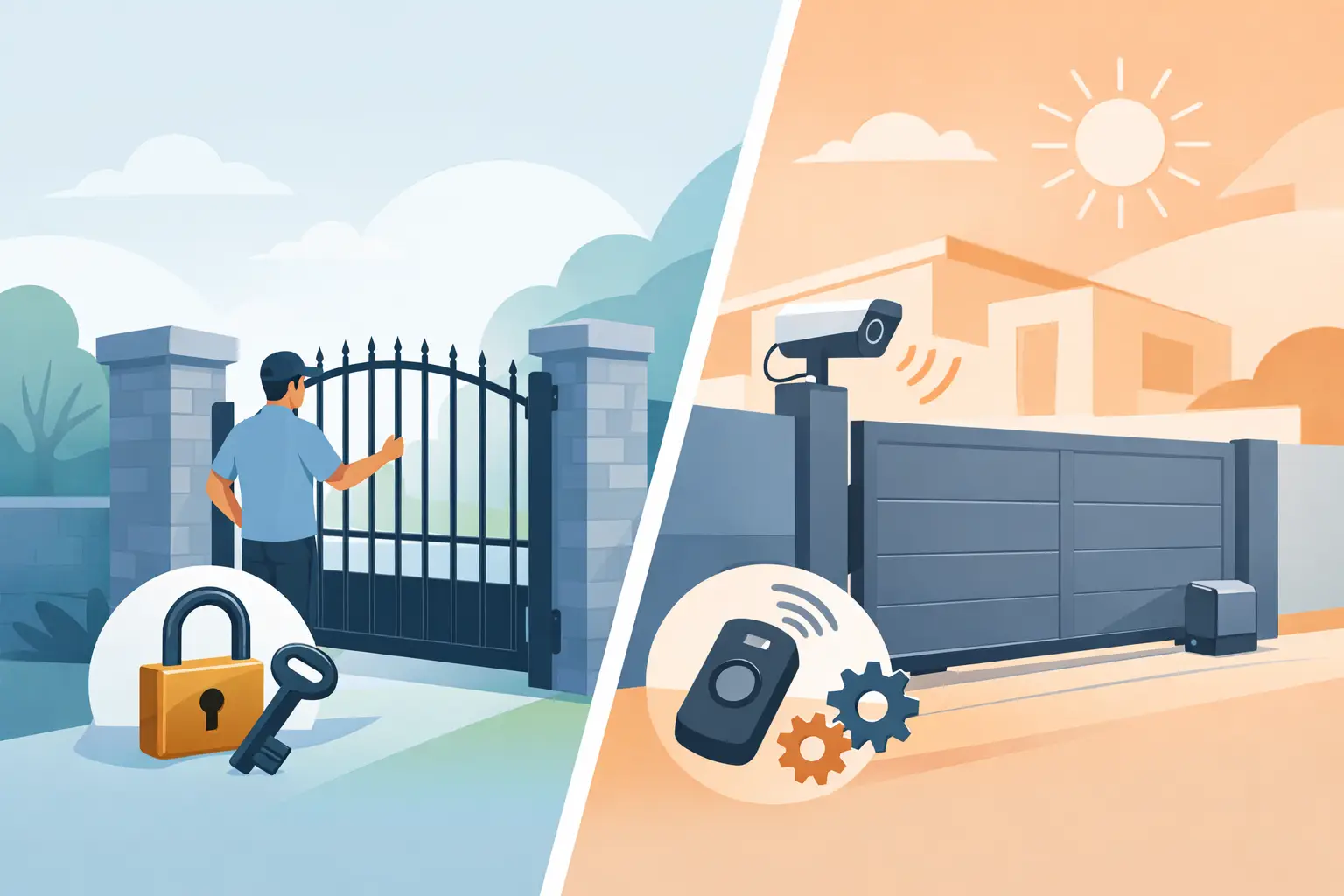
This is one of the earliest decisions because it affects layout, installation and cost. Swing gates are a popular choice for domestic properties because they suit many driveways and can work well with both traditional and contemporary designs. They can be supplied as single or double leaf gates depending on the width of the entrance and the available space.

However, swing gates need room to open safely and correctly. Ground levels, rising driveways and vehicle parking positions all matter. If the driveway slopes sharply or space behind the opening is restricted, a sliding gate may be the better answer.

Sliding gates are often chosen where space is tight or where buyers want a more controlled opening path. They can also be a strong option for commercial premises. The trade-off is that they need enough run-back space to one side, and the groundwork and supporting setup can be more involved. In short, sliding gates solve some access problems but introduce their own practical requirements.

Bespoke or readymade?

If your opening is standard and your priorities are speed and value, a readymade gate can be a very good option. It can reduce lead times and keep the process straightforward, particularly for garden gates or more conventional driveway layouts.

Bespoke gates come into their own when the opening is unusual, the design needs to match existing fencing or railings, or the property calls for a more tailored finish. Many homeowners underestimate how much difference made-to-measure sizing can make to the final look. A gate that fits the opening properly and aligns with the property style will usually look far more considered than a close-enough alternative.

For trade and project buyers, bespoke manufacture is often less about appearance and more about specification. You may need a certain height, infill pattern, frame detail, access width or automation-ready design. In those situations, made-to-order is usually the right route.

Style, privacy and planning the look

The design of the gate should suit the building rather than compete with it. Modern properties often work well with clean horizontal lines, minimalist frames and solid or semi-solid infill. Period homes may suit more decorative or ornate styles. If there are existing railings, fencing or balconies nearby, it helps to think about the wider visual picture.

Privacy is another practical decision. An open design gives visibility and can feel lighter from the street, but it offers less screening. A more solid design creates privacy and can make an entrance feel more secure, though it may also block sightlines when vehicles are exiting. Sometimes a semi-open design gives the best compromise.

Colour should not be an afterthought either. Black, anthracite grey and other neutral shades remain popular because they suit a wide range of properties, but the right finish depends on the setting. A gate should look like it belongs to the property, not like a separate add-on.

Getting the measurements and specification right

Accurate measuring is where good gate projects are won or lost. Width and height are only the starting point. You also need to account for levels, hinge space, post requirements, clear opening width, ground clearance and whether automation will be fitted now or later.

On driveway gates, think carefully about the vehicles using the entrance. A gate that technically fits a car may still feel awkward if turning space is limited. For commercial sites, delivery access, pedestrian segregation and frequency of operation all need to be reflected in the specification.

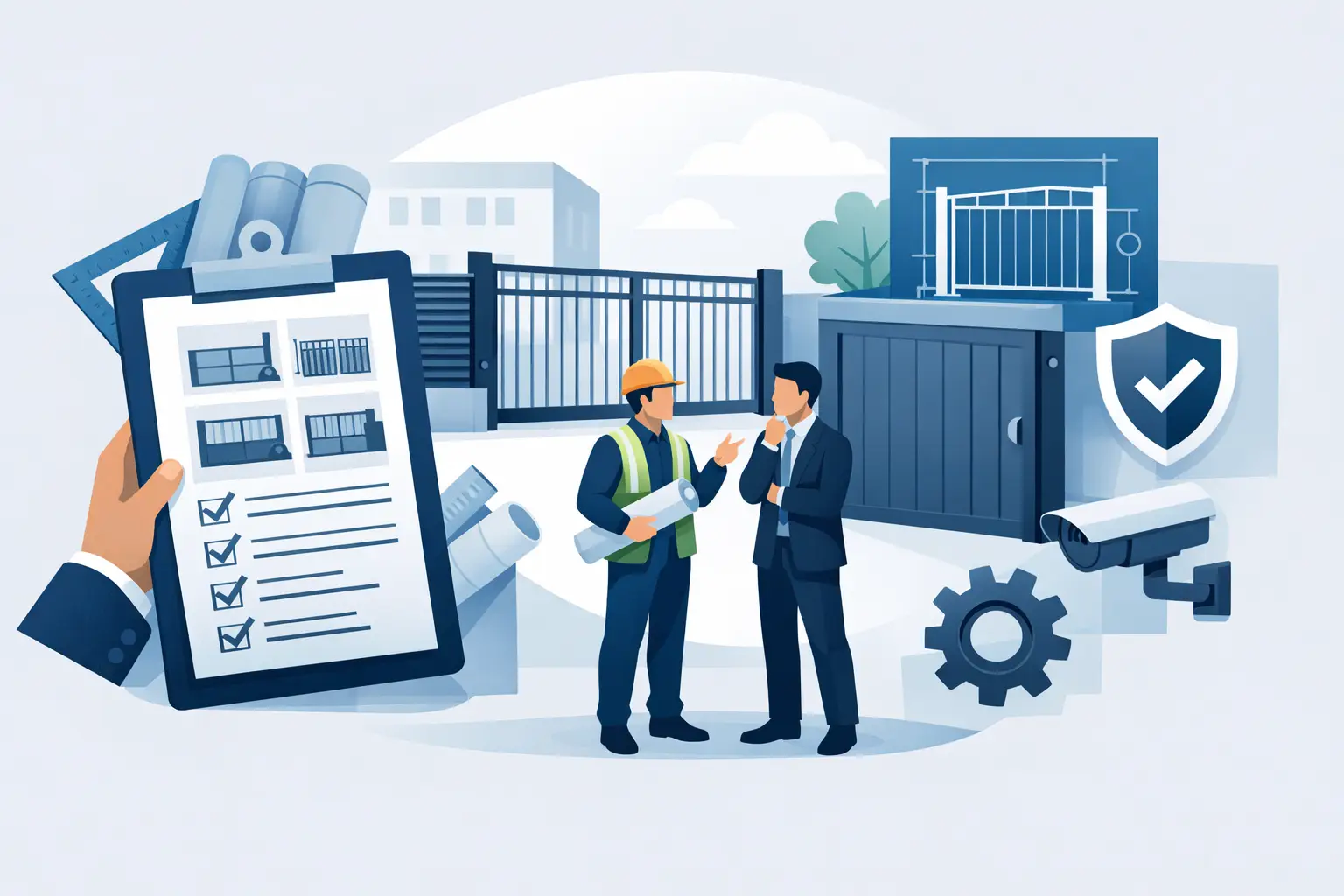
This is where expert guidance matters. A reliable supplier will not just ask for rough sizes and send a price. They should help establish whether the chosen design is suitable for the opening, the usage and any automation plans.

Manual or automated operation

Automation can transform how a gate is used, especially on busy driveways or commercial entrances. It adds convenience, supports access control and can improve the overall experience of arriving at a property. Integrated intercom systems are also increasingly popular, particularly where security and visitor management are important.

But automation should be planned properly. The gate design, weight, hinge arrangement, opening method and power supply all influence what system is suitable. Retrofitting later is possible in some cases, but it is generally better to think ahead. Even if you install the gate as manual initially, preparing for future automation can save time and cost later.

There is also an honesty point here: automation adds cost, and not every site needs it. If a side gate is used occasionally, manual operation may be entirely practical. The right choice depends on frequency of use, convenience, security requirements and budget.

Budgeting without focusing only on the gate price

A gate quote should be looked at as part of the full project cost. Depending on the site, that may include posts, fittings, groundwork, automation, intercoms, delivery and installation. A cheaper gate can become expensive if it is not suitable and has to be adapted on site.

Value is usually found in buying the right specification first time. A well-made aluminium gate may cost more upfront than a lower-grade alternative, but the reduced maintenance and longer service life often make it the better financial choice over time. This matters particularly for buyers replacing timber gates repeatedly or managing several plots or units.

Transparent pricing also matters. Buyers should understand what is included, what is optional and what may depend on site conditions. Clear advice at quotation stage avoids disappointment later.

A final check before you buy

The best aluminium gate buying guide always comes back to fit for purpose. Does the gate suit the opening, the property and the way the entrance is used every day? Is the design right for the building? Is the specification strong enough for the level of use? And if automation is planned, has the gate been chosen with that in mind?

For UK buyers, aluminium is a strong all-round choice because it combines appearance, durability and low maintenance in a way that suits both homes and commercial sites. The real difference comes from choosing carefully and getting proper advice before the order is placed. If you take the time to match the product to the project, the finished result should feel less like a purchase and more like a long-term improvement to the property.