A driveway gate that looks smart in year one but needs sanding, repainting or rust treatment by year three soon stops feeling like a good investment. That is why maintenance free driveway gates have become such a popular choice for homeowners, developers and commercial buyers across the UK. The appeal is straightforward – you want a gate that improves security and kerb appeal without creating another job to manage.
The phrase itself can be slightly misleading, though. No external gate is completely exempt from care. Anything exposed to British weather will benefit from occasional cleaning and basic checks. What most buyers really mean by maintenance free is low upkeep, long-lasting performance and no regular painting, staining or corrosion treatment. That distinction matters when you are comparing materials and deciding what will work best for your property.
What makes driveway gates maintenance free?
In practical terms, maintenance free driveway gates are built from materials and finishes that are designed to resist the usual causes of deterioration. Rain, frost, coastal air, pollution and general wear can all take a toll. A truly low-maintenance gate should cope well with those conditions without demanding frequent repair or refinishing.
For most UK properties, aluminium stands out because it does not rust in the way steel can and it does not absorb moisture like timber. When powder coated properly, it offers a durable finish that holds its appearance well over time. That means you are not dealing with flaking paint, swelling boards or the repeated cycle of preparation and repainting that often comes with traditional materials.
The construction method also plays a part. A well-made gate should be designed for strength without excessive weight, with quality fixings, dependable hinges and a finish suited to outdoor use. Maintenance is not just about the surface – it is also about how well the gate performs year after year.
Why aluminium maintenance free driveway gates are in demand
For many buyers, aluminium offers the most balanced answer to the maintenance question. It is lightweight compared with wrought iron or heavy steel, which can help reduce strain on posts, hinges and automation systems. At the same time, it remains strong enough for residential and many commercial applications.
That lighter weight has a practical knock-on effect. Swing gates and sliding gates both rely on smooth, reliable movement. If the gate is unnecessarily heavy, you may see more wear on hardware and motors over time. A lighter but strong material can support easier operation and more efficient automation, particularly on wider openings.
There is also the appearance to consider. Aluminium gates are available in a wide range of styles, from contemporary slatted designs to more traditional and ornate looks. For buyers who want the visual warmth of timber without timber upkeep, wood-effect aluminium can be especially appealing. You get the style without signing up for annual treatment.
Cost is part of the conversation as well. Aluminium may not always be the cheapest option at the point of purchase, but whole-life value is often stronger. If you remove the cost of repainting, repairs and replacement cycles, a quality aluminium gate can make more financial sense over the longer term.
The trade-offs buyers should understand
Low maintenance does not mean no decision-making. The right gate depends on your opening width, access needs, ground conditions, privacy preference and whether automation is planned now or later.
Timber, for example, still appeals to many homeowners for its natural character. On some period properties, it may suit the architecture well. The trade-off is upkeep. Even pressure-treated timber generally needs ongoing attention to preserve appearance and performance. If you are happy to put in that effort, it can still be a valid choice. If you want a fit-and-forget approach, it usually is not.
Steel can provide a very solid feel and may suit certain security-focused applications. However, if the protective finish is damaged and corrosion begins, maintenance demands can increase quickly. Galvanising and coating improve performance, but steel still tends to require more vigilance than aluminium.
Even with aluminium, quality varies. A cheaper gate that looks similar in photographs may use inferior coating, weaker components or less refined fabrication. The result can be disappointing alignment, reduced finish life or poor long-term reliability. The lesson is simple – low maintenance only works when the gate is properly made.
Choosing the right style for your property
A maintenance-friendly gate should still suit the building it protects. Buyers often begin with material, but design deserves equal attention because the gate will shape first impressions every day.
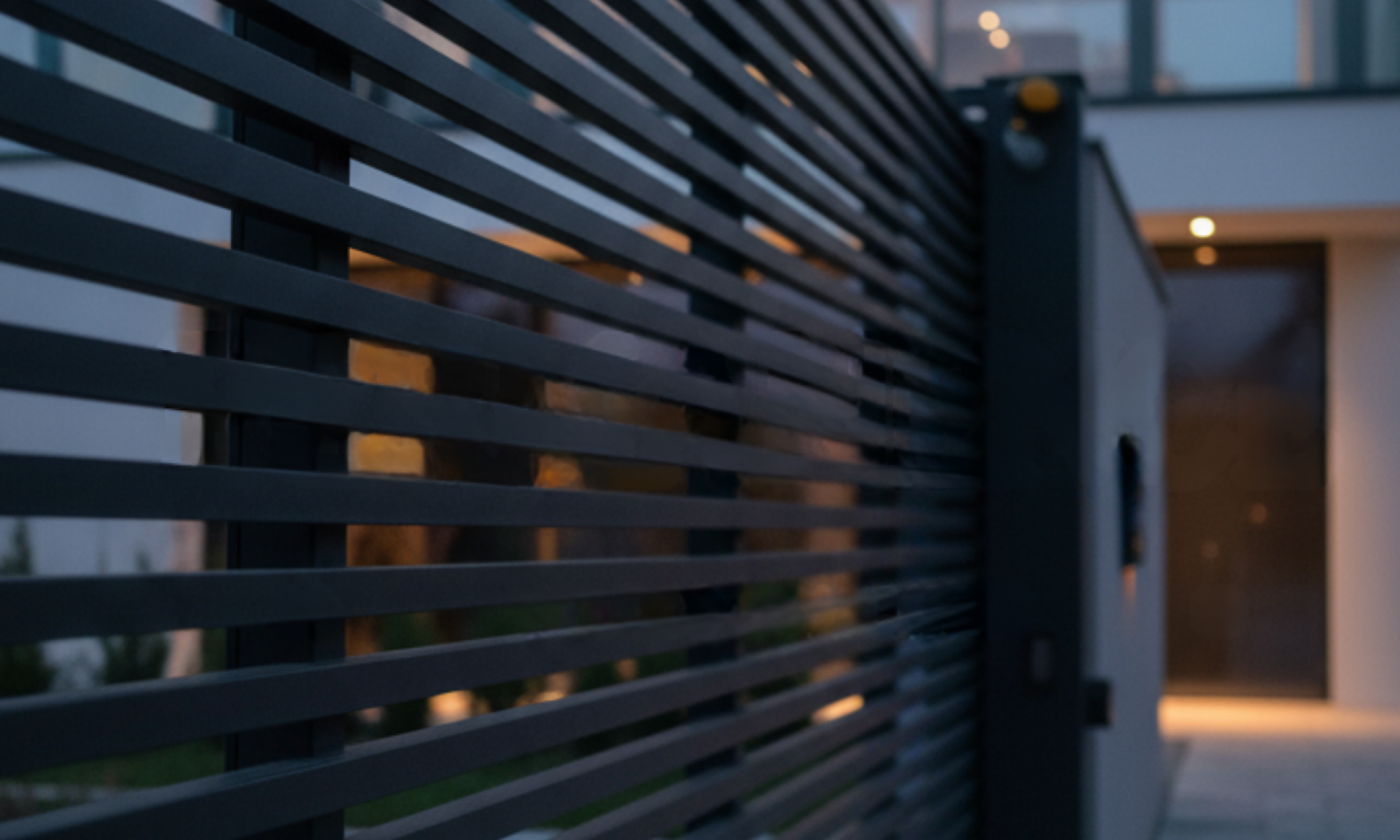
For modern homes, horizontal slatted aluminium gates remain a popular option. They offer a clean, architectural look and can be adjusted for more privacy or a more open frontage. For traditional homes, vertical bar styles, arched tops or decorative detailing may sit more comfortably with the surrounding architecture.
Privacy is another point worth thinking through. Solid or closely spaced designs can screen vehicles and improve seclusion, which many homeowners value on busy roads. More open designs can feel lighter visually and may be better where you want to preserve sightlines or avoid an imposing entrance.
Commercial and multi-occupancy settings often place more emphasis on function. Here, the best solution may prioritise access control, durability and ease of operation over decorative detail. That does not mean appearance is irrelevant. A smart, well-specified gate still contributes to site presentation and can improve how a property or development is perceived.
Automation and access control matter too
Many buyers looking at maintenance free driveway gates are also planning automation. This is where material choice becomes even more important. A gate that is strong but not excessively heavy is generally easier to automate effectively, and it can help support smoother long-term operation.
If you expect frequent daily use, speak to a supplier early about motor suitability, opening method and site layout. Swing gates need space to open inward or outward, depending on the design and site constraints. Sliding gates are often a better fit where driveway depth is limited, although they require enough lateral run-back.
Intercom systems, keypad entry, fobs and app-based controls can all be integrated depending on the project. Residential customers may be focused on convenience and security. Commercial buyers may need more structured access management. Either way, the gate should be specified as part of the wider access solution rather than treated as a standalone item.
What to ask before you buy
The safest way to choose well is to look beyond the headline claim of maintenance free and ask how that promise is supported. Find out what material grade is being used, how the finish is applied and whether the gate is made to measure or supplied in a fixed size range. Ask about automation compatibility, available colours and what support is offered with installation.
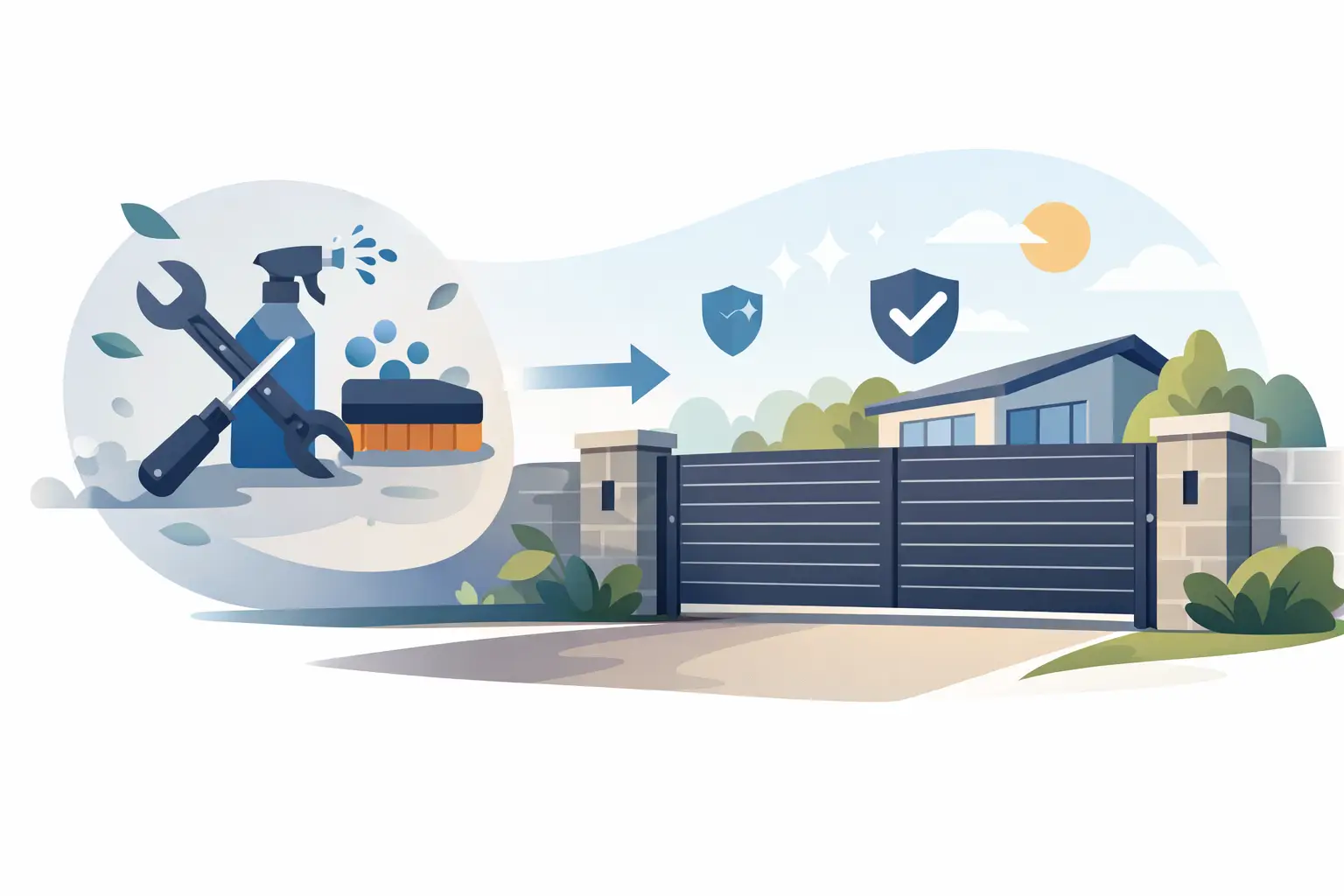
It is also sensible to ask what routine care is actually recommended. With aluminium, this is usually simple – occasional washing to remove dirt and environmental residue, plus periodic checks of moving parts and automation components. That level of upkeep is very different from sanding and repainting, but it is still worth understanding from the outset.
For bespoke projects, design flexibility can make a major difference. A gate that is tailored to your opening, style preference and access needs is more likely to perform properly and look right on the property. Readymade options can be a strong choice where speed and budget are priorities, provided the dimensions and specification are suitable.
Finding a gate that stays easy to own
The best maintenance free driveway gates are not just attractive on installation day. They remain straightforward to live with in five, ten and fifteen years’ time. That means choosing a material that resists weathering, a design that suits your property and a specification that matches the way the gate will actually be used.
For many UK buyers, aluminium provides that balance of durability, appearance and low upkeep better than the usual alternatives. It is not about making a gate maintenance-proof. It is about reducing the burden of ownership without compromising on security or style.
At Aluminium Gates Direct, that is usually where the most successful projects begin – not with the cheapest gate on paper, but with the right one for the property, the budget and the long term. If you approach the decision that way, the result is far more likely to feel like a lasting upgrade rather than another exterior feature that needs constant attention.
A good driveway gate should add value to your property and take work off your list, not add to it.