
12 Best Garden Gate Ideas for UK Homes

12 Best Garden Gate Ideas for UK Homes

A garden gate does more than mark an entrance. It shapes first impressions, affects privacy, and has to cope with British weather without becoming another weekend job. If you are looking for the best garden gate ideas, the right choice usually comes down to a balance of style, security, maintenance and how the gate will be used day to day.

For some properties, the priority is a smart side gate that keeps bins and tools out of sight. For others, it is a decorative pedestrian gate that completes a landscaped front garden. The strongest ideas are the ones that suit the setting rather than chasing a trend. That is why material, opening style, height and finish matter just as much as appearance.

What makes the best garden gate ideas work?

A good gate should feel like part of the property, not an afterthought. That means considering the proportions of the opening, nearby fencing or walls, and the style of the house itself. A sleek horizontal-slat gate can look excellent beside a modern extension, but it may feel out of place in front of a period cottage unless the detailing is handled carefully.

Practical use matters just as much. A gate used several times a day needs to be light, reliable and easy to latch. If the space is exposed, wind loading becomes relevant. If privacy is a concern, the infill design should limit visibility without making the entrance feel too heavy. The best garden gate ideas usually succeed because they solve more than one problem at once.

12 best garden gate ideas to consider

1. Contemporary slatted aluminium gates

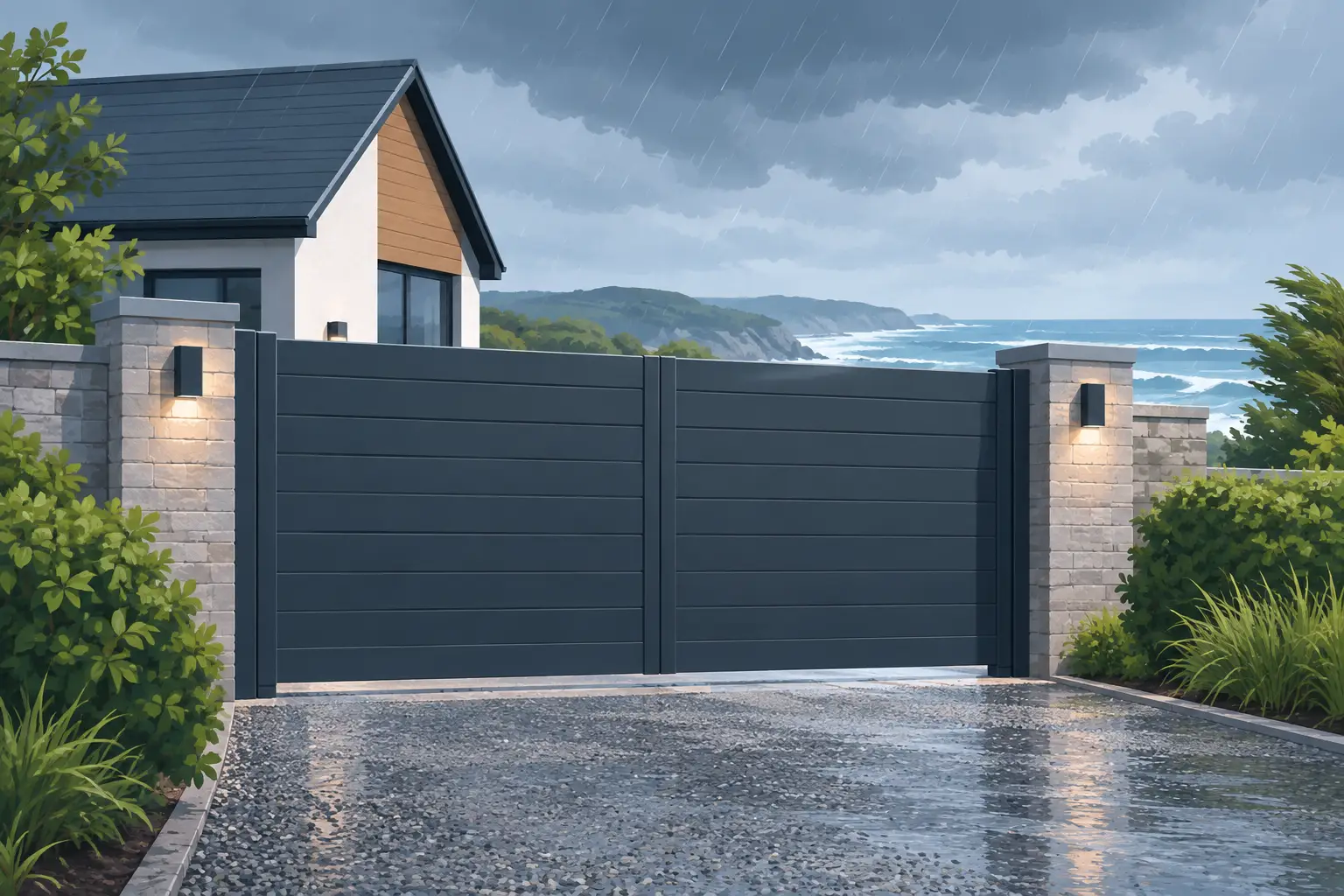
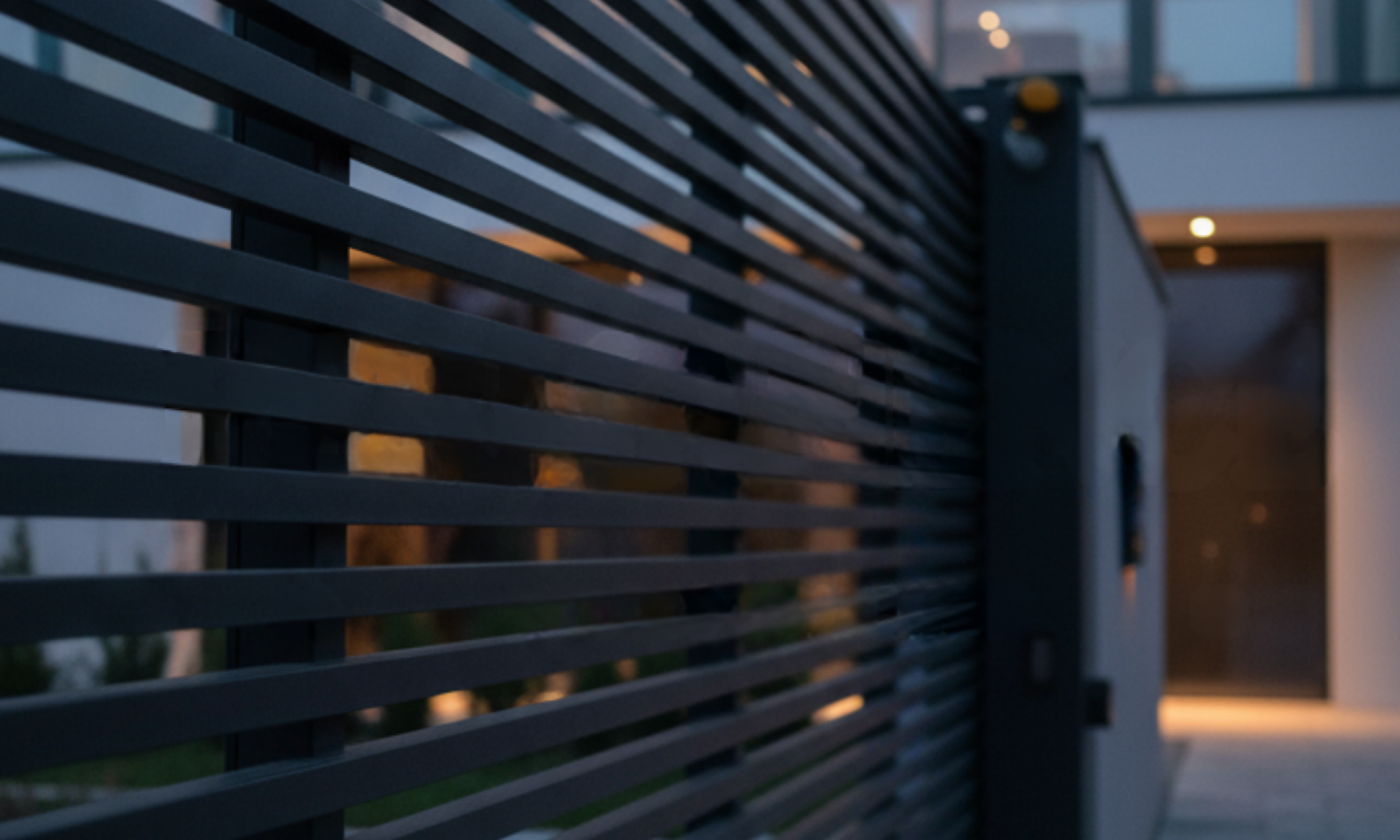
This is one of the most popular choices for modern homes, and for good reason. Slatted aluminium gates offer clean lines, strong kerb appeal and a good balance between privacy and airflow. Depending on spacing, they can either screen the garden almost completely or allow a lighter, more open look.

They are especially useful where homeowners want a low-maintenance alternative to timber. Powder-coated aluminium will not rot, warp or need regular repainting, which makes it a sensible long-term option for busy households.

2. Solid privacy side gates

A solid or near-solid gate works well for side access where security and screening are the main priorities. This style helps conceal storage areas, wheelie bins, tools and side passages, creating a tidier overall appearance.

The trade-off is that a fully enclosed design can catch more wind than an open style, so the frame, posts and hinges need to be specified properly. In exposed locations, a slightly ventilated design may perform better over time.

3. Decorative entrance gates for front gardens

If the gate is visible from the street, decorative detailing can add real character. Ornate tops, shaped frames and more traditional railing-style designs suit period homes particularly well, and they can lift the look of a front boundary without overwhelming it.

This approach works best when the gate reflects other exterior features such as railings, balcony details or the style of the front door. Too much ornament can look forced, so proportion is everything.

4. Matching gate and fencing sets

One of the simplest ways to achieve a polished result is to match the gate with the surrounding fencing or railings. Consistent materials, colours and line patterns create a neater finish and help the whole boundary feel intentional.

This is especially effective in new landscaping projects or larger renovations, where separate elements can otherwise compete with each other. It also makes specification easier for developers and trade buyers who need a coordinated perimeter solution.

5. Arched top garden gates

An arched top softens the look of a gate and can suit both traditional and transitional properties. It introduces visual interest without relying on heavy decoration, which makes it a good middle ground for homeowners who want something more distinctive than a flat-top design.

This shape can be particularly effective in cottage gardens or softer planting schemes. It is less suited to sharply contemporary architecture, where straight lines often work better.

6. Minimal framed pedestrian gates

For narrow paths and simple access points, a minimal framed gate can be the right answer. These designs tend to be understated, practical and easy to integrate into all sorts of boundary treatments.

The appeal here is restraint. Not every gate needs to be a focal point. In many cases, the best option is one that looks smart, works smoothly and does not demand attention.

7. Gates with integrated intercom or access control

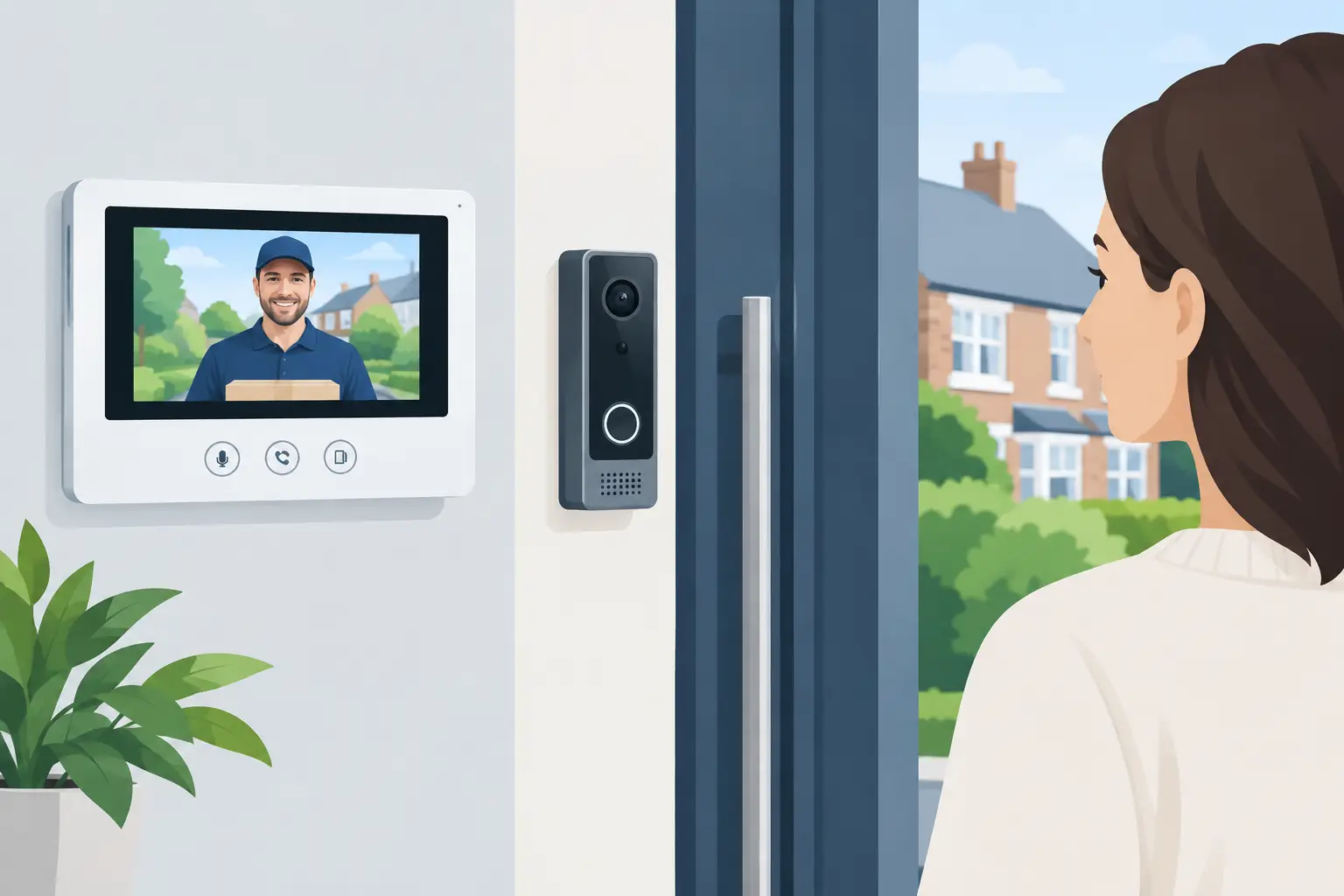
For higher-value residential projects or mixed-use sites, adding intercom or access control can make a garden or side entrance more secure and more convenient. This is particularly useful where a gate connects to a rear garden office, side alley or secondary access point.

It is not necessary for every property, but where controlled entry matters, planning for cables, posts and hardware early will avoid compromise later. A well-designed gate can accommodate modern access systems without looking overly commercial.

8. Vertical bar or railing-style gates

This style is ideal where visibility matters more than privacy. Vertical bar gates can look elegant and open, making them a strong option for front gardens, communal spaces or properties where owners want a welcoming boundary rather than a screened one.

They are also helpful where climbing plants, stonework or formal landscaping should remain visible from outside. Security can still be strong, but the overall feel is lighter than with solid infill gates.

9. Bespoke gates for awkward openings

Not every garden entrance is standard. Sloping drive edges, uneven walls, non-standard widths and inherited brick piers often mean an off-the-shelf gate is not the best fit. Bespoke sizing allows the gate to suit the opening properly rather than relying on fillers or compromises.

This can make a significant difference to both appearance and performance. A well-made bespoke gate will usually close better, sit more neatly and look more considered within the space.

10. Dual-purpose security and style gates

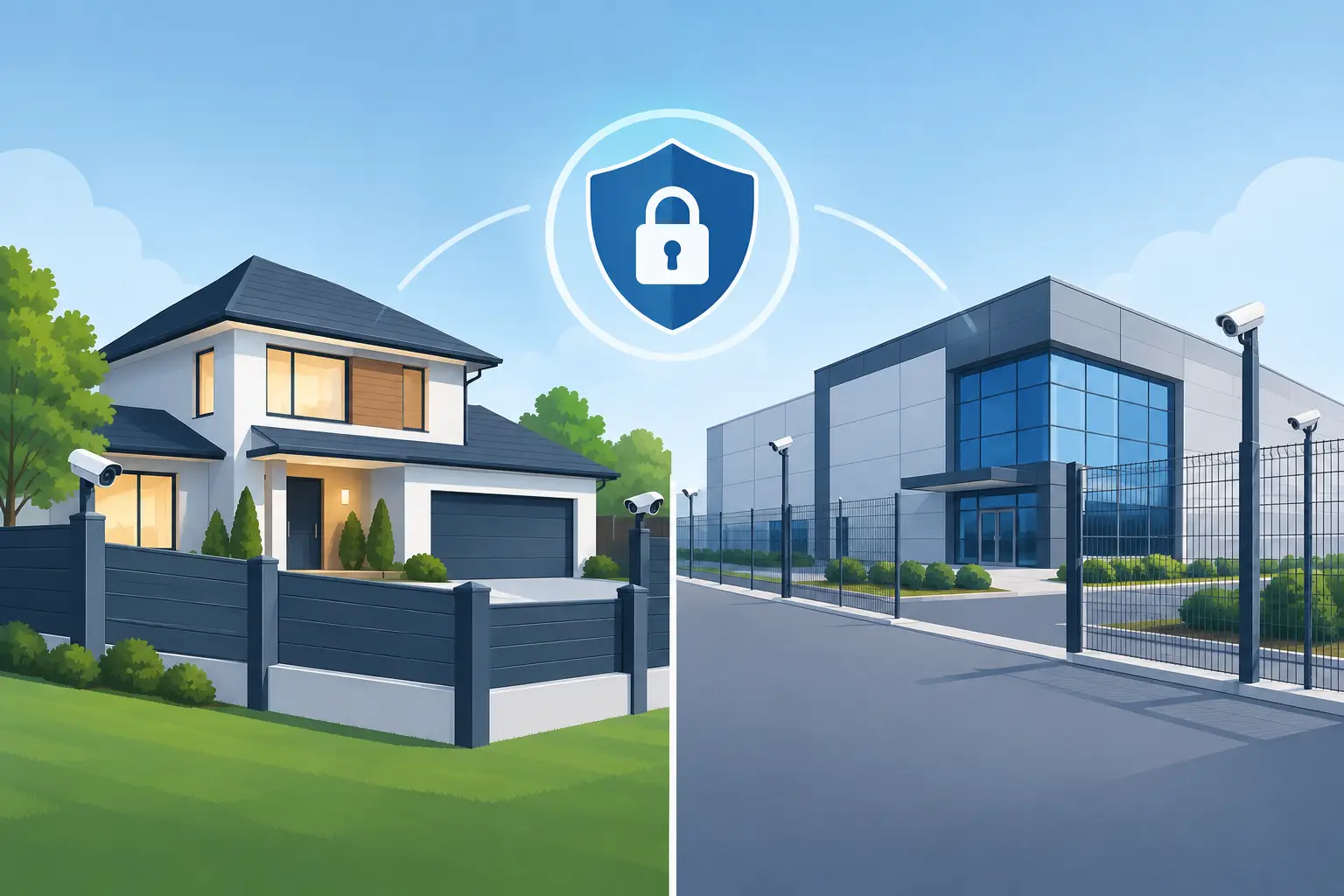
Some locations need a gate to do more than look attractive. Side access near public footpaths, shared boundaries or concealed passages often require stronger privacy, better locking and more durable construction.

The good news is that security-focused design does not have to look industrial. With the right frame, infill and finish, it is possible to achieve a secure gate that still complements the property.

11. Powder-coated colour statement gates

Anthracite grey remains a popular choice, but it is not the only option. Black, white and muted heritage tones can all work well depending on the building and surrounding materials. A coloured gate can either blend into the boundary or provide contrast as a design feature.

This is one area where samples and context really matter. A colour that looks right in isolation may appear too harsh or too flat against brick, render or stone.

12. Low-maintenance aluminium timber-look gates

For homeowners who like the warmth of timber but not the upkeep, timber-look aluminium is worth considering. It offers the character of woodgrain with none of the regular staining, sanding or risk of rot associated with traditional timber gates.

It is a practical solution where the garden design calls for a softer, more natural appearance but the customer still wants long-term durability and minimal maintenance.

Choosing between timber, steel and aluminium

Material choice affects almost every part of ownership. Timber can look attractive and traditional, but it needs regular care and is more vulnerable to weathering over time. Steel is strong, though it can be heavier and may require more attention to corrosion protection if the finish becomes damaged.

Aluminium is often the most practical choice for modern buyers because it is lightweight, durable and maintenance-free in day-to-day use. That makes it particularly appealing for side gates, pedestrian gates and garden entrances that need to stay looking smart without constant attention. For many UK properties, it gives the best mix of appearance, performance and value over the long term.

How to match a garden gate to your property

The best garden gate ideas are usually the ones that respect the house rather than competing with it. Contemporary homes often suit streamlined profiles, crisp powder-coated finishes and horizontal or flush infill styles. Traditional homes may benefit from softer shapes, decorative details or more classic vertical designs.

Think about the wider boundary too. Brick pillars, rendered walls, railings and fence panels all influence what will look right. If the gate sits beside a driveway gate, matching or coordinating the design can create a stronger result. If it stands alone, it may need slightly more presence to avoid looking undersized.

A few practical checks before you buy

Before choosing a design, measure the opening carefully and assess the ground levels. Check whether the gate needs to open inwards or outwards, and make sure there is enough clearance for the swing. Consider how often the gate will be used and who will use it, especially if children, elderly relatives or tenants need straightforward access.

It is also worth thinking ahead. If you may add fencing, automation or access control later, choose a gate system that can accommodate those upgrades. A little planning at the start can save money and avoid replacement further down the line.

At Aluminium Gates Direct, we often find that the right gate is not simply the most decorative option or the cheapest available. It is the one that fits the opening properly, matches the property, and performs well for years without creating extra work. If you start with that in mind, the best-looking choice is usually the most practical one too.

A garden gate should make everyday access feel easy and make the property look finished. When style, durability and the right specification come together, it stops being just an entrance and becomes part of what makes the space work.

What Is the Best Gate Material?

What Is the Best Gate Material?

A gate can look right on day one and still be the wrong choice five winters later. That is usually where the real question starts. When people ask what is the best gate material, they are rarely asking about appearance alone. They want to know what will last, what will need the least upkeep, what suits automation, and what represents good value over time.

The honest answer is that the best material depends on where the gate is going, how often it will be used, and how much maintenance you are prepared to take on. For most residential and commercial buyers in the UK, aluminium is now the strongest all-round option. It offers a rare combination of durability, low weight, corrosion resistance and low maintenance that traditional materials often struggle to match.

What is the best gate material for most properties?

If you are comparing the main gate materials on a practical basis rather than tradition, aluminium comes out ahead in most cases. That is especially true for driveway gates, side gates, garden gates and automated entrance gates where long-term performance matters as much as first impressions.

The reason is fairly simple. A gate lives outside all year. It deals with rain, frost, changing temperatures, dirt, daily use and, in many cases, automation. A material that is strong but too heavy can put strain on hinges, posts and motors. A material that looks attractive but needs regular treatment can become expensive and time-consuming to own. A material that corrodes or warps will eventually affect both appearance and function.

Aluminium avoids many of those common problems. It is lightweight compared with steel, it does not rust like ferrous metals, and it does not absorb moisture like timber. With the right finish, it keeps its appearance well and requires very little routine maintenance beyond occasional cleaning.

That does not mean every other material is a poor choice. It means aluminium tends to give the most balanced answer when customers want strength, appearance, reliability and lower ownership costs in one package.

Comparing the main gate materials

Aluminium

Aluminium is increasingly the preferred choice for modern gate systems because it performs well across the board. It is strong enough for residential and commercial use, yet light enough to reduce stress on hardware and automation. That lower weight matters more than many buyers expect. It can improve ease of operation, support smoother automated movement and reduce wear over time.

It is also a sensible material for the UK climate. Unlike steel, aluminium will not rust. Unlike timber, it will not rot, swell or twist due to moisture. For customers who want a gate that keeps its shape and finish with minimal upkeep, that makes a real difference.

From a design point of view, aluminium is versatile. It suits contemporary styles, traditional layouts and bespoke designs, and it is available in a wide range of colours and finishes. That makes it easier to match the gate to the property rather than compromise on appearance for the sake of practicality.

The main trade-off is usually upfront cost. A quality aluminium gate can cost more initially than a basic timber option. However, when you factor in reduced maintenance, long-term durability and better compatibility with automation, the value picture often changes in aluminium’s favour.

Steel

Steel is often chosen for its strength and security credentials. It has a solid, substantial feel and can work well for certain commercial or high-security applications. In ornate designs, it can also create a classic look that suits period properties.

The issue with steel is that strength comes with weight. Heavier gates may require more substantial support structures, stronger hardware and careful planning if they are to be automated. Weight also affects handling, installation and ongoing wear.

The other key consideration is corrosion. Steel can be protected with galvanising and powder coating, but if that protective finish is damaged and not maintained properly, rust can become a problem. In exposed locations, coastal areas or high-traffic sites, that maintenance burden can increase.

Steel still has a place, particularly where maximum impact resistance is a priority, but for many buyers it introduces more upkeep and more structural demand than aluminium.

Timber

Timber remains popular because of its natural appearance. For cottages, rural settings and traditional garden boundaries, wood can feel warm and familiar in a way metal sometimes does not. It can also be customised and painted or stained to suit the property.

That said, timber is the material most likely to demand ongoing attention. In the British climate, wooden gates are exposed to damp, UV, frost and temperature changes. Over time, timber can swell, shrink, warp, crack or rot if not properly treated and maintained.

Even a well-made timber gate usually needs periodic sanding, staining, painting or sealing to stay in good condition. For some homeowners, that upkeep is part of the appeal. For others, it becomes a recurring cost and inconvenience.

Timber can still be the right choice where natural character matters most, but it is rarely the best option for buyers who want a long-lasting, low-maintenance solution.

Composite

Composite gates are sometimes considered as a middle ground between timber appearance and lower maintenance. Depending on the product, they can offer a wood-effect finish with better resistance to weathering than natural timber.

However, not all composite systems are equal, and the long-term performance can depend heavily on the quality of the construction and frame. In many cases, the structural support still relies on metal elements, and lower-grade products may not deliver the durability buyers expect.

Composite can suit certain projects, but it is often a more niche option compared with aluminium, steel or timber. Buyers should look closely at the core construction, surface finish and expected lifespan rather than assume all composite gates behave the same way.

What matters most when choosing the best gate material?

The right material depends on the demands of the site as much as the appearance of the gate.

If low maintenance is your priority, aluminium is difficult to beat. It does not need the regular treatment associated with timber and avoids the corrosion concerns that can come with steel. For homeowners who want kerb appeal without a long maintenance list, that matters.

If the gate will be automated, weight becomes especially important. Lighter gates are generally easier on motors, hinges and posts. That makes aluminium a practical choice for both swing and sliding gates, particularly on busy driveways or commercial access points where reliability matters.

If security is the main concern, material is only one part of the picture. Gate design, frame construction, locking, access control and installation quality all matter. A well-designed aluminium gate can provide excellent security while still being easier to operate and maintain than a heavier steel alternative.

Budget should be looked at over the full life of the gate, not simply at purchase price. A cheaper timber gate may cost less at the start, but regular maintenance and earlier replacement can make it more expensive over time. A higher-quality aluminium gate often gives better long-term value because it keeps performing without constant attention.

What is the best gate material for driveways, gardens and commercial sites?

For driveway gates, aluminium is usually the strongest all-round choice. It offers the right balance of visual appeal, structural performance and suitability for automation. This is particularly relevant for wider openings where excessive weight can create avoidable strain.

For garden and side gates, aluminium again makes a strong case because it combines smart appearance with very little upkeep. Timber may still appeal where a softer, more traditional finish is important, but it comes with more maintenance.

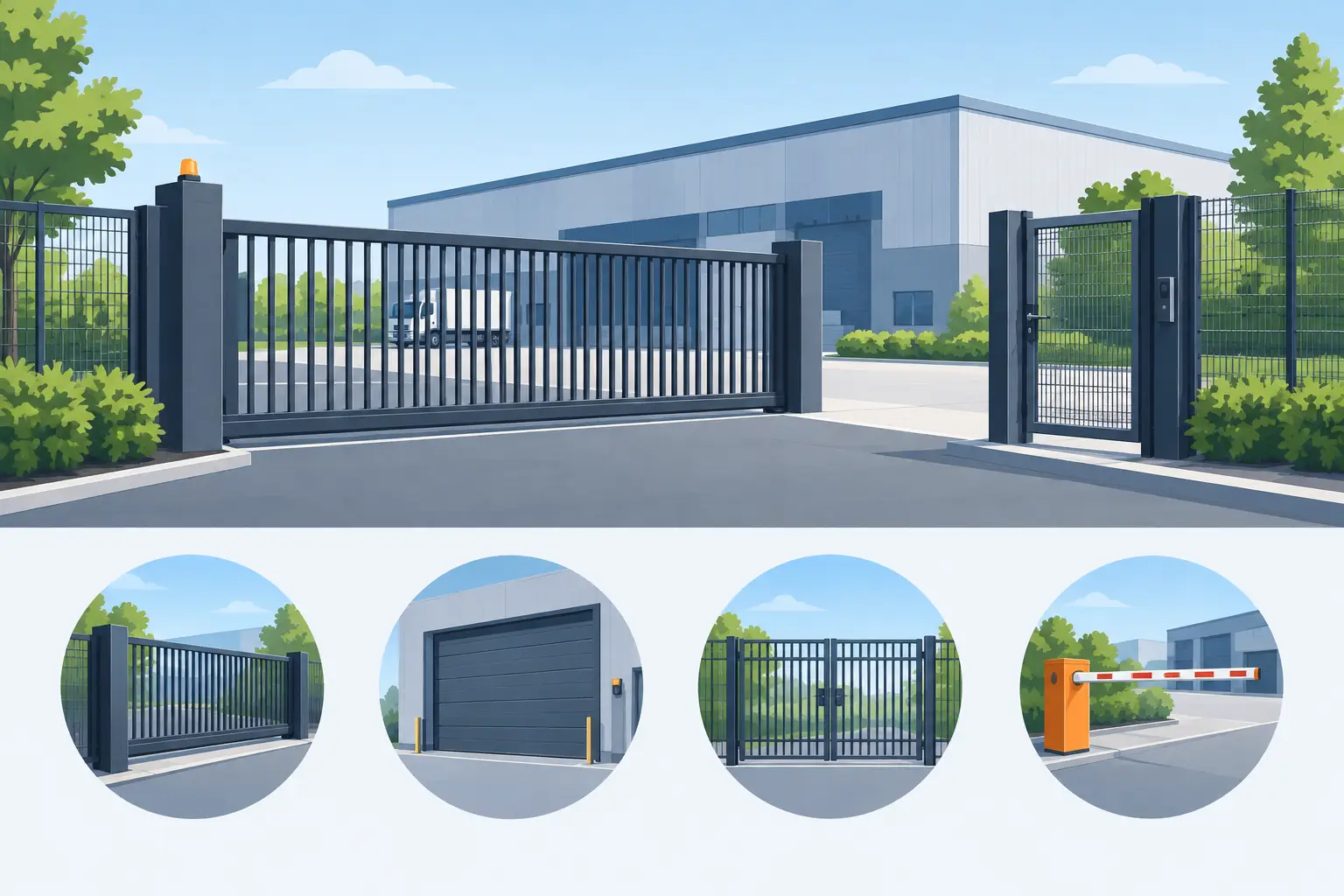
For commercial sites, the answer depends on use and specification. Aluminium is often ideal for controlled access points, offices, flat developments, schools and business premises where appearance, durability and automation are key. Steel may still be selected for certain high-security or industrial environments, but the added weight and maintenance should be part of the decision.

Why aluminium stands out as the long-term option

The best gate material is the one that suits the property, the level of use and the expectations you have for upkeep. For many UK buyers, that points clearly towards aluminium because it solves several common problems at once.

It is durable without being overly heavy. It is attractive without demanding constant maintenance. It works well for bespoke and readymade designs, and it is well suited to modern automation and access systems. For residential customers, that means less hassle and better long-term appearance. For trade and commercial buyers, it means a reliable, specification-friendly solution that supports performance and presentation.

At Aluminium Gates Direct, we see this decision every day across projects of different sizes, styles and budgets. The right gate should not leave you balancing looks against practicality if you can have both.

If you are weighing up materials, the best place to start is not with a trend or a guess. It is with the conditions on site, the level of maintenance you want to avoid, and how you expect the gate to perform years from now.

Choosing Aluminium Pedestrian Access Gates

Choosing Aluminium Pedestrian Access Gates

A side entrance that sticks, rusts or drags on the paving becomes a daily frustration far sooner than most buyers expect. That is why aluminium pedestrian access gates are often one of the most practical upgrades for homes, shared developments and commercial sites alike. They give you a secure, smart-looking access point without the upkeep that comes with timber or the corrosion concerns that can affect steel in exposed locations.

For many buyers, the challenge is not whether to have a pedestrian gate but which type will work best for the property, the people using it and the level of security required. A gate that suits a private garden path may be very different from one needed for a bin store, a side alley, a school entrance or a managed commercial perimeter. Getting the basics right early tends to save time, cost and compromise later.

Why choose aluminium pedestrian access gates?

The main appeal of aluminium is straightforward. It is lightweight, strong and designed for long-term outdoor use with very little maintenance. In practical terms, that means no regular sanding, staining or repainting, and far less concern about warping, rot or heavy corrosion.

That combination matters in the UK climate. Gates have to cope with rain, frost, changing temperatures and everyday use. A material that stays stable and presentable with minimal effort is a sensible choice for busy homeowners and for site managers who do not want ongoing maintenance to become another line on the job list.

Appearance also plays a part. Aluminium pedestrian gates are available in a wide range of styles, from clean modern lines to more decorative designs, so they can complement contemporary homes, period-style properties, flat schemes and commercial premises. Powder-coated finishes help maintain a consistent appearance over time, which is especially useful where the gate forms part of a broader fencing or railing scheme.

Where aluminium pedestrian access gates work best

These gates are a good fit wherever controlled foot access is needed. On residential properties, they are often used for side passages, garden boundaries, rear access routes and entrances between driveway gates and fencing. They help create a clear boundary while making daily entry and exit simple.

For developers and trade buyers, pedestrian gates are often specified as part of a complete perimeter package. This could include fencing, railings, larger vehicle gates and access control equipment. Using aluminium across the scheme can help achieve a consistent finish while keeping future maintenance demands low.

Commercial settings bring slightly different priorities. Security, durability and ease of use tend to lead the decision. A pedestrian gate for a school, office, industrial yard or housing development may need to handle frequent traffic, controlled entry and a more formal specification. In those cases, the right gate is usually one that balances presentation with practical performance.

What to consider before you buy

The first question is how the gate will be used. If it is for a private side entrance, you may be focused on privacy and appearance. If it is for a shared or commercial entrance, you may need stronger access control, self-closing hardware or integration with an intercom system.

Size is another key factor. A pedestrian gate needs to feel proportionate to the opening and easy to use, but it also needs enough clearance and the right hinge and post arrangement to operate properly. This is one reason made-to-measure options are often worth considering. Openings are not always perfectly square, and a tailored product can avoid awkward compromises on fit.

You should also think about visibility. Some customers prefer solid or semi-solid infill for privacy, especially on residential boundaries. Others want a more open style that preserves sightlines and feels less enclosed. There is no single right answer here – it depends on the setting, the level of privacy needed and the visual character of the property.

Style, finish and matching the wider project

A pedestrian gate rarely sits in isolation. In most cases, it forms part of the first impression of a property or site. That is why style should be considered alongside function, not afterwards.

Modern slatted designs remain popular because they offer a clean look that works well across many property types. More traditional or ornate styles may be a better fit for period homes, heritage-inspired developments or customers who want stronger visual detail. The benefit of aluminium is that it allows for both approaches without forcing a trade-off on maintenance.

Colour choice has a practical effect as well as a visual one. Anthracite grey, black and other standard shades are commonly chosen because they pair well with windows, doors, railings and fencing. Bespoke colours can be useful where the gate needs to match an existing scheme or satisfy a planning or design brief. For larger projects especially, that flexibility can make specification much easier.

Security and access control options

Not every pedestrian gate needs the same security level. For a domestic garden gate, a reliable latch and lockable mechanism may be enough. For side access to a home, many buyers want a stronger locking arrangement to help deter opportunistic entry.

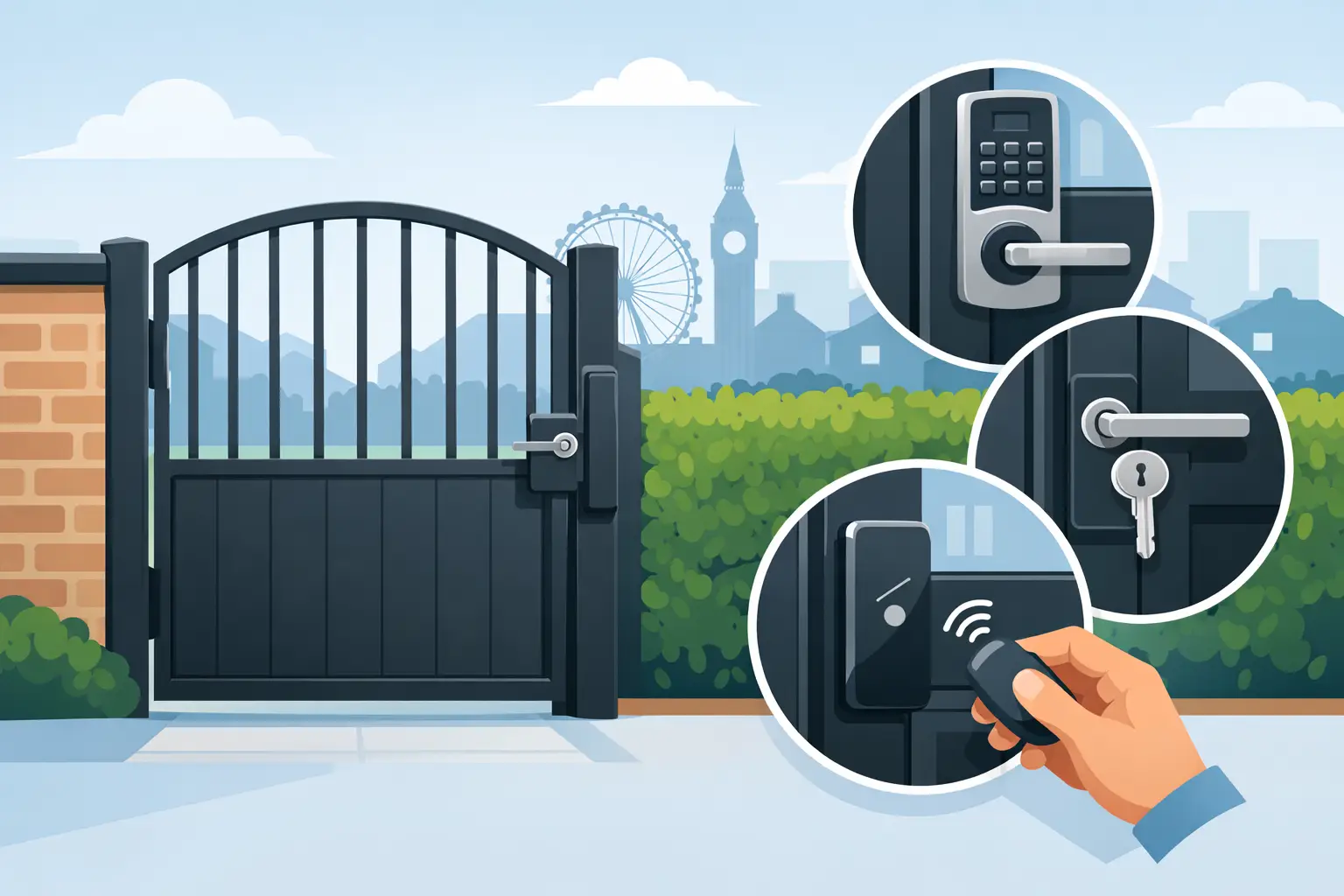
On commercial or multi-occupancy sites, requirements are often more advanced. A gate may need to work with keypad access, fob entry, magnetic locks or an intercom. In some settings, automation is also worth considering, although this depends on traffic levels, access needs and budget. The important point is to think about access control at the same time as the gate itself. Retrofitting later can be possible, but it is not always the most efficient route.

This is where specialist advice can be particularly useful. Hardware, posts, hinges and control equipment all need to work together, and the gate must be suited to the expected usage. A gate that looks the part but is under-specified for the site will not be the best long-term value.

Bespoke or readymade?

For some buyers, a readymade gate is the quickest and most cost-effective option. If the opening is standard, the design is straightforward and timescales are tight, this approach can make sense. It keeps decisions simple and can help move a project along faster.

Bespoke aluminium pedestrian access gates are often the better choice where dimensions are unusual, the design needs to match existing gates or fencing, or the project has specific privacy, access or branding requirements. Bespoke does not have to mean overcomplicated. In many cases, it simply means getting the right fit, finish and function from the start.

Budget naturally plays a part. A made-to-measure gate may cost more upfront than an off-the-shelf option, but it can also reduce adaptation work, improve the overall finish and provide a better result over the life of the installation. The right value is not always the lowest purchase price.

Installation matters more than many people realise

Even a well-made gate can disappoint if it is poorly installed. Alignment, post stability, hinge positioning, ground levels and latch setup all affect how the gate performs day to day. A pedestrian gate should open smoothly, close properly and feel secure without requiring constant adjustment.

On sloping ground or uneven surfaces, installation becomes more technical. The gate design may need to account for clearance and swing direction, and sometimes the most practical solution is not the most obvious one. This is another reason why support from a specialist supplier is useful, particularly for buyers managing wider site works or coordinating multiple trades.

A joined-up approach can also help when the pedestrian gate is part of a larger package that includes driveway gates, fencing, railings or access systems. Keeping specification and installation considerations aligned usually leads to a cleaner process and a better finished result.

A practical long-term investment

One of the strongest reasons buyers choose aluminium is that it keeps ownership simple. Once installed, the gate should need very little beyond occasional cleaning and routine checks of hinges, locks and fixings. That is good news for homeowners who want a smart boundary feature without ongoing work, and for commercial buyers responsible for multiple access points.

At Aluminium Gates Direct, that is often the real value of the product. It is not just that aluminium looks smart on day one. It is that it continues to perform, continues to look presentable and continues to support the way a property functions without demanding constant attention.

If you are weighing up options for a side entrance, garden access point or managed site boundary, the best choice is usually the one that matches how the gate will actually be used. Get the dimensions, style and security level right, and an aluminium pedestrian gate can be one of the simplest improvements you make for both appearance and peace of mind.

Bespoke or Readymade Gates: Which Fits Best?

Bespoke or Readymade Gates: Which Fits Best?

A gate often looks like a simple purchase until you start comparing sizes, styles, access requirements and budgets. That is usually the point where the real question appears – should you choose bespoke or readymade gates? The right answer depends less on what looks best in a brochure and more on how your entrance needs to work day after day, for years to come.

For some properties, a readymade gate is the most sensible route. It can offer a faster, more cost-effective solution with a clean, professional finish. For others, bespoke is the better investment because the opening is unusual, the design needs to match existing features, or automation and access control need to be planned in from the start.

Bespoke or readymade gates: what is the difference?

Readymade gates are manufactured in standard sizes and fixed designs. They are ideal where the opening is straightforward and the chosen style works without alteration. In practical terms, they simplify the buying process because dimensions, lead times and costs are usually more predictable.

Bespoke gates are made to order. That means the gate is produced to suit your specific width, height, layout and design preferences. Bespoke options are often chosen for sloped driveways, non-standard entrances, period properties, larger commercial openings or projects where appearance and specification matter just as much as function.

Neither option is automatically better. The best choice comes from matching the gate to the site, the usage and the level of customisation required.

When readymade gates make the most sense

If your opening suits a standard size and you want a straightforward solution, readymade gates can be excellent value. Many homeowners are surprised by how good a well-made standard gate can look, particularly in aluminium. You still get a smart, durable entrance without paying for custom manufacturing where it is not needed.

Readymade gates are often a strong fit for side access, pedestrian entrances, gardens and standard driveways. They can also suit developers and trade buyers working across multiple plots where consistency, speed and budget control are priorities.

The main advantage is efficiency. With fewer design variables, the process tends to move more quickly from selection to delivery and installation. Pricing is also easier to understand upfront, which helps customers compare options without feeling that every decision creates a new cost.

That said, standard sizes can only work where the site allows it. If the opening is awkward, if levels are uneven, or if you are trying to achieve a particular architectural finish, compromises can start to show. A gate that is almost right is not always right enough.

When bespoke gates are worth it

Bespoke gates come into their own when the project has specific demands. A wider driveway, an unusual entrance layout, walls or piers that are already fixed, or a requirement to match railings and fencing can all point towards a made-to-order solution.

There is also the design aspect. For many homeowners, the front entrance is one of the first things people notice. For developers and architects, it forms part of the overall visual language of the scheme. A bespoke gate gives you more control over proportions, infill styles, privacy levels, decorative detail and finish.

This matters because gates are not only about security. They affect kerb appeal, site presentation and how a property feels on arrival. A bespoke design can make the entrance look intentional rather than adapted.

From a practical point of view, bespoke can also be the better technical choice. If automation is planned, if the gate weight and swing need careful calculation, or if intercom and access systems are part of the project, custom design allows those elements to be considered early rather than added as an afterthought.

Budget matters, but so does value

Cost is often the first filter when comparing bespoke or readymade gates, and understandably so. Readymade options usually come with a lower initial outlay because the design and manufacturing process is standardised. For many projects, that makes them the obvious choice.

But price alone does not tell the full story. A cheaper gate that needs compromise on fit, appearance or installation can become less cost-effective over time. If the opening needs adjustment, if extra fabrication is required on site, or if the result never quite looks right, the saving may not feel like a saving for long.

Bespoke gates usually cost more because they involve custom manufacturing and a more tailored specification. Yet that additional spend can deliver better long-term value where exact sizing, integrated automation or a stronger visual match is needed. In other words, the best-value gate is not always the cheapest one – it is the one that solves the right problem first time.

Why material choice changes the equation

Whether you choose bespoke or readymade, material makes a major difference to ownership costs and day-to-day satisfaction. Aluminium remains a strong option for both formats because it offers durability without the ongoing maintenance associated with timber or the weight and corrosion risks often linked with steel.

For homeowners, that means no regular sanding, staining or repainting just to keep the gate looking presentable. For commercial sites, it means a smart perimeter solution that can cope with regular use while reducing upkeep demands.

The lightweight strength of aluminium also supports smoother operation, which is especially useful for automated systems. A gate that performs reliably over time is not just about convenience. It also affects wear on motors, hinges and fixings.

Bespoke or readymade gates for automation

Automation is one area where the choice deserves careful thought. A readymade gate can still work very well with automation if the size, weight and site conditions are suitable. For straightforward residential driveways, this can be an efficient way to achieve secure and convenient access.

However, bespoke gates often give more flexibility for automated setups. You can account for ground conditions, hinge positions, opening angles, safety requirements and the placement of intercoms or access control from the start. That can be especially useful for wider entrances, sloping approaches and commercial premises where traffic flow and security procedures are more demanding.

If automation is part of the plan, it is worth looking at the whole system rather than treating the gate as a separate purchase. The gate, posts, motors, control equipment and access devices all need to work together properly.

Design, privacy and property style

A gate should suit the building behind it. That sounds obvious, but it is one of the most common reasons customers move from readymade to bespoke. Standard designs often cover popular tastes well, but they may not fully complement a period property, a modern self-build or a high-spec commercial frontage.

Privacy is another factor. Some customers want an open, ornamental look that frames the property. Others want solid infill or reduced visibility from the road. Bespoke manufacturing gives you more control over that balance, while readymade ranges can be ideal if one of the available styles already achieves what you need.

There is no rule saying bespoke is always more attractive. A well-chosen readymade aluminium gate can look excellent. The key is whether the design feels properly matched to the site rather than simply available.

How to decide with confidence

The easiest way to choose is to start with the site, not the catalogue. Measure the opening accurately, consider how the gate will be used, think about privacy and security, and decide whether automation is likely now or later. From there, it becomes much clearer whether a standard solution will do the job or whether bespoke is the better route.

It also helps to be honest about priorities. If speed, simplicity and cost control matter most, readymade may be exactly right. If the entrance is a focal point, the dimensions are unusual, or the project needs a more tailored finish, bespoke is often the smarter decision.

At Aluminium Gates Direct, this is usually where expert guidance matters most. Customers do not always need the most customised option. They need the option that suits their property, budget and long-term plans without unnecessary complication.

A gate is something you will see and use every day, so it is worth choosing the version that fits properly, works reliably and still looks right years from now.

Choosing Lightweight Gates for Driveways

Choosing Lightweight Gates for Driveways

A driveway gate should feel solid when it closes, not become a constant source of maintenance, alignment issues or repainting. That is why many UK property owners are now looking closely at lightweight gates for driveways, especially where ease of use, long-term durability and automation matter just as much as appearance.

The term lightweight can be misleading. In practice, it does not mean flimsy or less secure. It means a gate that places less strain on posts, hinges, motors and daily operation while still delivering the strength and presence you expect at the front of a property. For homeowners, developers and commercial buyers alike, that balance can make a real difference over time.

Why lightweight gates for driveways are in demand

Traditional driveway gates in timber or steel can look impressive at first, but their weight brings practical challenges. Heavy gates put more pressure on hinges and support posts, which can lead to sagging, difficult movement and increased wear on automation systems. If the gate is used several times a day, those issues tend to show up sooner.

Lightweight gates for driveways reduce that load. They are generally easier to open and close, more suitable for automation, and less likely to create avoidable stress on the overall gate system. That matters on a busy family driveway, a multi-plot development or a commercial entrance where reliability is essential.

There is also the maintenance question. Buyers often start by thinking about style, then quickly realise that upkeep matters just as much. If a gate looks good on installation day but needs frequent treatment, rust repair or repainting, the long-term cost changes the picture.

Material choice matters more than the word lightweight

When people ask for a lightweight gate, they are usually asking for a gate that is easier to live with. The material is what determines whether that goal is realistic.

Aluminium is the obvious fit

Aluminium offers a useful combination that is difficult for other materials to match. It is significantly lighter than steel, it does not rust, and it is strong enough for both residential and many commercial applications. That makes it particularly well suited to driveway gates where durability and low maintenance are high priorities.

A well-made aluminium gate can provide the clean lines of a modern entrance, the detail of a more traditional design, or a fully bespoke solution shaped around the property. It also works well with powder-coated finishes, giving buyers a wide choice of colours without the maintenance burden associated with painted timber or untreated metal.

For many customers, the biggest advantage is not just the lower weight on paper. It is the fact that aluminium gates are easier to specify for regular use and automation without compromising on appearance.

Timber and steel still have a place

That said, the right choice does depend on the project. Timber remains popular where a natural look is the priority, especially on rural or period properties. Steel can suit projects that call for a more traditional wrought-iron appearance or higher impact resistance.

The trade-off is that both usually demand more attention over time. Timber needs ongoing care to protect it from moisture and movement. Steel is strong, but heavier and more prone to corrosion if not properly protected and maintained. If low upkeep and day-to-day practicality are central to the brief, aluminium often becomes the more sensible option.

What to look for in lightweight driveway gates

Not all gates described as lightweight perform in the same way. Good specification matters.

Strength in the frame and build quality

A lightweight gate still needs structural integrity. The quality of the frame, joints, fixings and finish will have more impact on performance than marketing language. A poorly made gate can cause problems regardless of material, while a well-engineered aluminium gate can feel secure, stable and substantial.

This is particularly important for wider driveway openings. As the span increases, design and fabrication become even more important. A specialist supplier should be able to advise whether a swing gate or sliding gate is the better fit, and whether a standard or bespoke design is more appropriate.

The right opening style

Swing gates remain a popular choice for domestic driveways and suit many properties well. They can be elegant, practical and straightforward to automate when space allows. Sliding gates are often the better answer where the driveway slopes upward, space is tighter, or the gate needs to work efficiently across a wider opening.

Weight plays into this decision. A lighter gate leaf can improve ease of movement in both formats, but the site layout should always come first. A lightweight gate is only a good solution if it also works with the property’s access and clearance requirements.

Privacy, appearance and airflow

Some customers want a fully boarded look for privacy. Others prefer open railings or decorative infills to maintain visibility and a lighter visual effect. There is no single right answer here. A solid driveway gate can create stronger screening and a more private frontage, while a more open design may suit exposed locations better by allowing wind to pass through.

This is where bespoke design can be valuable. The best result is usually the one that matches the building style, the practical demands of the entrance and the customer’s budget, rather than forcing a standard design onto every property.

Lightweight gates and automation

Automation is one of the strongest reasons buyers consider lighter driveway gates in the first place. Gate motors work more efficiently when they are not having to move unnecessary weight day after day. That can help with smoother operation, reduce strain on components and support better long-term performance.

For domestic buyers, this often comes down to convenience. Opening the gate from the car, controlling access remotely and integrating intercom systems can make everyday use much easier. For commercial sites or larger residential developments, automation becomes even more important because reliability, traffic flow and managed access are all part of the specification.

A lighter gate does not remove the need for correct installation and proper motor selection. Wind exposure, opening frequency, gate width and usage patterns still matter. But where two gates offer similar performance, the one carrying less weight is often the better partner for automation.

Design flexibility without the upkeep

One reason aluminium has grown so quickly in the UK gate market is that buyers no longer have to choose between practical and attractive. Lightweight driveway gates are available in contemporary horizontal slat designs, classic vertical formats, ornate styles and made-to-measure layouts that suit everything from new-build homes to more traditional properties.

For developers and trade buyers, this flexibility is useful because it allows the gate design to align with wider fencing, railings and perimeter treatments. For homeowners, it means the gate can improve kerb appeal without creating another maintenance job.

That low-maintenance point is worth being clear about. Maintenance-free does not mean you never clean the gate or inspect moving parts. It means the material itself is not demanding regular sanding, staining or rust treatment to stay presentable. For most buyers, that is the kind of saving that matters.

When lightweight gates are the wrong choice

There are cases where the lightest possible option is not the best one. High-risk commercial sites may need a more security-led specification. Exposed coastal or high-wind locations might call for specific design adjustments. Some listed or heritage properties may also need a material or style that aligns with planning expectations.

This is why good advice matters. The right gate is not simply the lightest model available. It is the one that fits the opening, the level of use, the desired appearance and the access requirements of the site. In many cases, that still points to aluminium, but the final specification should be based on the project rather than a single feature.

Buying with confidence

If you are comparing lightweight gates for driveways, it helps to think beyond the gate leaf itself. Ask how the gate will be used, whether automation is planned now or later, what level of privacy is needed and how much maintenance you realistically want to take on. Also consider whether a readymade gate will suit the opening or whether a bespoke option will avoid compromise.

This is where working with a specialist supplier can save time and cost. Clear advice on gate type, sizing, design, finish and installation support usually leads to a better result than choosing on appearance alone. Aluminium Gates Direct, for example, supports customers across the UK with readymade and bespoke options, helping match each project to the right balance of style, durability and budget.

A driveway gate is not something most people want to replace in a few years. If you choose well, it should look right, operate reliably and ask very little of you once it is in place. Lightweight gates make a lot of sense when they are properly designed, correctly specified and built from a material that can handle British conditions without becoming a burden. If you start with that standard, the rest of the decision becomes much clearer.

How Aluminium Gates Improve Kerb Appeal

How Aluminium Gates Improve Kerb Appeal

A tired frontage can drag down the look of an otherwise well-kept property. You might have fresh paving, neat planting and a smart exterior, but if the gate looks dated, warped or rust-stained, it quickly becomes the first thing people notice. That is exactly why so many property owners ask how aluminium gates improve kerb appeal – because the gate sits right at the point where first impressions are made.

For homes, that first impression shapes how the whole property is perceived from the road. For developers and commercial sites, it affects presentation, professionalism and even buyer or visitor confidence. A gate is not just a practical access point. It frames the entrance, sets the tone and tells people something about the standard of the property behind it.

Why kerb appeal starts at the boundary

Kerb appeal is often discussed in terms of brickwork, windows and landscaping, but the boundary treatment has a major role. Gates, railings and fencing create the visual edge of the property. If that edge looks neglected, lightweight or mismatched, the rest of the site can feel less considered.

A well-designed aluminium gate gives the entrance structure and definition. It can make a driveway feel more substantial, a front garden more finished and a commercial perimeter more professional. Even on modest properties, the right gate adds a sense of order that lifts the overall appearance.

This matters because people tend to judge a property in seconds. Estate agents know it, developers know it and homeowners often feel it when they pull onto the drive after upgrading an entrance. The effect is immediate – cleaner lines, a more deliberate design and a frontage that feels complete rather than pieced together.

How aluminium gates improve kerb appeal in practical terms

The main reason aluminium gates improve appearance is simple: they stay looking good with far less effort than many alternatives. Timber can be attractive, but it can also swell, crack, fade and require regular treatment. Steel is strong, but without proper protection it can suffer from corrosion. When finishes deteriorate, kerb appeal follows.

Aluminium offers a different balance. It is lightweight, strong and naturally resistant to rust. With a quality finish, it maintains its appearance over time without the cycle of sanding, painting and repairing that often comes with traditional materials. That means the frontage is more likely to keep its sharp, cared-for look year after year.

There is also a design advantage. Aluminium gates are available in a wide range of styles, from sleek modern slatted designs to more traditional and ornate formats. That flexibility makes it easier to match the architecture of the property instead of forcing a compromise. When the gate suits the building, the frontage looks intentional rather than functional.

Cleaner lines and a more contemporary finish

One of the biggest visual benefits of aluminium is the crispness of the finished product. Profiles can be neat, symmetrical and consistent, which gives the entrance a more polished look. On contemporary homes, this often means horizontal slats, simple framing and a smooth powder-coated finish. On period-style properties, it can mean decorative details without the maintenance concerns associated with older materials.

That clean finish matters more than many buyers expect. Straight away, it makes the entrance look newer, tidier and better maintained. In many cases, replacing an old gate has more visual impact than smaller upgrades elsewhere because it changes the whole frame of the property from the roadside.

Colour choice makes a visible difference

Kerb appeal is not only about the gate style. Colour has a strong effect on how the entrance sits against the rest of the property. Aluminium gates are well suited to powder-coated finishes in popular shades such as black, anthracite grey, white and bespoke colours.

This opens up more control over the final look. A darker gate can create contrast against brick or render and give the frontage a premium feel. A softer neutral can blend more naturally with stone, gravel or painted boundaries. The right colour can tie together doors, window frames, railings and fencing so the property looks coordinated instead of mixed.

A smart entrance without the upkeep burden

There is a practical side to kerb appeal that often gets missed. A frontage only looks good if it can be kept that way. This is where aluminium stands out.

For many homeowners, the appeal of a low-maintenance gate is not just convenience. It is the reassurance that the entrance will continue to present well without becoming another job on the list. A quick clean is usually enough to keep an aluminium gate looking fresh. There is no regular repainting and no worry about rot. That helps the property avoid the gradual decline in appearance that can happen when maintenance gets delayed.

For landlords, developers and commercial buyers, this can be even more important. When multiple properties or large sites are involved, maintenance time and cost matter. A gate that keeps its finish and structure with minimal intervention supports a better long-term appearance and lowers ongoing upkeep demands.

Matching the gate to the property style

Not every gate improves kerb appeal just because it is new. The design still needs to suit the property.

A modern new-build often benefits from minimalist aluminium driveway gates with simple lines and a refined finish. A more traditional house may suit a softer style, perhaps with decorative top details or a heritage-inspired layout. Garden gates and pedestrian gates also need to feel in step with the wider frontage, especially if fencing, railings or boundary walls are already part of the visual scheme.

This is where bespoke options can make a real difference. Readymade gates are a good solution for some projects, particularly where speed and budget are priorities, but custom sizing and design can create a stronger visual result where proportions matter. A gate that fits the opening properly and reflects the character of the property will nearly always look better than a close-enough alternative.

Proportion is as important as style

A gate can be beautifully made and still look wrong if the scale is off. If it is too low, the entrance may feel underwhelming. If it is too solid, the frontage can become heavy or overly closed off. Privacy, light flow and visibility all need to be balanced.

This is why expert guidance matters. The best kerb appeal comes from choosing a gate that suits the width of the opening, the height of nearby features and the level of privacy or openness the property needs. Sometimes a more open design gives a frontage elegance. In other cases, a taller infill design brings a stronger, more premium feel.

Security and style can work together

Some buyers assume that adding security means sacrificing appearance. In practice, aluminium gates often help solve both.

A well-designed gate gives a property clearer boundaries and a stronger sense of protection, which can itself improve perception from the street. A secure entrance tends to look more substantial and better considered. When paired with automation or intercom access, the result is often a smarter and more modern frontage rather than a harsher one.

For commercial sites, flat developments and higher-value homes, this combination is especially useful. Visitors and occupants want the perimeter to feel secure, but they also expect it to look professional. Aluminium gates allow that balance because the material supports both strong construction and a clean finish.

How aluminium gates improve kerb appeal for resale and long-term value

Kerb appeal is not just about pride in appearance, although that matters. It can also affect perceived value.

When prospective buyers arrive at a property, the entrance shapes expectations before they step out of the car. A smart aluminium gate can suggest that the property has been maintained properly and upgraded thoughtfully. It gives the impression of order, care and investment. That does not mean a gate alone transforms sale price, but it can contribute to a stronger overall impression, and that can matter in a competitive market.

For developers, the same principle applies across multiple units or shared access points. A well-finished aluminium entrance can help create a more premium feel across the scheme. For commercial premises, it supports brand image and site presentation just as much as function.

The trade-offs to keep in mind

It is worth being realistic. Aluminium is not a one-size-fits-all answer.

If someone wants the exact texture and natural ageing of real timber, aluminium may not fully replace that preference, even with wood-effect finishes available. Budget can also vary significantly depending on whether the gate is bespoke, automated or part of a larger perimeter package. And while aluminium is lightweight compared with steel, correct specification and installation still matter for performance and appearance.

That is why choosing the right supplier and the right design matters as much as choosing the material. The best results come from looking at the full picture – property style, opening size, access requirements, privacy needs and budget.

A gate should do more than close off an entrance. It should make the property look settled, secure and properly finished every time you arrive. If you want an upgrade that changes first impressions and keeps doing its job without constant upkeep, aluminium is a very strong place to start.