
Top Gate Styles for Modern Homes in the UK

Top Gate Styles for Modern Homes in the UK

A new gate changes the first impression of a property before anyone reaches the front door. The top gate styles for modern homes combine clean lines with practical requirements such as privacy, security, safe access and low upkeep. For UK homeowners, the right choice is rarely just about appearance. It must also suit the driveway width, boundary layout, level of exposure to the weather and how the gate will be used each day.

Aluminium is particularly well suited to contemporary properties because it provides a crisp, consistent finish without the regular staining, painting or rust treatment associated with many timber and steel gates. It is lightweight but strong, available in a wide choice of colours and can be made to suit standard or bespoke openings. The key is selecting a style that looks at home with the building while working properly for the people using it.

What makes a gate feel modern?

Modern gate design is usually defined by proportion and restraint rather than decorative detail. Straight horizontal lines, simple frames, uncluttered surfaces and carefully chosen colours tend to complement newer homes, renovated properties and extensions alike. That does not mean every gate has to be plain. A practical design can still have character through its spacing, finish or combination of materials.

Before choosing a style, consider what you need the gate to do. A driveway gate may need to secure vehicles and provide controlled access, while a side or garden gate may primarily screen bins, protect children or provide a private route to the rear of the property. The best design balances these requirements instead of treating them as separate decisions.

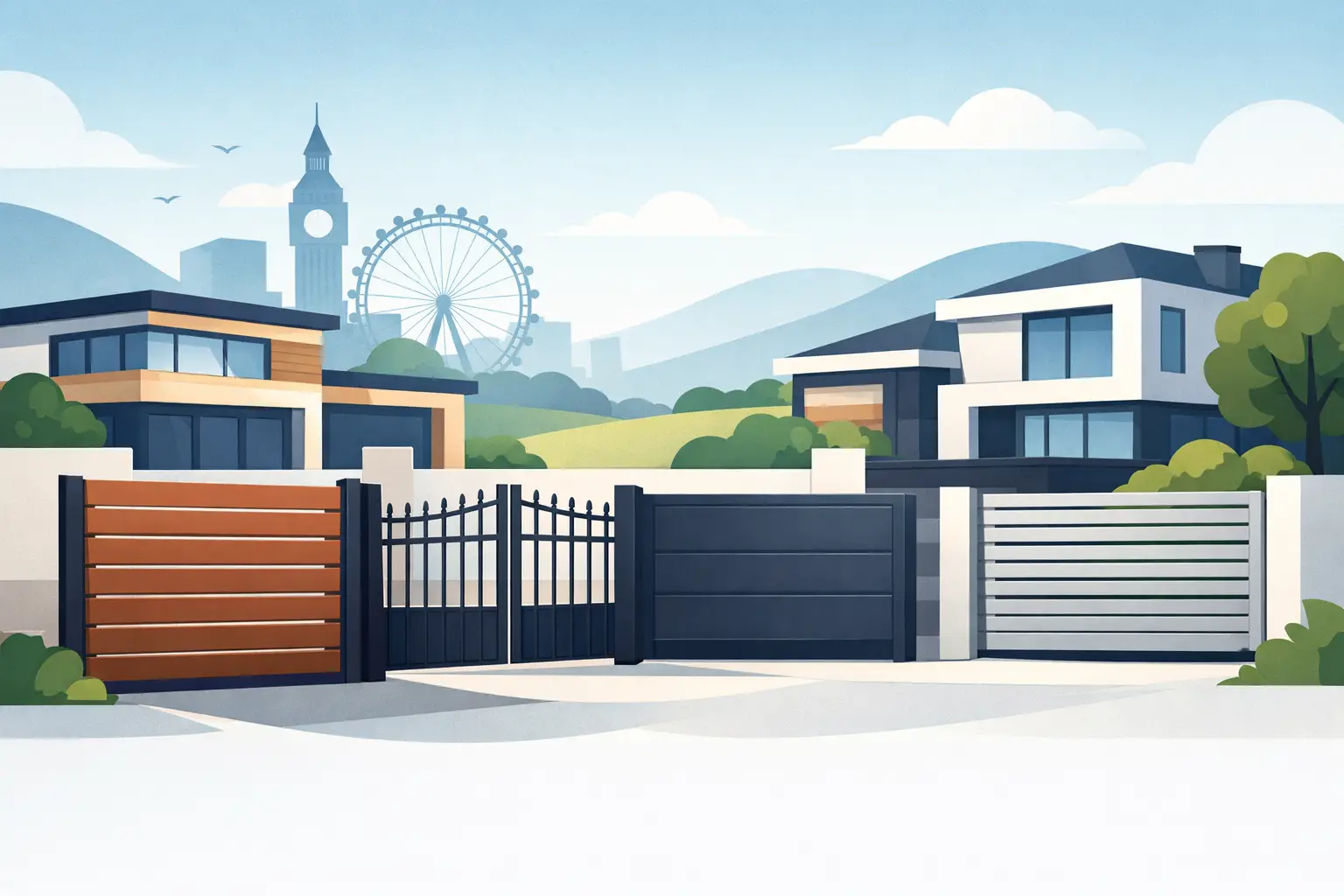
Top gate styles for modern homes

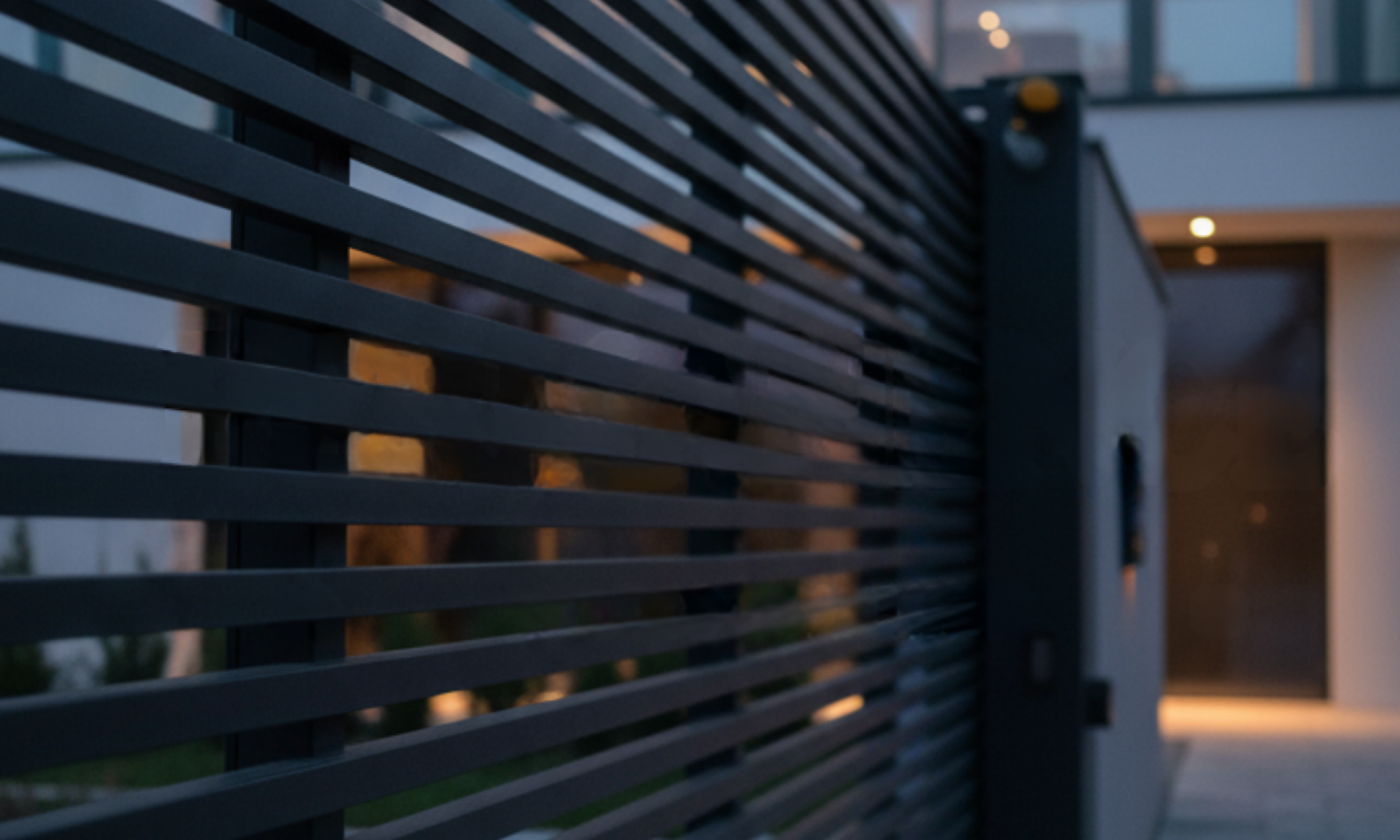
Horizontal slatted gates

Horizontal slatted gates are one of the most popular choices for contemporary homes. The repeated linear pattern gives a driveway or garden entrance a clean, architectural look, and the gap between slats can be adjusted to suit the required level of visibility and privacy.

Narrow gaps create a more enclosed boundary and help shield a driveway from the road. Wider spacing allows light and air through, which can be useful on a smaller plot or where a solid gate would feel too imposing. It is worth remembering that open slats offer less screening at an angle, so a gate that looks private when viewed head-on may be more transparent from the pavement or neighbouring property.

This style works especially well when paired with aluminium fencing or railings in the same finish, creating a considered perimeter rather than a gate that appears added as an afterthought.

Full privacy gates

A solid-panel aluminium gate offers the greatest visual screening. It suits homes on busier roads, properties with overlooked driveways and gardens where privacy matters as much as access control. With no open gaps, the gate gives the frontage a calm, substantial appearance and can make a compact outside space feel more enclosed.

The trade-off is weight in visual terms rather than physical weight. A tall, fully solid gate can dominate a narrow entrance or reduce natural light to a driveway. Breaking up the design with a horizontal reveal, a contrasting frame or a slightly lower pedestrian section can retain the privacy benefits while keeping the frontage balanced.

Full privacy designs are also a strong option for side gates, where they can conceal storage areas and offer a secure route between the front and rear of the property.

Vertical slatted gates

Vertical slats provide a slightly different look while still feeling current. They can add height to a low, wide frontage and are often a natural match for properties with vertical cladding, tall windows or upright architectural details. The design can be close-boarded for privacy or spaced to create a lighter boundary.

For period homes with modern alterations, vertical slats can be a useful middle ground. They are simpler than ornate designs but may sit more comfortably alongside traditional brickwork than a very wide horizontal profile. As with horizontal styles, spacing and gate height should be decided with the view from both inside and outside the property in mind.

Framed contemporary gates

A framed gate uses a clearly defined outer border around a slatted or solid central panel. This gives the design a sharper, more tailored appearance and can echo window frames, garage doors or aluminium bifold doors. It is an effective choice where the gate needs to make a strong visual statement without adding decorative scrolls or complicated features.

Framed designs are particularly useful for bespoke projects because the proportions can be tailored to the opening. A wide driveway may benefit from a deeper frame to prevent the gate looking too thin, while a narrow side entrance may need a slimmer profile to preserve usable access. This is one area where made-to-measure design can make a noticeable difference.

Mixed-panel and feature gates

For a more individual finish, some homeowners choose a gate that combines solid panels and slatted sections. For example, a lower solid panel can provide privacy around parked vehicles while an upper slatted section keeps the elevation lighter. A contrasting insert or carefully selected colour can also create a focal point.

This approach suits architectural homes and developments where a standard gate would look too generic. However, it needs restraint. Too many panel changes, colours or surface details can date quickly. Usually, one clear feature is enough to make the entrance distinctive.

Choosing between swing and sliding gates

The gate style is only half of the decision. The opening method has a major impact on day-to-day convenience and what will work on site.

Swing gates remain a popular choice for residential driveways. They can be supplied as single or double leaves and offer a traditional opening movement with a modern appearance. They need sufficient clear space inside the property for the leaves to open safely, and the driveway should be reasonably level across the swing path. On a sloping entrance, specialist planning may be needed.

Sliding gates are often the better solution where there is limited internal depth, a steep driveway or a need to avoid gates opening towards a public highway. They travel sideways along the boundary, making them well suited to wider entrances and properties where vehicle space is at a premium. A sliding system does require adequate run-back space and a suitable supporting structure, so it should be considered early in the project.

For pedestrian access, a matching aluminium side gate can provide a consistent finish while allowing everyday entry without operating the main driveway gate. This is particularly useful for deliveries, refuse collection arrangements and family use.

Colour, finish and the wider boundary

Anthracite grey remains a popular colour for modern aluminium gates because it complements white render, brick, stone and contemporary window systems. Black creates a stronger, more defined outline, while lighter greys can soften the look of a pale property. Bespoke colour options are worth considering where the gate needs to match existing doors, cladding or fencing.

A gate should also be considered alongside its posts, walls, fencing and railings. A high-quality gate can lose impact if the surrounding boundary is tired or mismatched. Coordinating aluminium fencing and pedestrian access points creates a more complete result and can simplify specification for new-build and renovation projects.

The finish should suit the setting too. A darker colour may show dust and water marks more readily in exposed locations, while a lighter shade can feel less severe on a small frontage. Aluminium remains a low-maintenance option, but an occasional clean with mild soapy water helps keep the finish looking its best.

Plan automation and access control early

Automation is easiest to integrate when it is included at the design stage. The gate type, weight, hinge or track arrangement, power supply and safety equipment all need to be compatible with the operator. A well-planned automated gate should open reliably, include appropriate safety measures and provide a practical manual release for power outages.

Intercom and access control choices also affect the specification. An Akuvox intercom system, keypad, remote controls or vehicle detection can be selected around how the property is used. For example, a family home may prioritise video calling and convenient pedestrian access, while a commercial site may need controlled entry for staff, visitors and deliveries.

Do not leave cable routes and power requirements until after landscaping or paving has been completed. Early planning avoids unnecessary disruption and helps ensure the finished installation looks as tidy as the gate itself.

Getting the proportions right

A modern gate should fit the opening, not simply fill it. Height, width, ground clearance and the relationship to adjoining walls all influence the finished appearance. Gates that are too low can feel insubstantial, while excessively tall gates may appear heavy and may be subject to planning considerations depending on their position and height.

Accurate site measurements are essential, particularly for sloping ground, irregular masonry or automated systems. For made-to-order work, discussing photos, measurements and intended use with a gate specialist can identify potential issues before manufacturing begins. Readymade options can be excellent value for standard openings, but bespoke aluminium gates offer greater control where the entrance has unusual dimensions or a specific design brief.

Whether you are replacing an ageing timber gate, completing a renovation or specifying a development, Aluminium Gates Direct can help match the style, configuration and access options to the property. Start with the entrance you have, the privacy you need and how the gate will be used every day – the right modern design will follow from those practical details.

Best Low Maintenance Perimeter Fencing

Best Low Maintenance Perimeter Fencing

If you are replacing a tired timber boundary or specifying fencing for a new development, the phrase best low maintenance perimeter fencing usually means one thing – you want a boundary that looks smart, lasts well and does not keep coming back as a job on your list. For most UK properties, that balance comes down to choosing the right material, not just the right style.

A fence can do several jobs at once. It sets the tone for the property, improves privacy, defines the edge of a site and, in many cases, supports wider access control with gates and entry systems. The challenge is that many traditional options look cost-effective at the start but need regular painting, treatment or repair once they are exposed to British weather.

What makes the best low maintenance perimeter fencing?

Low maintenance is not simply about avoiding annual painting. It also means the fence resists rot, rust, warping, fading and everyday wear without constant attention. A genuinely practical perimeter solution should be easy to clean, structurally reliable and suitable for the level of privacy or security the property needs.

For homeowners, that often means a clean-looking fence that still enhances kerb appeal after years outside. For developers and commercial buyers, it may mean a system that can be specified with confidence across multiple plots or larger sites, with predictable maintenance costs over time. In both cases, the cheapest option on day one is not always the most economical over ten or fifteen years.

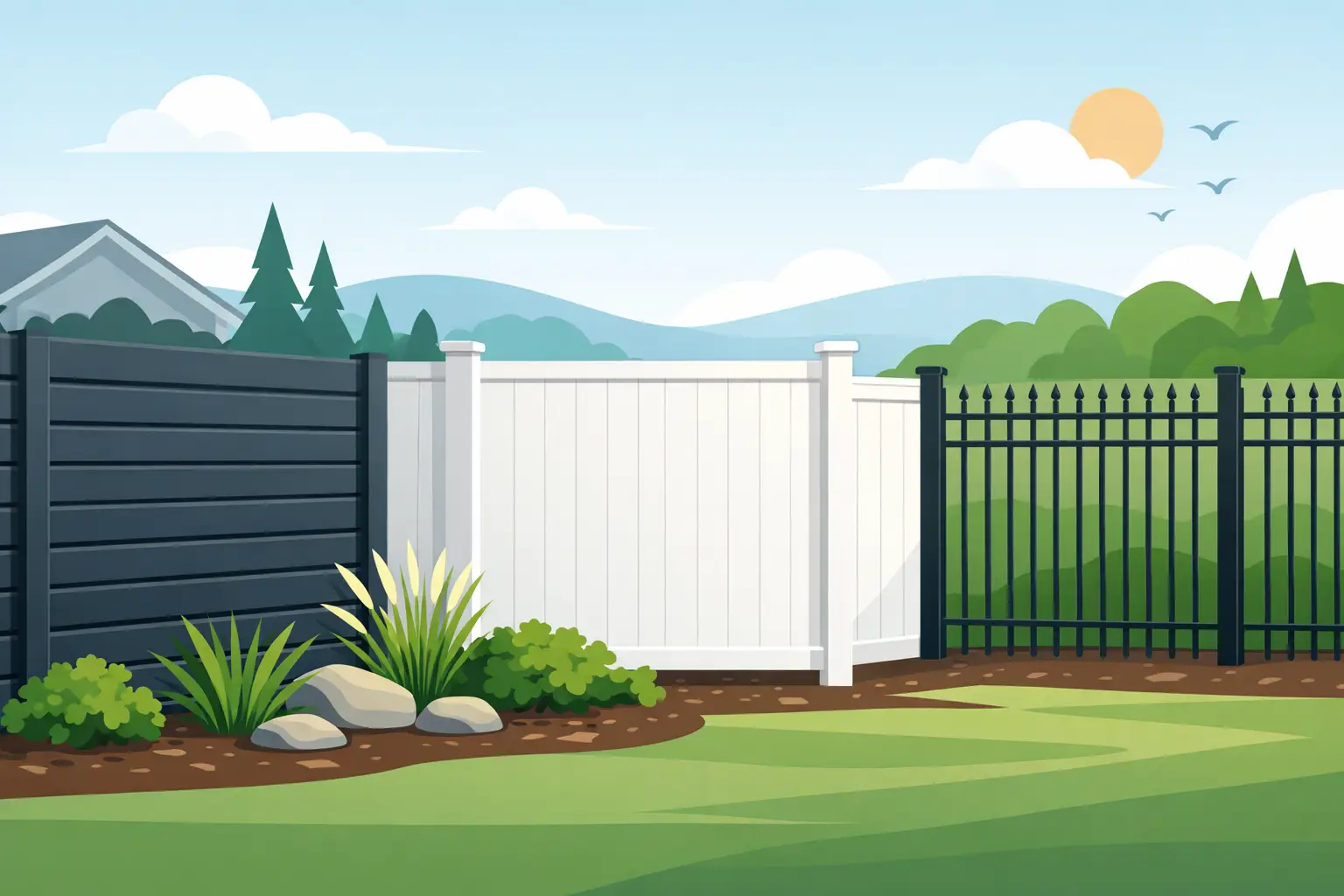
Best low maintenance perimeter fencing materials compared

There is no single right answer for every site. The best choice depends on exposure, budget, appearance, privacy requirements and whether the fencing needs to work alongside matching gates, railings or automation.

Aluminium fencing

Aluminium is one of the strongest options if you want low upkeep without compromising on appearance. It does not rot like timber, and unlike traditional steel it does not suffer from the same rust concerns. A quality powder-coated aluminium fence is designed to hold its finish well, cope with the weather and stay looking sharp with little more than occasional cleaning.

This is why aluminium works so well for both residential and commercial perimeter projects. It offers a modern, premium look, but it is also practical. Being lightweight helps with handling and installation, while its strength makes it suitable for a wide range of boundary and gate applications.

Another advantage is consistency. If you want fencing to match driveway gates, pedestrian gates or railings, aluminium gives you a more joined-up finish across the whole perimeter. That matters for homeowners investing in kerb appeal and for developers aiming for a polished result across a scheme.

The trade-off is upfront cost. Aluminium is rarely the lowest-priced option at purchase stage, but it often proves better value over time because it avoids the repeat cost of treatment, repainting and early replacement.

Composite fencing

Composite fencing is another popular low maintenance choice, especially where privacy is a priority. It is usually made from a blend of recycled wood fibres and plastic, designed to give some of the visual warmth of timber without the same level of upkeep.

For many gardens and residential boundaries, composite can be a sensible middle ground. It will not need staining or painting in the way timber does, and it tends to resist rot and insect damage well. It also suits contemporary schemes where clean lines and solid infill panels are preferred.

That said, not all composite products are equal. Lower-quality boards can be more prone to movement, fading or surface wear over time. It is also worth considering the overall design, because some composite systems look heavier or less refined than aluminium. If the fencing needs to pair neatly with entrance gates or a premium frontage, that visual difference can matter.

Steel fencing

Steel remains a strong option for certain perimeter applications, particularly where security takes priority over privacy. Palisade, mesh and rail-style systems are common on commercial and public-facing sites because they are durable and offer a clear physical barrier.

Galvanised and powder-coated steel can be relatively low maintenance, but it is not maintenance-free in the same way high-quality aluminium aims to be. Over time, chips, scratches or coating failures can create points where corrosion begins. In harsher coastal or exposed environments, that can become more relevant.

For industrial and higher-security settings, steel still has a clear place. For many homes and mixed-use developments, though, it can feel more functional than attractive unless carefully specified.

uPVC fencing

uPVC is often chosen for its low purchase price and minimal upkeep. It does not need painting, and it can work well in some garden settings where a simple, lightweight boundary is enough.

The limitation is that it tends to offer less strength and a less premium finish than aluminium or well-specified steel. It can also become brittle or discoloured with age, particularly where products are lower grade. For customers investing in a front boundary, entrance feature or long-term perimeter solution, it is not usually the strongest all-round choice.

Timber fencing

Timber is still widely used across the UK, mainly because it is familiar and often cheaper at the outset. It can look attractive when new, and for some traditional properties it suits the setting well.

The issue is maintenance. Timber fencing typically needs ongoing treatment to protect against moisture, rot and weathering. Boards can twist, posts can weaken and panels can deteriorate faster than expected in exposed conditions. If your priority is to reduce upkeep, timber is rarely the best answer, even if the starting price is appealing.

Choosing the right fencing for your property

The best low maintenance perimeter fencing for a suburban driveway is not always the best choice for a retail unit, flat scheme or commercial compound. That is why material selection should start with the job the fence actually needs to do.

If appearance leads the decision, aluminium is often the strongest fit. It delivers a cleaner, more architectural finish than many alternatives and works well across both modern and traditional properties, depending on the design. If privacy is the key requirement, composite or solid-panel aluminium systems may be more suitable than open rail styles.

If security is the first concern, the detail matters more than the headline material. Height, spacing, climbing resistance, gate integration and access control all play a part. In some commercial settings, a steel security system may still be appropriate. In others, aluminium fencing combined with well-matched gates, automation and intercom access can offer a neater and more user-friendly perimeter solution.

Budget also needs to be looked at properly. Many buyers compare fencing only on supply cost, but installation, lifespan and maintenance should be part of the same conversation. A lower-cost fence that needs regular repair or replacement may cost more over its life than a better product specified from the start.

Why aluminium stands out in the UK market

For many customers, aluminium comes closest to what they mean when they ask for the best low maintenance perimeter fencing. It suits the British climate, it offers a strong balance of durability and appearance, and it helps reduce the long-term hassle that often comes with more traditional materials.

This is particularly relevant where the fence is part of a wider entrance project. Matching fencing and gates create a more complete finish, and aluminium makes that easier to achieve across driveway gates, pedestrian access and boundary lines. It also supports bespoke design options, so the perimeter can be tailored to the style of the property rather than treated as an afterthought.

From a practical point of view, cleaning is straightforward and ongoing maintenance demands are low. That is valuable for private homeowners who do not want annual repainting jobs, but it is equally valuable for developers, landlords and site managers who need products that continue to present well with limited attention.

At Aluminium Gates Direct, this is exactly why aluminium remains a preferred choice across so many residential and commercial projects. It gives customers a durable, attractive perimeter solution that is easier to live with over the long term.

A smart specification saves money later

It is easy to focus on style first, especially when fencing forms part of a visible frontage. But long-term performance should carry just as much weight. Ask how the finish is applied, what level of weather resistance the material offers, how the fencing works with gates and whether the system can be tailored to the site.

A good perimeter should not create extra work a year after installation. It should still look right, function properly and suit the property as it matures. That is why careful specification matters more than simply choosing the cheapest panel in the merchant yard.

If you want a boundary that is built to last, low maintenance should be treated as a performance standard, not a marketing phrase. The right fence will save time, reduce future costs and help the whole property look better for longer.

Automatic Gate Opener Selection Guide

Automatic Gate Opener Selection Guide

A gate can look exactly right on paper, then become awkward to live with once automation is added. The motor is too small, the opening speed feels sluggish, the access control is overcomplicated, or the setup does not suit the way vehicles actually move in and out. That is why an automatic gate opener selection guide matters – not as a technical extra, but as a practical way to make sure the whole entrance works properly from day one.

For homeowners, that usually means balancing convenience, appearance and budget. For developers, builders and commercial buyers, it often means getting reliability, compliance and traffic flow right without creating avoidable maintenance issues later. In both cases, choosing the correct opener starts with the gate itself, not the motor catalogue.

What this automatic gate opener selection guide should help you decide

The right opener depends on five things working together: gate type, gate size and weight, frequency of use, site conditions and the access control you want to pair with it. If one of those is overlooked, the automation can feel like a compromise rather than an upgrade.

A lightweight aluminium gate often gives you more flexibility than heavier alternatives because the operator does not need to work as hard to deliver smooth, dependable movement. That can affect not only the motor choice, but also long-term wear, power consumption and how quietly the system runs. Even so, lightweight does not mean every opener will suit every gate. A wide double swing driveway gate has different demands from a compact pedestrian gate or a commercial sliding entrance.

Start with the gate format

Swing gate openers

Swing gates remain a popular choice for domestic driveways and many private developments. They suit properties where there is enough space behind the gate for the leaves to open inward, and they can offer a traditional, balanced look.

When selecting automation for a swing gate, the hinge geometry matters as much as the leaf size. The distance between the hinge point and the rear face of the post affects whether you need an articulated arm motor or a ram type operator. Deep brick piers, wide posts or awkward hinge positions can limit your options. This is one of the most common areas where buyers benefit from specialist advice, because a motor that looks suitable by headline specification may not fit the physical layout properly.

Swing automation also needs careful thought where the driveway rises sharply. If the gates open inward and the ground slopes up, standard movement can be restricted. In those cases, a sliding gate or a different hinge and automation arrangement may be more practical.

Sliding gate openers

Sliding gates are often the better answer when space is tight, the driveway is sloped, or security and controlled access are higher priorities. They are widely used on commercial sites, flat developments and modern private driveways where a clean, efficient opening action is preferred.

A sliding operator must be matched to the gate weight, the length of travel and expected duty cycle. It also relies heavily on the quality of the track, guide system and installation accuracy. If the gate does not roll freely, even a powerful motor will be under strain. For high-traffic sites, that can shorten service life and create unnecessary callouts.

Match the motor to real use, not ideal conditions

One of the easiest mistakes is choosing an opener purely by maximum gate weight. That figure is useful, but it is only part of the picture. Manufacturers rate automation systems differently, and the stated capacity may assume favourable conditions.

In practice, you should think about how often the gate will open each day, whether it will operate in exposed weather, and whether the entrance will be used by one household, several properties or regular delivery traffic. A domestic gate opening six times a day needs a different level of performance from a gate serving a shared courtyard or a commercial yard with repeated vehicle movements.

Duty cycle is especially important. Some operators are designed for light residential use, while others are built for intensive operation. Over-specifying can increase cost unnecessarily, but under-specifying usually costs more in the long run through wear, downtime and frustration.

Consider the site conditions before you choose

The entrance itself often decides more than the brochure does. Wind exposure, ground levels, available run-back space, post sizes and power supply all influence which system will work best.

A solid infill gate in a windy location places greater load on a swing operator than an open design would. A long driveway may give you flexibility with underground cabling and control positions, while a compact frontage may require a simpler and more contained layout. On rural properties, you may need to think about power availability and whether accessories such as GSM access or battery backup would make day-to-day use easier.

Commercial sites bring extra considerations. HGV access, repeated opening cycles, wider clear openings and integration with safety devices all need to be planned from the start. It is not only about opening the gate – it is about controlling movement safely and predictably across the whole site entrance.

Safety is not an optional extra

Any automatic gate system must be designed with safety in mind. That includes the right control logic, obstacle detection, safety edges, photocells and force settings, depending on the gate type and operating environment.

For domestic buyers, safety can feel secondary to convenience until they start thinking about children, pets and visitors. For commercial and multi-user settings, there is even less room for error. A good specification considers who will use the gate, who may be near it, and how the system behaves if something interrupts its travel.

This is another reason why the opener should never be chosen in isolation. The motor, controls and safety devices are part of one system, and they need to be compatible with both the gate design and the site layout.

Access control should suit how you actually use the entrance

The opener gets the gate moving, but the access control decides how convenient the entrance feels every day. That might be as simple as remote fobs for a private driveway, or it could involve keypads, video intercoms, GSM calling, timed access or integration with wider site security.

The right answer depends on the user profile. A family home may need straightforward operation for multiple drivers and occasional visitors. A block development may need managed access for residents and delivery drivers. A commercial site may require staff entry, audit trails and separate control for pedestrian and vehicle access.

There is no point fitting advanced automation if the access method is frustrating. It is usually better to choose a system that is easy to manage and reliable in everyday use than one packed with features that rarely get used.

Budgeting properly means looking beyond the motor

When buyers compare prices, they often focus first on the opener kit. In reality, the total cost depends on more than the motor itself. Control boards, safety devices, access equipment, cabling, groundwork, posts, installation time and commissioning all affect the final figure.

That is why transparent pricing matters. A cheaper opener does not always mean a better-value system if it needs more adjustment, offers lower duty performance or is not well suited to the gate. Equally, the most expensive setup is not automatically the right one for a modest domestic entrance.

A sensible budget should reflect the full system and the expected level of use. For many buyers, aluminium gates help here because the lower weight can support efficient automation without sacrificing strength, durability or appearance.

Bespoke or readymade – does it change the opener choice?

Sometimes it does. A readymade gate can be a practical route when the opening is straightforward and the priority is a faster, cost-conscious solution. A bespoke gate becomes more valuable when the opening is unusual, the design needs to match an existing boundary, or the automation requirements are more complex.

Custom sizing and fabrication can make automation more effective because the gate can be designed with the operator, hinge positions, locking and cable routes in mind from the outset. That joined-up approach often avoids compromises later.

For customers who want both supply and installation support, working with a specialist such as Aluminium Gates Direct can make the process more manageable. It helps ensure the gate, automation and access control are considered together rather than as separate purchases.

The best opener is the one that suits the whole entrance

A good automatic gate system should feel uncomplicated once it is in use. It should open smoothly, close safely, respond reliably and fit the character of the property or site without constant adjustment. That result usually comes from asking the right questions early, not from choosing the strongest motor or the cheapest kit.

If you are weighing up swing versus sliding, domestic versus intensive use, or readymade versus bespoke, the most useful next step is often to look at the gate opening, traffic pattern and control requirements together. Get that part right, and the opener becomes much easier to choose – and much easier to live with.

Gate Installation Planning Guide for UK Buyers

Gate Installation Planning Guide for UK Buyers

A gate project usually looks simple until the practical questions start. How wide should the opening be? Will the ground allow a swing gate to open cleanly? Do you need automation now, or should you prepare for it later? A good gate installation planning guide helps you answer those questions before you commit to a design, which is often what separates a smooth installation from an expensive rethink.

For homeowners, developers and commercial buyers alike, the best results come from planning the gate as part of the wider entrance or perimeter, not as a standalone product. The gate itself matters, but so do levels, access, posts, power, safety and how the system will be used every day. Getting those details right early gives you more choice and better value.

Why planning matters before you choose a gate

Most gate problems are not really gate problems. They are site problems, measurement problems or expectation problems. A gate may be the right style and size on paper, but if the entrance slopes sharply, the pillars are unsound or the available run-back for a sliding gate is too short, the specification needs to change.

Planning early also helps you balance appearance with function. A pair of driveway gates might suit a wider opening and create a more traditional look, while a single leaf gate can work well where space allows and daily use is lighter. Sliding gates are often the better answer where inward or outward swing is restricted, but they need enough lateral space and the right groundwork. There is rarely one universal solution. It depends on the property, the opening and how the gate will be used.

Gate installation planning guide: start with the site

The first step is to assess the entrance properly. Width is the obvious measurement, but it is not the only one that matters. You also need to understand the height difference across the opening, the surface finish, the condition of any existing brickwork or posts and whether vehicles need to turn or stop safely while the gate opens.

For residential driveways, think about the largest vehicle likely to use the entrance. A gate that comfortably suits a family car may feel restrictive for a van, caravan or wider SUV. For commercial sites, access planning should account for delivery vehicles, frequency of use and any requirement for controlled entry.

Ground levels deserve close attention. Swing gates need clearance to open, so rising ground behind the gate can limit leaf height or opening angle. Sliding gates avoid that issue, but they introduce other considerations such as track position, run-back length and support structure. If the site is exposed, wind loading should also be considered, especially with taller and more solid gate designs.

Choosing the right gate type for the opening

Once the site is understood, the gate format becomes much easier to narrow down. Swing gates remain a popular choice for homes because they offer a clean, traditional entrance and suit many property styles. They can be supplied as single or double leaf gates depending on the width and layout.

Sliding gates are often chosen for larger openings, sloping driveways or locations where space in front of or behind the gate is limited. They can also be a strong option for commercial settings where controlled access and reliable operation are priorities.

Pedestrian gates should not be an afterthought. In many cases, a separate access gate improves convenience and reduces wear on the main entrance gate. It can also support safer movement for staff, visitors or family members without opening the full driveway entrance every time.

Material choice matters too. Aluminium is increasingly preferred because it combines strength with a lighter operating weight and requires very little maintenance compared with timber or steel. That lower maintenance burden is especially valuable for busy households and commercial sites that want long-term performance without regular painting or treatment.

Measurements, posts and structural support

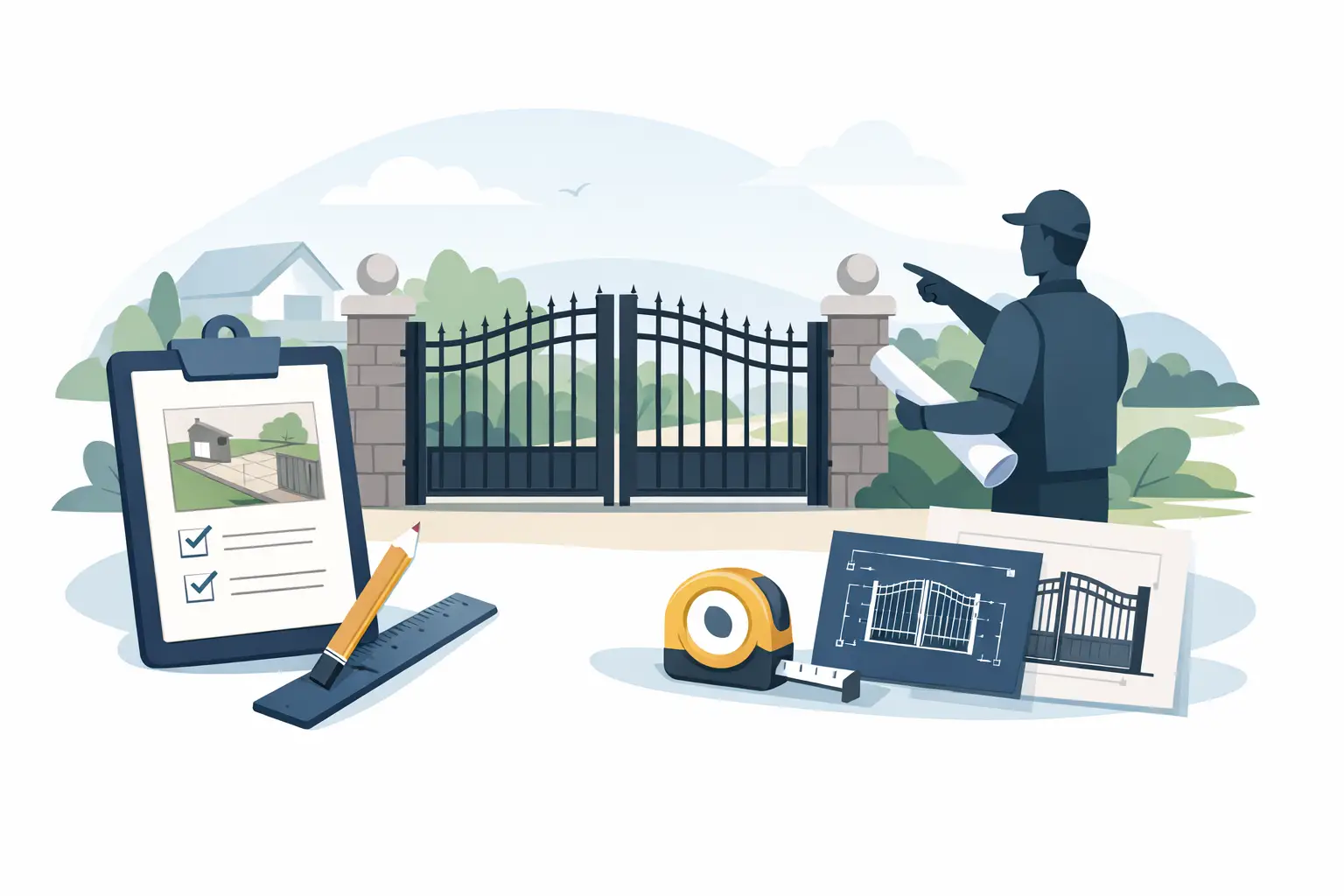
Accurate measurement is one of the most important parts of any gate installation planning guide. A made-to-order gate can only perform properly if the opening has been measured correctly and the supporting structure is suitable.

It is not just a case of measuring between two points once. Openings should be checked in more than one place because walls and pillars are not always perfectly square. You also need to allow for hinges, latch positions, ground clearance and any automation hardware. A narrow discrepancy can affect fit, appearance and operation.

The support structure should be assessed with the same care. Existing brick pillars may look sound but may not be suitable for the weight and forces of a new gate, especially if automation is being added. In some projects, new posts or reinforced supports are the safer and more reliable option. This is particularly relevant for wider gates and high-use commercial entrances.

Planning for automation and access control

Many buyers know they want an automated gate. Others start with a manual setup and consider adding automation later. Both routes can work, but it is usually more cost-effective to plan for automation from the beginning, even if the motors are installed at a later stage.

That means thinking about power supply, cable routes, control points and safety devices before groundwork is completed. Retrofitting these elements can add avoidable disruption and cost. If intercom access is required, the position of the gate, pedestrian route and property entrance should all be considered together.

Automation is not only about convenience. It can also improve access control, privacy and site management. For commercial buyers, integration with intercom or entry systems may be central to the project. For homeowners, it may simply mean easier day-to-day use and better security. The right setup depends on how often the gate will operate, who needs access and whether the site needs timed, remote or monitored entry.

Groundworks, drainage and installation access

A gate is only as dependable as the groundwork beneath and around it. Poor foundations, inadequate drainage or restricted installation access can delay a project and affect long-term performance.

Groundworks vary by gate type. Swing gates may require secure hinge posts and suitable stop positions. Sliding gates often need a precisely prepared track area or cantilever support structure, depending on the system. In both cases, stable foundations and correct alignment are critical.

Drainage is often overlooked. If water collects around posts, tracks or motor foundations, it can shorten the life of components and affect operation. This is especially important on driveways with existing drainage issues or low points near the entrance.

Installation access also needs planning. Materials, equipment and installers need a workable route to the gate position. On some properties, restricted access may influence the order of works or the type of equipment used during fitting.

Budgeting properly without losing sight of value

Gate costs vary widely because projects vary widely. Size, style, finish, automation, intercoms, groundwork and installation complexity all affect the total figure. A readymade gate may suit a straightforward opening and tighter budget, while a bespoke gate may be the better fit where measurements, design requirements or site conditions are more specific.

The key is to compare like with like. A lower initial gate price does not always mean a lower project cost if additional structural work, site preparation or upgrades are likely later. Equally, paying for features you do not need is not good value either.

For many buyers, aluminium offers a sensible long-term balance. It is durable, lightweight and resistant to weathering, which reduces ongoing maintenance costs and helps preserve appearance over time. That makes it a practical choice for buyers who want kerb appeal and reliability without regular upkeep.

Working with a supplier and installer

A good supplier should help you narrow the options based on the site, budget and intended use, not simply push a standard answer. That support is valuable whether you are specifying a single garden gate or a larger automated entrance for a development or commercial premises.

It also helps to deal with a specialist that can support both product selection and installation planning. Aluminium Gates Direct, for example, works with customers nationwide and can help align gate choice, bespoke requirements and installation support through its partner network. That joined-up approach reduces the risk of gaps between what is ordered and what the site actually needs.

The more information you can provide at the enquiry stage, the better the guidance tends to be. Clear measurements, photos, notes on levels and details about automation or intercom requirements can all help shape a more accurate recommendation.

Common planning mistakes to avoid

The most common mistake is choosing on appearance alone. Style matters, but a gate still needs to work with the opening, the ground and the access pattern. Another frequent issue is underestimating the importance of posts, foundations and power supply.

Buyers also sometimes specify for today without thinking about tomorrow. If you may want automation later, or if vehicle sizes are likely to change, it makes sense to factor that in now. Planning ahead usually costs less than altering the setup after installation.

A gate should feel like a well-resolved part of the property, not a compromise fitted around avoidable oversights. When the planning is right, the final result tends to look better, operate better and last longer. If you are at the early stage of a project, that is the right moment to ask the practical questions and get the entrance working properly on paper before anything is ordered.

Choosing Ornate Aluminium Garden Gates

Choosing Ornate Aluminium Garden Gates

A garden gate does more than mark an entrance. It sets expectations before anyone steps onto the path, frames the view of the property, and has to keep doing that job in all weathers without becoming a maintenance project of its own. That is exactly why ornate aluminium garden gates appeal to so many UK homeowners and trade buyers – they offer decorative detail without the ongoing issues often associated with timber or traditional wrought iron.

For some properties, the right ornate gate adds a finishing touch that makes the front garden, side access or rear boundary feel complete. For others, it is part of a wider specification where appearance matters just as much as durability, privacy and ease of use. The best results come from treating the gate as a practical product first and a design feature second, because that is what ensures it still looks right years down the line.

Why ornate aluminium garden gates make sense

The word ornate can sometimes suggest something purely decorative, but with aluminium that is only part of the story. An ornate design can include scrollwork, finials, shaped tops, decorative infill panels or more traditional styling cues, while still delivering the everyday benefits buyers now expect from a modern gate.

The main advantage is low maintenance. Aluminium does not rot, warp or suffer in the same way as timber, and it does not carry the same rust concerns people often worry about with steel. For busy homeowners, landlords and developers, that matters. A gate should improve the property, not create a repainting schedule.

Weight is another practical benefit. Aluminium is lighter than many alternatives, which can make handling, fitting and daily operation easier. That lighter weight does not mean it feels flimsy when manufactured properly. A well-made aluminium gate can provide the strength needed for regular use while reducing strain on hinges, posts and automation components.

Then there is appearance. Decorative gates are often chosen because they soften boundaries and add character, particularly on period-style homes, landscaped gardens and higher-end residential developments. The appeal of aluminium is that you can achieve a more classic or decorative look with a material better suited to modern expectations around durability and upkeep.

What to consider before you choose a design

The most common mistake is choosing a gate purely from a photo. A design might look impressive in isolation but feel too busy once it is placed against brickwork, railings, render or planting. Good gate selection is about proportion, finish and context.

Start with where the gate will sit. A front garden gate usually plays a more visible role in kerb appeal, so decorative detailing may be more important. A side gate may need to prioritise security and privacy while still matching the wider property. In shared developments or managed sites, the gate may also need to align with existing boundary treatments and planning expectations.

Height and openness matter as well. More open ornate designs can create an elegant look and preserve visibility into the garden, which suits many front boundaries. A more enclosed style can give greater privacy, but it changes the visual weight of the entrance. There is no universal right answer here. It depends on whether your priority is presentation, screening, security or a balance of all three.

You should also think about who will use the gate and how often. A pedestrian garden gate serving a side passage has different demands from a statement entrance gate leading from a front path. Regular use by children, tenants, delivery drivers or maintenance teams may influence latch choice, width, hinge setup and overall practicality.

Matching ornate aluminium garden gates to the property

The best gate usually looks as though it belongs there. That does not always mean copying every period detail of the house, but it should feel in step with the building rather than competing with it.

For traditional homes, ornate aluminium garden gates often work well with arched tops, decorative spearheads or classic railing-inspired designs. These details can echo older metalwork styles while avoiding the maintenance burden that often comes with older materials. For newer homes, a simpler ornamental approach is often more effective. A clean frame with selected decorative elements can add character without looking overdone.

Colour choice has a big influence on the final result. Black remains a popular option because it suits both traditional and contemporary settings, but grey, anthracite and other powder-coated finishes can create a more modern appearance. The right finish should work with the property’s windows, doors, fencing and railings, not just the gate on its own.

This is where bespoke options can make a real difference. Standard sizes and set designs suit many projects, but some properties need a gate tailored to unusual openings, sloping ground or a very specific look. Bespoke manufacturing allows buyers to match dimensions, decorative style and finish more closely to the site, which can be especially valuable on renovation projects and architect-led schemes.

Practical details that affect performance

A decorative gate still has to perform day after day, so specification matters. The opening width needs to be correct, but so does clearance, hinge positioning and post suitability. If the ground rises, falls or sits unevenly, that needs to be accounted for early rather than corrected later.

Latch and locking arrangements should reflect how secure the gate needs to be and who is accessing it. Some residential buyers want a simple and dependable garden gate latch. Others need a lockable solution for side access. On larger or more premium schemes, the gate may need to coordinate with railings, fencing or wider perimeter treatments for a consistent result.

Finish quality is also worth close attention. Powder coating is a major part of what makes aluminium so practical, and a properly finished gate will help protect appearance over time. In coastal or more exposed locations, discussing environmental conditions at the point of enquiry is sensible, as site exposure can affect the best specification.

Installation is another area where shortcuts tend to show. Even a high-quality gate can underperform if the posts are not right, the hinges are poorly aligned, or the opening has not been measured correctly. For homeowners, having access to expert guidance can remove a lot of uncertainty. For trade buyers, dependable specification support helps avoid delays and remedial work on site.

Readymade or bespoke?

This usually comes down to timescale, budget and how specific the project requirements are. A readymade gate can be a very good fit when the opening is standard and the design brief is straightforward. It keeps the buying process simple and can be the quickest route to a finished solution.

Bespoke is often the better route where dimensions are unusual, the property has a strong architectural character, or the buyer wants a closer match to existing railings and boundary features. It can also be the right choice when a project calls for a particular level of detail that off-the-shelf products cannot offer.

Neither option is automatically better. The practical question is whether the gate fits the site properly and delivers the look and performance required. A good supplier should be able to advise honestly on that point rather than pushing every buyer towards the same route.

When style and security need to work together

Garden gates are not usually the primary security feature on a property, but they still play an important role in controlling access and defining boundaries. Ornate designs do not have to mean compromised security. The right specification can combine decorative detailing with solid construction, secure locking and dependable hardware.

For residential customers, this often means a gate that deters casual access while keeping the property welcoming. For developers and commercial buyers, presentation can matter just as much as perimeter control, especially in schemes where first impressions count. In those cases, a decorative aluminium gate can support a more polished frontage without adding avoidable maintenance obligations for site teams or occupiers.

Where wider access control is part of the brief, the gate should be viewed as one part of the whole entrance setup. That may include matching railings, larger gates elsewhere on the site, or future automation and intercom considerations. Planning these points early usually leads to a cleaner and more cost-effective result.

Buying with confidence

Most buyers are not choosing gates every week, so clear guidance matters. Measurements, design options, finishes, lead times and installation planning all affect the final outcome. Whether you are replacing an ageing timber gate at home or specifying boundary solutions across multiple plots, the value lies in getting a gate that suits the site rather than simply picking the nicest-looking pattern.

At Aluminium Gates Direct, that usually starts with understanding the opening, the style of property and the level of support required. Some customers need a straightforward decorative gate at a fair price. Others need a more bespoke solution, installation support and coordination with a wider perimeter project. In both cases, the right advice saves time and helps avoid buying twice.

If you are considering ornate aluminium garden gates, focus on the balance between design, durability and fit for purpose. The most successful gate is not always the most elaborate one. It is the one that looks right on the property, works properly every day and still feels like a good decision long after it has been fitted.

Gate Access Control Review for UK Buyers

Gate Access Control Review for UK Buyers

When a gate looks right but the access control is wrong, problems show up quickly. Deliveries get missed, residents get frustrated, staff find workarounds, and a smart entrance starts to feel awkward to use. That is why a proper gate access control review matters before you commit to an intercom, keypad, fob system or app-based entry.

For homeowners, the priority is usually convenience, privacy and kerb appeal. For commercial sites, it is more often control, auditability and reliable day-to-day operation. In both cases, the best system is rarely the one with the longest feature list. It is the one that suits the gate type, the people using it and the level of security the site actually needs.

What a gate access control review should cover

A useful gate access control review is not just a look at hardware. It should assess how the entire entrance works in practice. That includes the gate itself, the automation, the entry method, the power supply, visitor communication and the safety measures around the opening and closing cycle.

On a residential driveway, that might mean checking whether a video intercom is more practical than a simple audio unit, or whether a keypad will become inconvenient for family members coming and going at different times. On a commercial entrance, it might mean deciding if token access is enough or whether you need time-based permissions, event logs and the ability to manage multiple users remotely.

The other point often missed is compatibility. Not every access control option works equally well with every gate configuration. Swing and sliding gates have different operating characteristics, and the access equipment needs to be matched to the automation and site layout rather than added as an afterthought.

Gate access control review: the main system types

Most buyers are choosing between a small number of access methods, sometimes as a single solution and sometimes in combination.

Intercom systems

Intercoms remain one of the most practical choices for both domestic and commercial properties because they deal with the basic question every gate has to answer – who is outside, and should they be allowed in?

Audio intercoms are straightforward and cost-effective, but video has clear advantages. Being able to see the caller gives extra reassurance, particularly at larger homes, shared entrances and business premises where multiple visitors arrive throughout the day. Modern systems can also route calls to an indoor monitor, a mobile app or both, which adds flexibility if the property is occupied irregularly.

The trade-off is that more capable systems usually mean more setup considerations. Signal quality, monitor location, internet dependency and app configuration all need to be considered properly. A better specification is not automatically a better result if the system becomes harder for the end user to manage.

Keypads

Keypads are popular because they are simple to understand and relatively affordable. They work well where several regular users need access without carrying extra devices, and they can be especially useful on side gates, smaller developments and staff entrances.

Their weakness is predictable. Codes get shared. Codes get forgotten. Codes often stay in use longer than they should. For low to moderate security needs, that may be acceptable. For higher-risk sites or places with staff turnover, it can become a weak point unless codes are updated regularly and supported by another entry method.

Fobs, cards and readers

Fob and card systems give tighter user control than a standard keypad. Access can be added or removed for individual users, which is useful for blocks of flats, offices, schools and managed commercial spaces. If someone loses a fob, that credential can usually be deactivated without changing the whole system.

This approach works well where management needs a cleaner structure, but it does depend on users carrying the right device. Lost fobs, replacement costs and admin time are part of the equation. For some residential buyers, that feels unnecessary. For commercial operators, it is often worth it.

App and GSM entry systems

Mobile-based access control has become more attractive because it offers remote management and fewer physical credentials to issue. GSM and app-enabled systems can let you open a gate from your mobile phone, grant access remotely and in some cases review usage.

This can be very useful for busy households, holiday lets, managed sites and businesses that do not always have someone sitting near the entrance. The main consideration is reliability. Mobile signal, internet availability and user confidence with the technology all matter. A system that looks convenient on paper can become irritating if it depends on poor coverage or if different users struggle with the app.

Matching access control to the gate and property

The best access setup depends on the physical gate as much as the electronics. A heavy steel gate, for example, behaves differently from a lightweight aluminium gate. Aluminium offers a real advantage here because it is strong yet lighter than many alternatives, which can reduce strain on automation components and support smoother operation over time.

That does not mean every aluminium gate needs the same access system. A sliding gate on a commercial site may call for a different access strategy from a pair of swing gates on a private driveway. Visitor flow, available space, cabling routes and the distance between the gate and the building all shape what makes sense.

For a long driveway, a video intercom with remote answering can be far more practical than a basic keypad. For a shared access point, controlled user permissions may matter more than appearance. For a garden or side entrance, a simpler and more durable solution may be entirely appropriate.

Security, safety and ease of use

Good access control is about more than keeping the wrong people out. It also needs to work safely and without causing hassle for authorised users.

Safety is especially important on automated gates. Photocells, obstacle detection and correctly configured opening and closing forces are not optional extras. They are part of making the entrance suitable for regular use. If the gate automation and access control have not been considered together, you can end up with a system that is technically secure but awkward or unsafe in practice.

Ease of use matters just as much. A gate that takes too long to answer, needs multiple steps to open or confuses occasional visitors will frustrate people quickly. That is often where professional advice proves its worth. On paper, many systems look similar. In real use, small differences in layout, call handling and control options make a noticeable difference.

Cost versus value in a gate access control review

Price always matters, but lowest upfront cost is not the same as best value. A cheaper access method may be perfectly suitable for a straightforward domestic installation. Equally, it may become expensive if it needs replacing early, lacks the right functions or creates avoidable callouts.

When reviewing costs, it helps to separate hardware price from total project cost. Installation complexity, groundwork, power supply, integration with automation and future maintenance all affect the final figure. So does the consequence of getting it wrong. Replacing a poor-fitting access system after installation is usually far more expensive than choosing properly in the first place.

This is where a tailored approach makes sense. Some buyers need a bespoke solution with integrated intercom and automation. Others are better served by a ready-to-deliver gate paired with a straightforward control method. The right answer depends on site conditions, budget and how the gate will actually be used.

Common mistakes buyers make

One common mistake is choosing access control purely on features. Remote opening, video feeds and app control sound attractive, but they are only worthwhile if they improve daily use. Another is underestimating the importance of installation quality. Even good equipment can perform poorly if cabling, positioning or setup have been handled badly.

Buyers also sometimes focus on the gate style first and leave access decisions until late in the process. In reality, the best results come when gate design, automation and entry system are planned together. That is especially true on bespoke projects, where you have the opportunity to get the details right from the outset.

A final mistake is not thinking far enough ahead. A family home may later need parcel access, trades access or better control for older relatives. A business may grow and need more user credentials or better visitor handling. Choosing a system with sensible room to adapt can save time and money later.

How to choose the right setup

Start with the people who will use the gate every day. Think about residents, staff, visitors, deliveries and contractors. Then consider the site itself – gate type, distance to the building, available services, expected traffic and security level.

From there, narrow the options to the systems that suit both the property and the users. A domestic driveway may benefit most from a reliable video intercom with simple remote access. A commercial entrance may need structured credentials and stronger management control. Neither is universally better. It depends on the job the system needs to do.

At Aluminium Gates Direct, that is usually where practical guidance makes the difference. When the gate, automation and access control are treated as one joined-up package, buyers are more likely to end up with a system that looks right, performs properly and stays easy to live with.

The best gate access control review is the one that leads to fewer compromises after installation. If you choose with real use in mind, the entrance will feel less like a piece of technology and more like part of the property working exactly as it should.