

How to Compare Gate Quotes Without Missing Costs

How to Compare Gate Quotes Without Missing Costs

A gate quote can look competitive until the details start to emerge: posts are extra, automation has not been included, groundwork is assumed, or the stated size is not the opening size you measured. Knowing how to compare gate quotes properly means looking beyond the final figure and checking that every supplier is pricing the same job.

For a driveway, garden entrance or commercial perimeter, the right gate should suit the property, provide the level of access control required and remain dependable for years. A clear comparison helps you choose on value, specification and support, rather than simply selecting the lowest headline price.

How to compare gate quotes: start with a fixed brief

The fairest way to compare quotations is to give each supplier the same information. If one company has priced a standard double swing gate with manual operation and another has allowed for a bespoke automated system with new posts, their totals will never be directly comparable.

Set out the opening width and height, whether the measurement is between existing posts or walls, the gate style you prefer, and whether it is for pedestrians, vehicles or both. Include photographs of the entrance, a simple sketch where helpful, and any changes in ground level. For a sliding gate, mention the clear run-back space available to one side. For swing gates, identify whether the leaves will open inwards or outwards and whether the driveway slopes.

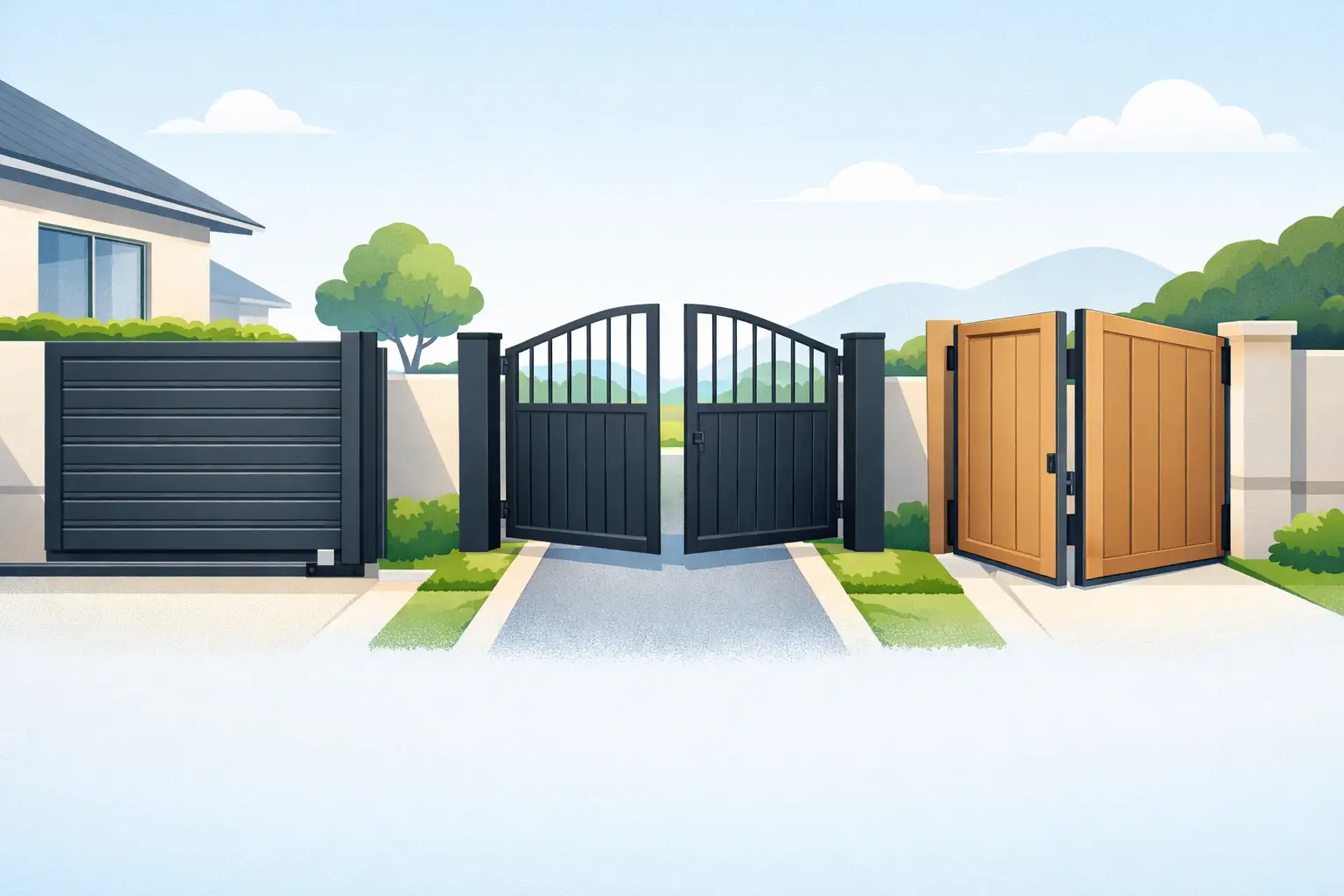
It also helps to decide early whether you need a readymade size or a made-to-measure design. Readymade aluminium gates can be a sensible, cost-effective choice where the opening suits a standard format. Bespoke gates offer more freedom over dimensions, infill, colour, layout and access arrangements, but the price should reflect the extra design and manufacturing work involved.

Check exactly what the quote includes

A useful quote does more than state “aluminium gate” and a total price. It should make the scope clear enough for you to see what you are buying and what still needs to be arranged.

Start with the gate itself. Confirm the number of leaves, overall dimensions, frame and infill design, finish, colour and direction of opening. If the design includes decorative sections, privacy screening or matching side panels, make sure each element is named rather than assumed.

Then look at the supporting components. Posts, hinges, latches, drop bolts, locks and fixings may be included, supplied separately or excluded because existing brick piers will be used. None of these approaches is automatically wrong, but the detail matters. A gate supplied for installation onto sound existing piers is different from a complete package with aluminium posts and concrete foundations.

Ask whether VAT is included and whether delivery to your postcode is included. Larger gates may require specialist handling, and delivery arrangements can vary depending on product size and location. A quotation should also state whether unloading support is required at the property.

For projects with several elements, such as gates, fencing, railings and an access-control system, request an itemised quotation. It is easier to adjust a design or manage a budget when you can see the cost of each part rather than one combined figure.

Compare material specification, not just the word “aluminium”

Aluminium is valued because it is lightweight, strong, corrosion-resistant and low maintenance. However, aluminium gates are not all specified in the same way. Differences in frame construction, wall thickness, reinforcing, welding, hardware and coating can affect strength, appearance and long-term performance.

Ask each supplier what is included in the gate construction and how the finish is applied. A quality powder-coated finish gives you a durable surface in a wide choice of colours, but you should still check the proposed RAL colour, sheen level and whether a special finish carries an additional charge or lead time.

Gate weight is another practical consideration. A lightweight aluminium gate can reduce strain on hinges and automation equipment, yet it must still be engineered appropriately for its width, height and exposure to wind. A wide, solid privacy gate in an exposed location may need a different solution from an open-slatted garden gate. This is where a lower quote may indicate a simpler specification rather than a like-for-like saving.

Treat automation as a separate system

Automation is often where gate quotations become difficult to compare. One quote may include motors only, while another covers safety devices, control equipment, cabling, commissioning and remote controls. For an automated gate, every component has a role in safe, reliable operation.

Check whether the quote allows for the type of gate you have chosen. Swing gate automation and sliding gate automation use different equipment, and the correct choice depends on gate weight, travel, usage levels and site layout. Commercial or shared-access sites may require a higher-duty system than a typical private driveway.

A complete automation quotation should explain the access method. This could include key fobs, keypad entry, vehicle detection, telephone-based controls or an Akuvox intercom system. It should also identify safety measures such as photocells, safety edges and warning devices where required by the installation. Do not assume these are included because the word “automated” appears on the quote.

Electrical works deserve particular attention. Find out who is responsible for bringing a suitable power supply to the gate position, trenching and ducting cables, and making good afterwards. If these items are provisional, ask for the assumptions in writing. They can be a material part of the final installed cost.

Separate supply, installation and groundwork costs

A supply-only gate price can be ideal for a builder, developer or capable installer who already has a clear programme and site team. For many homeowners, however, the installed cost is the figure that matters most. Compare like with like by separating product supply, delivery, installation, automation and groundwork.

Installation quotes should make clear whether they include removing an existing gate, setting new posts, excavating and concreting foundations, fitting the gate, adjusting hardware and testing automated operation. Ground conditions can only be fully confirmed on site, so some variation may be unavoidable. The key is to understand what has been allowed for and what could change the price.

If an installation partner is involved, ask who will survey the site, who is your point of contact, and what happens if an issue is found during fitting. Aluminium Gates Direct can support customers with product selection and access to nationwide installation partners, helping to keep the gate specification and installation requirements aligned.

Look at lead times, warranties and aftercare

A cheaper quote is less attractive if it cannot meet your build schedule or if the terms are unclear. Check the expected lead time from approval, whether the gate is made to order, and what information is needed before manufacturing begins. Bespoke products may need final measurements and design sign-off before they can be released.

Read the warranty terms rather than only comparing the warranty length. Find out what is covered for the gate structure, powder coating, hardware and automation equipment. Ask what maintenance is expected to keep the warranty valid. Aluminium requires far less upkeep than timber or untreated steel, but hinges, locks, tracks and automation systems still benefit from periodic checks and cleaning.

Aftercare is especially relevant for automated gates. Establish who to contact for technical support, replacement remotes, servicing or fault diagnosis. A supplier that can explain the process clearly before purchase is usually easier to work with after installation as well.

Use a simple quote comparison sheet

Put each quotation side by side and compare the same headings: gate size and style, material and finish, posts and hardware, delivery, installation, automation, electrical work, VAT, lead time and warranty. If one quote is missing an item, mark it as “not stated” rather than assuming it is included.

Then ask each supplier to clarify any gaps before making a decision. This is not about forcing every quote to look identical. One supplier may recommend stronger posts, a different opening arrangement or a better automation package for a valid site-specific reason. The aim is to understand why the price differs and whether that difference benefits your project.

The best gate quote is the one that clearly matches your entrance, budget and intended use, with no costly assumptions left for later. Take the time to confirm the detail now, and you will be in a far stronger position to choose a gate that looks right, works properly and delivers lasting value.
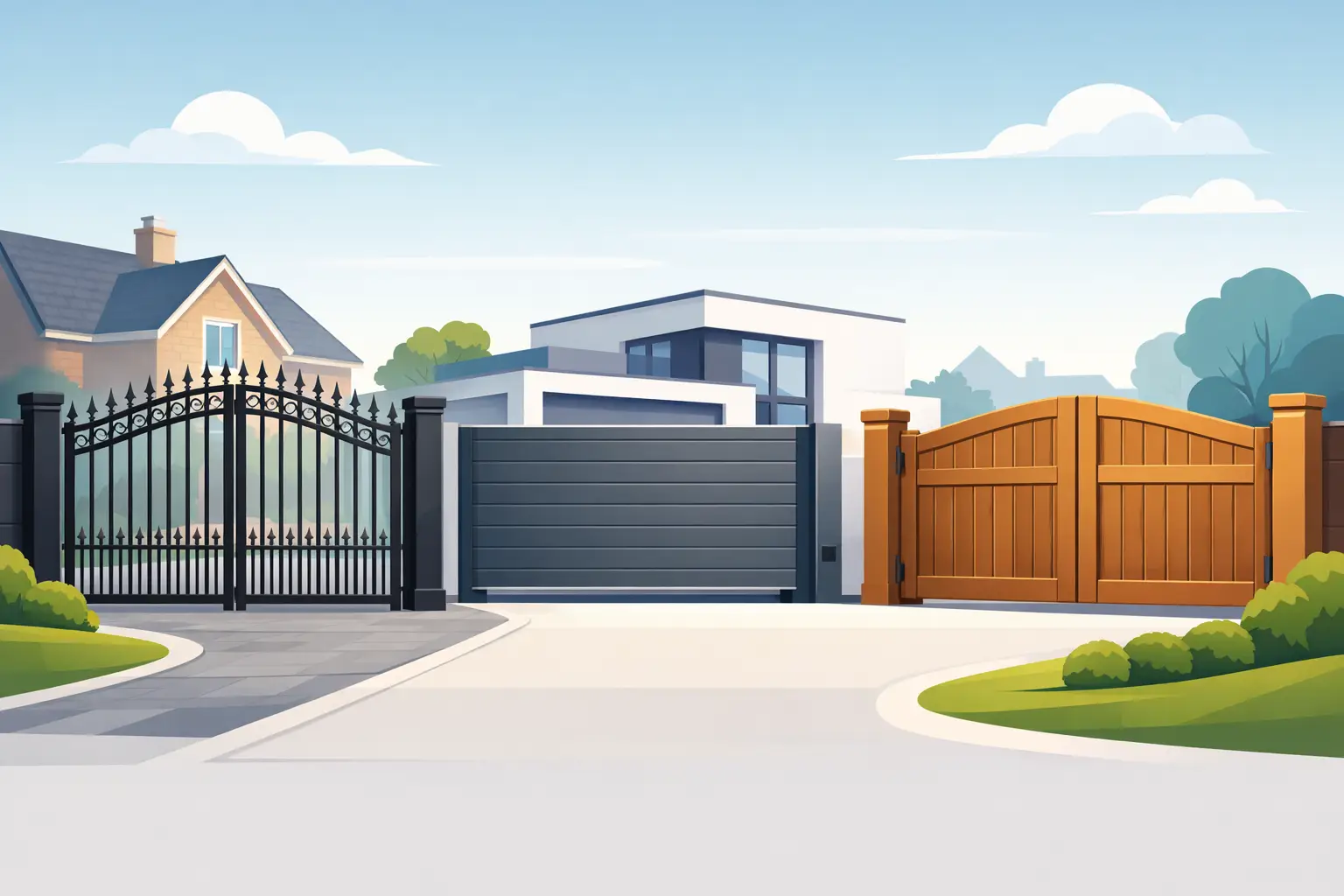

Best Readymade Driveway Gates for UK Homes

Best Readymade Driveway Gates for UK Homes

A driveway gate has to do more than fill an entrance. It needs to suit the width and gradient of the drive, complement the property, provide the level of privacy required and remain reliable through British weather. The best readymade driveway gates make that decision simpler, offering a faster route to a smart, durable entrance without the lead time of a fully bespoke design.

For many homeowners, a readymade aluminium gate is the right balance of value, appearance and convenience. The key is choosing a standard-size option that genuinely fits the site, rather than trying to make the opening fit the gate after delivery.

What makes the best readymade driveway gates?

The best option is not automatically the heaviest gate or the one with the most decorative detail. It is the gate that works properly with your entrance, posts, access needs and budget. A well-specified readymade gate should offer strong construction, a practical opening arrangement and a finish that will still look good after years outside.

Aluminium is particularly well suited to driveways. It is lightweight compared with steel, so manual operation is easier and automated systems do not have to work as hard. It will not rot like timber or develop the rust associated with untreated steel. Quality powder-coated aluminium also offers a consistent, attractive finish in popular colours such as anthracite grey, black and white.

This does not mean every property needs the same gate. A modern home may suit a horizontal slatted design, while a period property can benefit from an aluminium gate with more traditional lines or ornate detailing. The right style should look intentional from the road and work with existing fencing, railings, brickwork and landscaping.

Start with accurate driveway measurements

Most problems with ready-to-delivery gates come down to measurement. Before selecting a size, establish the clear opening between the finished gate posts, walls or pillars. Measure at ground level and again higher up, especially where old brickwork is not perfectly square.

It is also essential to check whether the stated gate size refers to the gate leaf itself or the total opening it is intended to fill. Hinges, latch gaps and clearances all require space. If you are replacing existing gates, do not assume the old leaves were correctly sized for the opening.

For a double swing gate, consider the width of each leaf and the space available for it to open. A narrow driveway that meets a busy road may not have room for gates to swing outwards, and outward-opening gates can create safety and legal concerns where they cross a public pavement. In most domestic settings, gates should open into the property.

Driveway slope matters too. A rising drive can prevent a conventional swing gate from opening fully unless there is adequate ground clearance or the gate arrangement is designed around the gradient. A sliding gate may be a more suitable solution where space and levels make swing gates impractical, though it needs sufficient room along one side of the entrance for the gate to travel.

Allow for posts, hardware and ground clearance

Readymade gates are supplied in standard sizes, but a complete installation includes more than the gate panels. You may need aluminium, steel or masonry-mounted posts, plus hinges, a latch, drop bolts and suitable fixings. If the gate will be automated, the choice of hinges and mounting positions needs to be agreed before installation.

Leave sensible clearance beneath the gate for uneven ground, surface water, leaves and small stones. Too little clearance can lead to scraping and difficult operation. Too much can reduce security and spoil the finished appearance. An experienced installer can assess this before posts are set in place.

Choose the right balance of privacy and kerb appeal

Solid or closely slatted aluminium driveway gates provide greater privacy and can help screen parked vehicles from view. They are a popular choice for homes on through roads or properties with a close view of neighbouring houses. However, solid panels catch more wind than open designs, which can affect the specification of posts, hinges and automation.

Open-bar, spaced slat or rail-style gates allow light and visibility through the entrance. They can make a smaller frontage feel less enclosed and often suit properties that already have railings. Their more open construction can also be helpful in exposed locations, where reducing wind load is a sensible consideration.

Think about the view in both directions. From outside, the gate should enhance the front of the property. From inside, it should not make the drive feel dark or overly enclosed. Matching the gate colour and design to adjacent pedestrian gates, fencing or railings creates a more considered perimeter than selecting each element separately.

Manual or automated operation?

A manual gate is a sensible, cost-effective choice for a short drive or a home where the entrance is used occasionally. Aluminium’s lower weight makes it comfortable to operate, provided hinges are correctly installed and the ground is level. A good latch and drop bolts are still important for security and stability.

Automation adds convenience, particularly when arriving home in rain or using the driveway several times a day. It can also make a large double gate easier to manage. Yet an automated gate must be planned as a system, not treated as an accessory added at the last minute.

The gate weight, length, wind exposure, frequency of use and available power supply all influence the appropriate motor. Safety features such as photocells, force limitation and a manual release mechanism should be included in the design. An intercom or keypad can provide controlled access for visitors, deliveries and tradespeople, while vehicle exit loops and remote controls can make daily use more straightforward.

If automation is likely in the future, tell your supplier at the point of purchase. Choosing a gate and post arrangement that is automation-ready can avoid unnecessary changes later.

Readymade versus bespoke driveway gates

Readymade gates are ideal when your opening aligns with a standard width and height, you prefer an established design and delivery time is a priority. They can offer excellent value because the design and manufacturing process is already defined. For straightforward domestic entrances, this is often all that is required.

Bespoke gates become more worthwhile when the opening is unusual, the driveway is sloped, pillars are irregular, or you want a specific pattern, height, colour or infill. They are also worth considering where a gate needs to match existing perimeter products precisely. Bespoke does not simply mean decorative – it can solve practical site constraints that a standard size cannot.

There is a trade-off. A readymade option can be quicker and more economical, but flexibility is limited. A bespoke gate takes longer to manufacture and may cost more, yet it gives greater control over fit and appearance. The most suitable choice depends on how standard the entrance really is.

Do not overlook installation and aftercare

Even a high-quality aluminium gate will only perform as well as its installation. Posts must be securely founded, aligned and capable of carrying the gate’s load. Hinges need correct adjustment, latches must meet cleanly and automated equipment must be installed and commissioned by a competent professional.

Aluminium requires very little upkeep, which is one of its main advantages. Periodically wash the gate with mild soapy water and a soft cloth to remove road film, salt and general dirt, particularly in coastal areas or beside heavily used roads. Avoid abrasive pads and harsh chemicals that could damage the powder-coated surface. Check moving parts occasionally and keep the ground track or opening area clear.

For nationwide projects, installation support can be as valuable as the gate itself. Aluminium Gates Direct can help customers select a suitable aluminium solution and connect them with installation partners, including projects that require automation or access control.

A practical buying checklist

Before ordering, confirm the clear opening, intended gate height, direction of travel and whether the driveway is level. Decide how much privacy you want, whether the gate will be manually operated or automated, and whether posts, fittings and access controls are included in the specification.

Also consider how the entrance will be used in real life. Will a family car, van, refuse lorry or delivery vehicle need to pass through comfortably? Is there enough room for visitors to stop safely while the gate opens? Will a pedestrian gate make everyday access easier without operating the driveway gate? These details often determine whether a gate feels convenient or becomes a frustration.

A well-chosen readymade aluminium gate should make the entrance feel secure, finished and easy to live with. Take the time to measure properly and discuss the site conditions before ordering, and you can choose a gate that looks right on day one and continues to perform for years to come.

How to Secure Commercial Entrances Effectively

How to Secure Commercial Entrances Effectively

A commercial entrance has to do more than stop unauthorised access. It needs to guide legitimate visitors, protect staff and assets, accommodate deliveries, and present the right image to customers. Knowing how to secure commercial entrances starts with assessing how people and vehicles actually use the site, then choosing measures that work together rather than relying on one barrier alone.

For a warehouse, school, trade yard, office park or managed residential development, the right approach will differ. A busy delivery entrance may need automated sliding gates and clear vehicle controls, while a smaller office may benefit more from a pedestrian gate, intercom and better lighting. The aim is controlled access without creating unnecessary delays or compromising safety.

Start with the risks at each entrance

Before specifying gates, fencing or access equipment, consider what each entrance is exposed to. The front entrance may need to welcome visitors while restricting access beyond reception. A side gate might be vulnerable because it is less visible. Vehicle entrances can be targeted for theft, trespass or fly-tipping, particularly outside trading hours.

Walk the perimeter at different times of day and identify where someone could enter unnoticed, tailgate through an opening, climb a boundary or force a gate. Look at sightlines from the road, neighbouring properties and any on-site office or security point. An entrance that cannot be easily seen may require stronger physical protection, CCTV coverage or improved lighting.

It also helps to separate users into groups: employees, visitors, contractors, delivery drivers and emergency services. Each group should have a simple, appropriate route in and out. When every user is expected to use the same unsecured opening, security quickly becomes difficult to manage.

Choose a gate that suits the site

A commercial gate is often the first and most visible line of defence. It should be specified around the opening width, available run-back space, traffic level, ground conditions and desired level of access control.

Sliding gates are a practical choice for many commercial entrances because they do not swing into the carriageway or across internal vehicle routes. They can be particularly useful where space behind the entrance is limited, although they need adequate room alongside the opening for the gate to travel. Cantilever sliding gates avoid a track across the entrance, which can be helpful where debris, frequent vehicle movements or uneven surfaces are a concern.

Swing gates can suit lower-traffic entrances, pedestrian access points and sites where there is enough clear space for the leaves to open safely. Their appearance can be tailored to complement a property, but the opening arc must be considered carefully. A gate should never obstruct a public pavement, road or escape route.

Aluminium gates offer a strong, lightweight and low-maintenance option for commercial sites. Unlike timber, they will not rot, and unlike untreated steel, they do not require regular repainting to protect against rust. They are available in a wide range of styles and colours, making it possible to secure an entrance without giving the premises an overly industrial appearance.

The gate itself should be matched with suitable posts, hinges, tracks, locks and foundations. A high-quality gate will not perform as intended if its supporting structure is under-specified. For bespoke openings, made-to-measure gates can provide a neater fit and reduce weak gaps at the sides or beneath the gate.

Combine physical security with access control

A locked gate is useful, but keys can be copied, lost or passed between people. Access control gives site managers more control over who enters and when. The right system depends on the number of users and how frequently access permissions change.

For smaller sites, a keypad with a regularly changed code may be sufficient. Where staff access is more frequent, fobs, cards or app-based credentials can be easier to manage. These options allow access to be removed without changing locks or collecting keys from every employee.

Intercom systems add another layer of control at visitor entrances. Audio and video intercoms allow staff to verify a caller before releasing the gate, which is preferable to leaving a pedestrian entrance open during working hours. A system with remote answering can be especially useful where reception is not permanently staffed.

Vehicle gates can be operated through fobs, keypads, number plate recognition or a monitored intercom. The best choice depends on traffic volume and the consequences of a vehicle being admitted without checks. For example, a trade yard with regular known deliveries may need a different process from a private development where all visitors must be authorised by a resident or manager.

Do not overlook pedestrian access. If staff have to climb, squeeze around or leave a vehicle gate open to walk through, the arrangement will be ignored. A dedicated lockable pedestrian gate alongside the main vehicle entrance makes secure daily use far more realistic.

Avoid tailgating and casual access

Tailgating happens when an unauthorised person or vehicle follows an authorised user through a gate before it closes. This is common at busy entrances and can undermine an otherwise well-designed access system.

Set gate closing times to balance security with safe passage. A gate that stays open for too long invites follow-on access, but one that closes too quickly can create a risk for pedestrians and vehicles. Safety devices such as photocells, safety edges and detection loops should be correctly specified, installed and tested so the gate responds safely to obstructions.

Clear signage also matters. Visitors should know where to report, how to call for access and whether they are being recorded. Staff should be given a straightforward rule: do not hold gates open or allow unknown people to follow them onto the premises.

Secure the full perimeter, not just the opening

An automated entrance gate can be bypassed if the fencing beside it is easy to climb, cut or push aside. Treat the gate, fencing, railings and pedestrian routes as one perimeter system.

Match the height and style of the surrounding boundary to the risk level and site requirements. Open-style railings can improve visibility around a frontage, while solid panels may offer greater privacy where needed. On commercial sites, a combination can work well: visible railings at public-facing areas and more restrictive fencing around service yards, storage areas or plant equipment.

Pay particular attention to the gap between gates and posts, the underside clearance, and where fencing meets buildings or walls. These are common weak points. Landscaping should also be kept under control. Dense shrubs can provide cover for someone attempting to gain access, while overgrown branches can interfere with cameras, lighting and gate movement.

Use lighting and surveillance intelligently

Good lighting discourages opportunistic intrusion and helps employees, visitors and delivery drivers feel safer. It should cover entrances, pedestrian routes, gate controls and areas where someone could conceal themselves. Position lighting to avoid glare for drivers and avoid pointing directly into neighbouring homes.

CCTV is most effective when it supports a clear security plan. Cameras should capture faces at pedestrian entrances and number plates at vehicle entry points where possible. They need a suitable angle, enough lighting and a clean field of view. A camera installed too high, too far away or behind foliage may provide little useful evidence.

For UK businesses, surveillance should be used lawfully and proportionately. Display appropriate signs, limit recording to areas that need monitoring and ensure footage is handled responsibly. If a system is monitored remotely, make sure there is a defined response when an alert is received. Recording an incident is helpful, but preventing it or responding promptly is better.

Keep safety and emergency access in the design

Commercial gates and access systems must protect people as well as property. Automated gates should be professionally installed, fitted with appropriate safety measures and maintained in line with the manufacturer’s guidance. A gate that is poorly adjusted or lacks the right safety devices can cause serious injury.

Emergency access needs to be planned from the outset. Fire and rescue services, ambulances and other emergency responders may need a reliable method of entering the site, while staff must be able to leave safely in an emergency. Do not use a security gate to obstruct a designated fire escape route.

It is also sensible to plan for power failure. Depending on the system, this may mean a manual release, battery backup or a documented procedure for authorised staff. The key point is that the procedure should be known, accessible and tested rather than left to chance.

Maintain the entrance after installation

Security equipment is only dependable when it is maintained. Gates should be inspected for damage, loose fixings, unusual noise, poor alignment and signs of impact from vehicles. Keep tracks and run-back areas free from stones, leaves and other debris, and make sure drainage does not allow standing water to affect operation.

Access codes should be changed when staff leave or contractors no longer require entry. Review fob and card permissions regularly, particularly on larger sites. Check that intercom call points, cameras, lighting and safety devices are still working as intended.

A written inspection routine is useful for commercial premises because it creates accountability and makes faults easier to spot early. Small issues such as a slow-closing gate, faded sign or damaged fence panel can become a bigger security gap if they are left unresolved.

How to secure commercial entrances with the right support

The most effective commercial entrance is not necessarily the tallest gate or the most complicated system. It is the one that suits the site’s daily operation, controls access consistently and remains practical for staff, visitors and deliveries.

Aluminium Gates Direct can help commercial buyers, developers and site managers choose aluminium gates, fencing, pedestrian access and automation options that fit their layout, security priorities and budget. A well-planned entrance gives people a clear route, gives managers better control and makes the whole site feel properly looked after.

Which Gate Suits Narrow Driveways? A Clear Guide

Which Gate Suits Narrow Driveways? A Clear Guide

A narrow driveway can make a standard gate layout impractical very quickly. If you are asking which gate suits narrow driveways, the answer is usually not simply the narrowest gate. You need a design that preserves as much usable entrance width as possible, has somewhere safe to move when open and works with the slope, parking arrangement and access needs of your property.

For many UK homes, a sliding or bi-fold gate is the most effective answer. However, an inward-opening swing gate can still be an excellent choice where there is enough clear space inside the boundary. The right option depends on the full site, not just the gap between your gate posts.

Which gate suits narrow driveways best?

A sliding gate is often the first option to consider when driveway width is limited but there is enough room along the fence or wall line for the gate to travel. Rather than swinging into the driveway, it moves sideways, leaving the entrance clear once open. This makes it especially useful where a vehicle needs to turn directly after entering or where the driveway is short.

Bi-fold gates are another strong option for tight sites. Their leaves fold back as they open, so they need far less swing depth than a conventional pair of gates. They are well suited to driveways where there is little room inside the boundary but no practical side run for a sliding gate.

Traditional swing gates remain a sensible, attractive and often cost-effective choice where the driveway has sufficient depth. They can work particularly well on properties with a wider internal parking or turning area. The key is ensuring that the leaves can open fully without reducing access, striking a parked vehicle or obstructing a pedestrian route.

Start with the usable opening, not the overall frontage

A common mistake is to measure the full width between two boundary walls and assume that this is the available driveway opening. Posts, hinges, gate frames and clearance requirements all take up space. On a narrow entrance, even a small loss of width can make the difference between comfortable daily use and having to fold mirrors every time you come home.

Measure the clear distance between the proposed gate posts, then consider the width and turning circle of the largest vehicle likely to use the drive. This may be a family SUV, a delivery van, a work vehicle or a mobility vehicle rather than the car currently parked outside.

Also consider the approach. A straight entrance can work with a tighter clear opening than a driveway reached from an angle or a narrow road. If drivers need to turn sharply through the gateway, extra width becomes far more valuable.

Allow space for posts, automation and safety clearances

Gate posts must be sized to suit the gate weight, height and type of operation. Aluminium is lighter than steel or solid timber, which can make handling and automation requirements more manageable, but posts and foundations still need proper specification.

Automated gates also require room for motors, hinges, guide rollers, tracks or cantilever hardware, depending on the system. Safety devices such as photocells and safety edges should be included in the plan from the outset rather than added as an afterthought. A gate that fits on paper may not be the best working solution once these details are allowed for.

Sliding gates: maximum driveway space, with one major condition

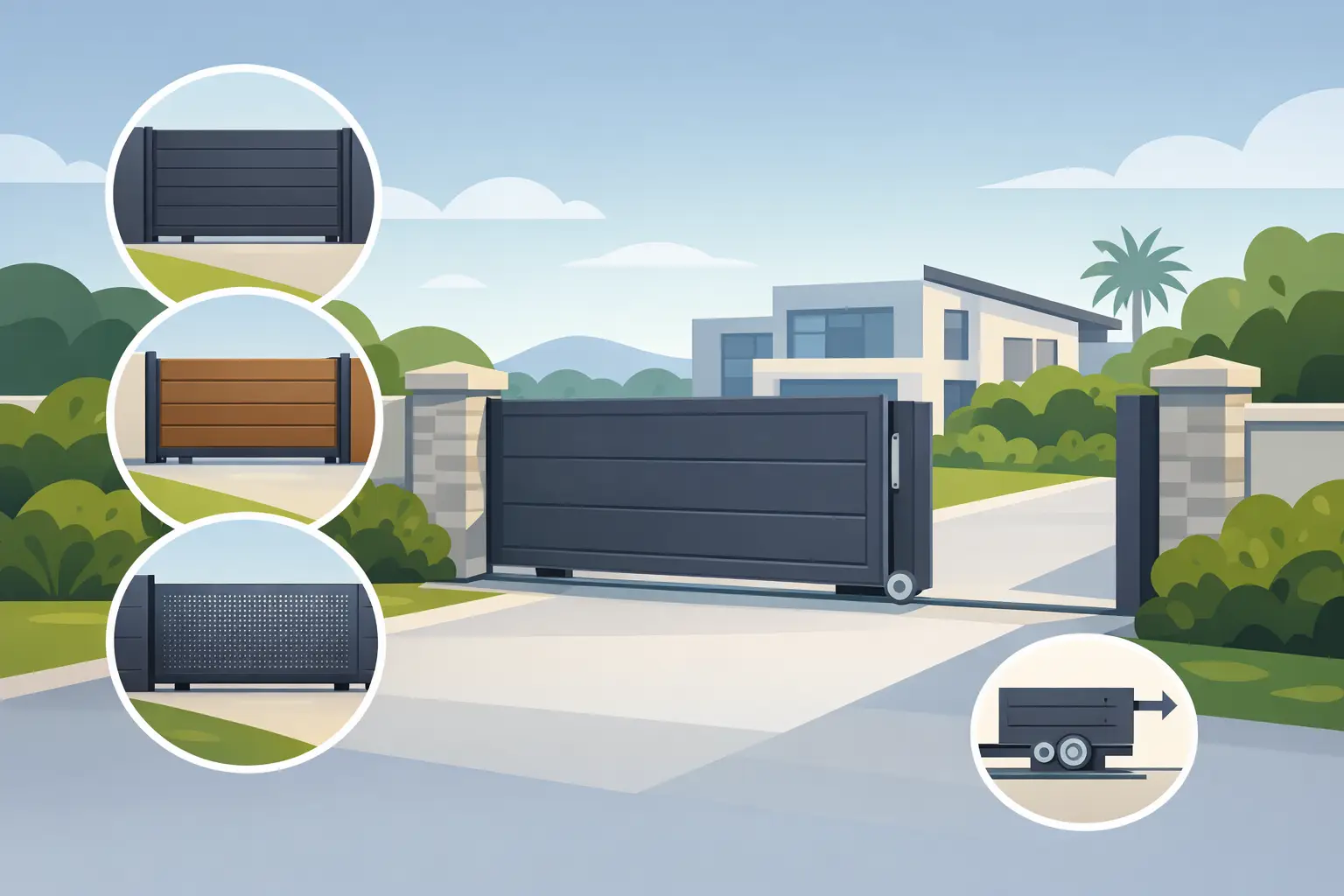
Sliding gates are popular on restricted driveways because they do not consume space behind the entrance. A tracked sliding gate runs on a ground track, while a cantilever sliding gate is supported above the ground and travels past the opening without a track across it.

The major condition is side room. A sliding gate needs a clear run-back area beside the entrance. In many cases, this needs to be at least the width of the opening, plus additional space for the frame, posts and operating equipment. If your boundary has a wall, planting, a garage or a change in level immediately beside the entrance, a sliding gate may not be viable without redesigning the layout.

Cantilever systems can be particularly useful where leaves, gravel, uneven ground or drainage make a ground track less desirable. They generally require more run-back space and a stronger supporting structure, so they are best assessed as part of the complete installation.

For a narrow driveway with a long, unobstructed fence line, a made-to-measure aluminium sliding gate is often the cleanest solution. It can be designed to complement fencing, railings and the property frontage while keeping the entrance as open as possible.

Bi-fold gates: a practical answer where side room is limited

A bi-fold gate has hinged sections that fold together as the gate opens. This reduces the depth needed inside the driveway and offers quicker opening than a long single swing leaf. It is a useful compromise for properties that cannot accommodate a sliding gate but do not have enough depth for conventional swing gates.

Bi-fold gates can be supplied as a single folding leaf or a pair of folding leaves, depending on the opening and the desired appearance. A pair opening from the centre can suit a symmetrical entrance, while a single leaf may work where the available space is uneven.

There are trade-offs. Bi-fold designs have more moving components than standard swing gates, and the structure must be well specified to ensure smooth, reliable operation. They can also have a more contemporary appearance than a traditional pair of driveway gates. For many homes, this is a benefit, especially when matching modern aluminium fencing or a clean-lined façade. For a period property, a bespoke design can soften the look with more traditional detailing.

When swing gates are still the right choice

A narrow entrance does not automatically rule out swing gates. If the driveway opens into a generous parking area, inward-opening aluminium swing gates can offer an elegant and dependable solution. Their simple layout is familiar, versatile and well suited to both manual and automated operation.

The direction of opening matters. Gates should not open outwards across a public pavement or highway. In most residential settings, this means the leaves need to open inwards. Before choosing them, check that there is enough unobstructed depth for the leaves to swing through their full arc.

Sloping ground is another important consideration. A driveway rising immediately behind the gates can prevent standard inward-opening leaves from operating correctly. Depending on the site, rising hinges, a change to the driveway level, a sliding arrangement or a bi-fold system may be more appropriate.

For a very short drive, do not overlook the waiting position outside the gate. Drivers need somewhere safe to stop while the gate opens, without blocking the road, a junction or a neighbouring entrance. Automation and an intercom can make access more convenient, but they do not solve a poor approach layout.

Design choices that help a tight entrance feel less restricted

The gate style can affect how a narrow driveway feels. Open slatted or rail-style aluminium gates maintain sightlines and can make an entrance appear wider, while solid privacy panels create a more enclosed, private boundary. Neither is universally better. Consider visibility for drivers leaving the property, the level of privacy required and the character of the house.

A pedestrian gate can also reduce unnecessary use of the main driveway gate. This is useful for households receiving regular visitors, for bins and deliveries, or where residents walk in and out frequently. It avoids repeatedly operating the vehicle gate for simple access and can be matched to the driveway gate for a coordinated finish.

Colour and finish deserve thought too. Aluminium gates are available in a broad range of powder-coated colours and can be made to suit traditional or contemporary properties. Dark tones can give a crisp, architectural look, while lighter or wood-effect finishes may sit more naturally alongside brick, render or timber features.

Do not choose automation last

On a narrow driveway, automation should be part of the first design discussion. The choice of gate type affects where motors, control equipment and safety devices can be positioned. It also affects how a driver enters, exits and communicates with visitors.

A keypad, remote controls or an Akuvox intercom system can be selected around the way the property is used. For example, a home with a gated entrance close to the road may benefit from video calling and remote release, while a commercial site may need controlled access for staff, visitors and deliveries.

Any automated gate should be professionally assessed, installed and safety tested. The gate must have appropriate protection against trapping, crushing and impact risks, particularly where children, pedestrians or members of the public may be nearby. A lightweight aluminium gate helps reduce operating loads, but safety depends on the complete system, its installation and ongoing checks.

Get a site-led recommendation before ordering

The most reliable way to decide between sliding, bi-fold and swing gates is to assess the opening, side run, driveway depth, slope and daily vehicle use together. Photographs and accurate measurements are helpful, but an installation survey is often worthwhile for more complex sites, especially where automation, uneven ground or boundary changes are involved.

Aluminium Gates Direct can help customers compare ready-made and bespoke aluminium gate options, with support for nationwide installation through trusted partners. A made-to-measure design may cost more than an off-the-shelf size, but on a narrow driveway it can protect valuable access width and avoid costly alterations later.

Choose the gate that gives you comfortable access every day, not just one that physically fits between two posts. A well-planned gate should make arriving home feel simpler, safer and more secure from the very first use.

How to Choose Sliding Gates for Your Driveway

How to Choose Sliding Gates for Your Driveway

A sliding gate can solve a problem that a swing gate cannot: it secures a driveway without needing clear space inside or outside the entrance for gate leaves to open. However, choosing the wrong sliding system can create new issues, from insufficient run-back space to awkward access or costly groundworks. Knowing how to choose sliding gates starts with the site, not the style.

For homeowners, developers and commercial buyers, the best choice balances security, appearance, daily use and the realities of the entrance. A well-specified aluminium sliding gate should look right from the road, operate reliably and require very little upkeep for years to come.

Start with the space beside the entrance

A sliding gate needs room to travel when it opens. This is the first measurement to confirm, before considering colours, infill designs or automation.

For a single sliding gate, the clear opening is the distance between the two points where vehicles pass through. The gate itself must usually be wider than that opening to provide suitable overlap and support. You also need a clear run-back area to one side of the entrance where the gate can sit fully open.

As a general guide, the available run-back should accommodate the full gate width, plus the space required for the chosen support and automation arrangement. Obstructions such as walls, planting, slopes, utility boxes, parking bays and existing fencing can all affect what is possible.

If there is limited room at either side, a telescopic sliding gate may be worth considering. This design uses two or more gate sections that slide together, reducing the length needed for the gate to open. It is a practical answer for tighter plots, although it is more mechanically involved than a standard single-leaf sliding gate and should be specified carefully.

Choose between tracked and cantilever sliding gates

The two main sliding gate formats work differently, and the right option depends largely on the driveway surface and site conditions.

Tracked sliding gates

A tracked gate runs on wheels along a rail fixed into or onto the driveway. It is often a cost-effective and straightforward option where there is a level, sound surface and regular cleaning is realistic.

The rail needs to remain clear. Leaves, gravel, mud, snow and debris can interfere with smooth operation, particularly on rural properties or busy commercial entrances. A tracked system can still be an excellent choice, but it suits sites where the track can be kept clean and the ground is stable.

Cantilever sliding gates

A cantilever gate is suspended above the driveway rather than running on a ground track. It uses a counterbalance section and roller support assembly at one side of the entrance. Because there is no rail across the opening, it is particularly useful for uneven ground, gravel drives, areas affected by debris, or locations where drainage and winter conditions could make a track less practical.

Cantilever gates generally need more run-back space because of the counterbalance section. They can also involve a more substantial support structure, so the initial investment may be higher. In return, many customers value the cleaner opening and reduced dependence on a clear ground track.

Measure the driveway and vehicle use properly

The width of the entrance should reflect more than the average family car. Think about delivery vehicles, refuse lorries, tradespeople, vans, trailers and emergency access. A narrow opening may feel secure, but it can make everyday access frustrating or lead to damaged kerbs, gate posts and vehicles.

Consider where a vehicle waits while the gate opens. If the entrance leads directly onto a busy road, automated operation becomes especially valuable because drivers can remain safely off the carriageway where possible. On a deep driveway, opening speed may matter less than quiet, dependable movement and strong access control.

For commercial premises, account for peak traffic, vehicle types and whether pedestrians regularly share the access point. A gate that works for occasional car movements may not be suitable for a development, warehouse, school, managed site or business yard with frequent arrivals.

Select a material that suits long-term ownership

Steel and timber gates both have their place, but they bring ongoing maintenance requirements. Timber can weather, move and require treatment, while steel can need regular attention to protect against corrosion and maintain its finish.

Aluminium is a strong choice for sliding gates because it is lightweight, durable and resistant to rust. Lower weight can reduce strain on automation equipment when compared with heavier alternatives, while powder-coated aluminium provides a clean, consistent finish in a wide choice of colours. It also offers the low-maintenance ownership many property owners want – usually routine cleaning is all that is needed to keep the gate looking smart.

Lightweight does not mean insubstantial. The gate frame, infill, posts and supporting hardware must all be designed for the span, wind exposure and operating system. Larger or more exposed entrances require careful engineering, particularly where solid infill panels may catch the wind.

Match the design to privacy, security and kerb appeal

A sliding gate is a prominent part of the property boundary. It should complement the architecture of the home or site rather than feel like an afterthought.

Horizontal slatted designs suit many contemporary homes and offer a balance between privacy and light. Close-boarded or solid-panel styles provide greater screening, which can be useful for properties on main roads. More open designs can preserve sightlines, soften the boundary and allow better visibility at the entrance.

Security is not only about making a gate difficult to climb. It is also about the complete perimeter strategy. The height of the gate, the gap beneath it, the design of adjacent fencing, the placement of posts and the security of pedestrian access all need to work together. For commercial projects, the required level of protection may call for a more purpose-led design, controlled entry and suitable fencing or railings alongside the gate.

Bespoke aluminium gates allow the width, height, layout, colour and infill pattern to be tailored to the site. Readymade options can be a sensible route where dimensions are standard and quicker availability is the priority. The right route depends on whether the property needs a precise fit or a practical off-the-shelf solution.

Plan automation and access control early

Although a sliding gate can be manually operated, automation is usually the better choice for a driveway entrance. It adds convenience, supports controlled access and avoids the need to leave the vehicle in poor weather or on an exposed road.

The motor must be matched to the gate’s weight, length, expected usage and system type. A domestic gate used a few times each day has different demands from a commercial entrance operating throughout the day. Choosing a motor solely on headline power can be misleading – duty cycle, safety features, control options and professional installation matter just as much.

Think about how people will enter before the installation begins. Remote controls are simple and familiar, but keypad entry, fob access, GSM calling and video intercom systems may better suit the property. An Akuvox intercom system, for example, can provide video calling and controlled entry for households, flats or commercial sites where visitors need to be verified.

A separate pedestrian gate is often a worthwhile addition. It prevents people from walking through a vehicle entrance and reduces unnecessary gate cycles. This can be safer, more convenient and better for the long-term operation of the automated system.

Do not treat safety as an optional extra

Automated gates must be designed and installed with safety at the centre of the project. Moving gates create pinch points, crushing risks and other hazards that need to be assessed for the specific entrance.

A suitable system may include photocells, safety edges, force limitation, emergency release and clearly planned control positions. The exact requirements depend on the gate layout, nearby walls and posts, pedestrian routes, public access and how the gate is used. Professional installation, commissioning and handover are essential, not a final add-on.

It is also wise to plan for servicing. Even a low-maintenance aluminium gate relies on moving components, electrical equipment and safety devices that should be checked periodically. Keeping the system maintained protects its reliability and helps identify wear before it becomes a breakdown or safety concern.

Allow for foundations, power and drainage

The visible gate is only one part of the project. Posts, cantilever supports, tracks, motors and safety equipment all need secure foundations. Ground conditions can influence the size and type of concrete bases required, particularly for wide gates or exposed locations.

Power should be considered before hard landscaping is completed. Running cables after a new driveway has been laid is possible, but it is rarely the most efficient or tidy option. If an intercom, keypad, lighting or vehicle detection is planned, discuss the cabling route at the same time.

Drainage also deserves attention. Water collecting around a tracked gate can affect its operation and accelerate wear around the rail. A good installer will assess levels and surface water rather than simply fitting the gate to an unsuitable finished surface.

Get advice based on your actual entrance

The most successful sliding gate projects begin with accurate measurements, photographs and a clear conversation about how the entrance is used. Provide the opening width, available run-back, driveway surface, ground level, desired height, vehicle use and preferred method of access. This gives a supplier or installation partner the information needed to recommend a system that fits the site and budget.

At Aluminium Gates Direct, the focus is on matching customers with aluminium gate solutions that are practical as well as attractive, with support available for bespoke design, automation and nationwide installation planning. A properly chosen sliding gate should feel straightforward every time you arrive home or open up a site – secure when closed, unobtrusive when open and built around the way the property really works.

Best Gates for Commercial Properties in the UK

Best Gates for Commercial Properties in the UK

A commercial gate has to do more than mark a boundary. It may control deliveries before 7am, protect staff parking overnight, direct visitors to the right entrance and give a site a more professional appearance. The best gates for commercial properties are therefore not simply the strongest-looking option. They are the gates that suit the traffic, layout, security needs and daily operation of the site.

For warehouses, offices, schools, trade yards, flat developments and private estates, aluminium is an increasingly practical choice. It is lightweight, strong, corrosion-resistant and does not demand the regular painting or treatment associated with timber and some steel gates. The right design can also work with automation, intercoms and access control from the outset.

Start with how the entrance is used

Before choosing a style, establish who uses the gate and how often. A gate serving occasional visitor vehicles has very different requirements from one used by delivery vans, staff cars and contractors throughout the day. Vehicle type matters too. A narrow car park entrance may be suitable for a pair of swing gates, while a busy industrial access road often benefits from a sliding gate that keeps the opening clear.

Consider the hours of use, the number of movements expected each day and whether people will need pedestrian access separately. A dedicated pedestrian gate can improve safety by keeping foot traffic away from vehicle entrances. It can also reduce unnecessary wear on an automated main gate.

Site conditions should be assessed early. Sloping ground, limited run-back space, uneven surfaces, wind exposure and underground services can all affect the right specification. This is particularly relevant when automation is planned, as foundations, posts, safety devices and power supply need to be allowed for rather than treated as an afterthought.

Best gates for commercial properties: choosing the format

There is no single gate format that suits every commercial premises. The following options cover most projects, but the best result comes from matching the format to the site rather than forcing the site to fit a preferred design.

Sliding gates for busy or restricted entrances

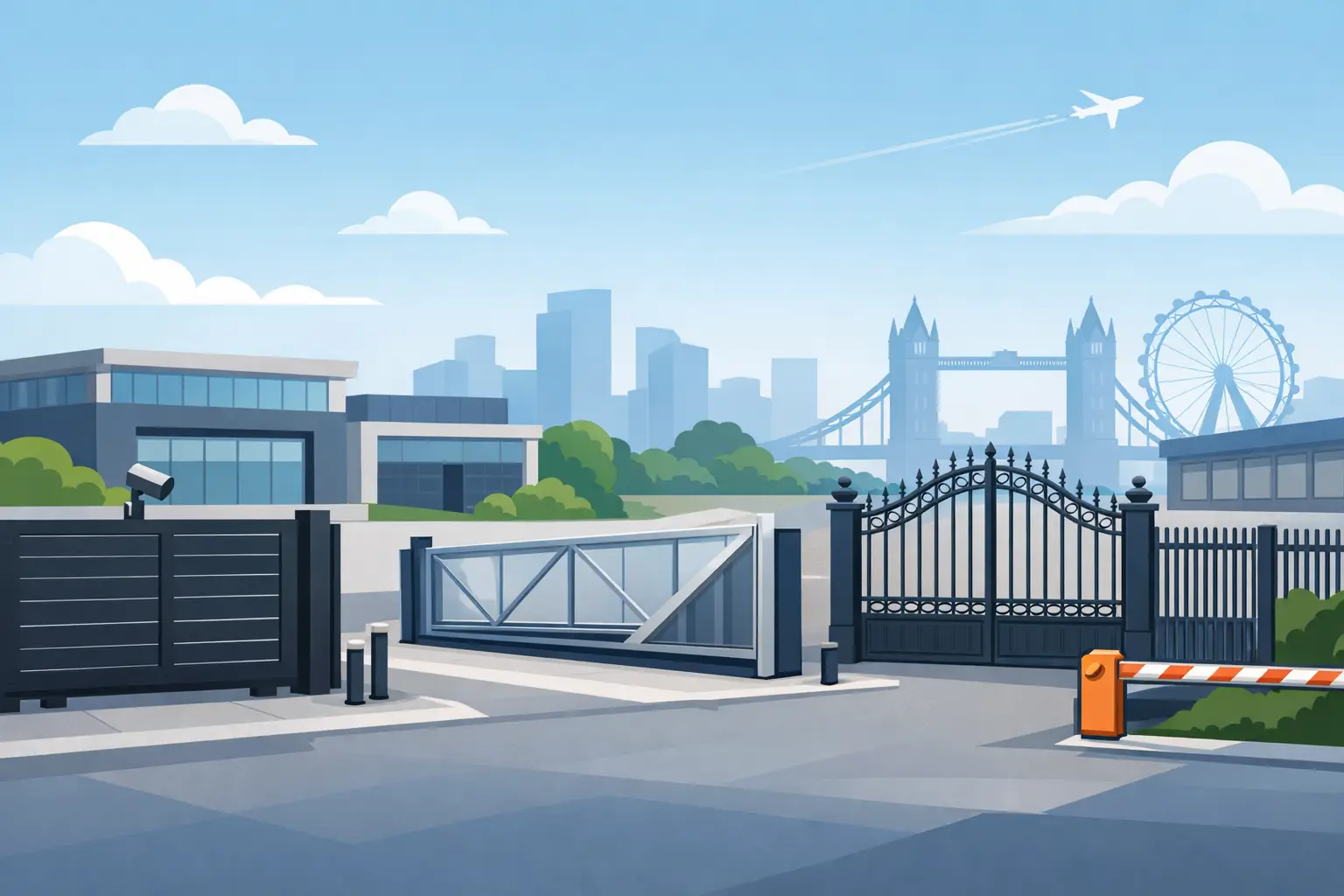
Sliding gates are often the first choice for sites with frequent vehicle movements or limited space behind the entrance. Rather than swinging into the site or towards the road, the gate travels sideways along the boundary line. This can make them particularly useful for commercial yards, business parks, secure compounds and flat developments.

A tracked sliding gate needs a clear, level route for the gate to travel along. Cantilever sliding designs avoid a ground track across the entrance, which can be helpful where debris, leaves or regular vehicle traffic could cause disruption. The trade-off is that cantilever gates require additional side room and a properly engineered support structure.

For wider openings, a sliding gate may offer a cleaner and more manageable solution than very large swing leaves. It also works well with keypad, fob, GSM and intercom entry systems, allowing authorised users to enter without leaving their vehicle.

Swing gates for straightforward access points

Commercial swing gates remain a sensible option for offices, smaller car parks, managed residential sites and lower-traffic entrances. They can be supplied as single or double leaves, depending on the opening width and the available space.

Their main consideration is the clearance arc. The leaves need room to open safely, ideally inward, without obstructing a pavement, road or parked vehicles. On a sloped approach, the direction of the slope may also determine whether swing gates are practical. Where the site layout allows it, aluminium swing gates provide a smart, durable entrance with a wide choice of contemporary and traditional designs.

Pedestrian gates for controlled foot access

A pedestrian gate is not a minor detail. It may be the entrance staff and visitors use most often, and it should sit naturally within the overall perimeter design. For commercial settings, it can be specified with a reliable lock, closer, coded access or an intercom release.

Using a matching pedestrian gate alongside vehicle gates and aluminium fencing creates a more considered boundary. It also supports safer movement around the site by giving people a clear route that does not depend on the vehicle entrance being open.

Bespoke gates for unusual layouts or brand-led schemes

Standard sizes can work well for straightforward openings, particularly when time and budget are tight. However, bespoke aluminium gates are often the better investment where openings are unusually wide, ground levels are challenging or a development requires a particular architectural finish.

Bespoke design also gives project teams greater control over height, infill pattern, privacy level, colour and access points. For client-facing premises, this can help the entrance reflect the building and brand without compromising the security brief.

Security is about the whole entrance

A high gate alone does not automatically create a secure perimeter. The effectiveness of the entrance depends on the gate, posts, fencing, locking method, automation and access control working together. Gaps beneath or around a gate, weak fixing points and poor visibility of the entrance can undermine an otherwise good specification.

The right level of privacy depends on the site. Solid or closely spaced aluminium infills can screen parking areas, bins and storage zones, while slatted designs allow a degree of visibility without leaving the site fully exposed. Open railings may be better suited to locations where passive surveillance and a welcoming appearance are priorities.

For many commercial properties, access control is where the gate becomes most useful. A simple keypad may suit a small team, while fob access, GSM calling and video intercom systems offer greater control for multi-user sites. Akuvox intercom systems can be considered where video verification and remote visitor management are required. The most appropriate system depends on how visitors arrive, who approves access and whether reception is staffed during all operating hours.

Plan automation around safety and usage

Automation improves convenience, but it must be specified for the gate’s weight, size and expected duty cycle. A motor intended for occasional residential use may not be suitable for a commercial entrance with repeated daily movements. Selecting equipment with the correct capacity helps avoid avoidable downtime and premature wear.

Safety measures should form part of the installation plan. Depending on the gate type and site, these can include photocells, safety edges, warning lights, emergency release and suitable controls for manual operation during a power failure. A professionally planned system will also consider where vehicles wait while the gate opens, so they are not left obstructing a highway or pedestrian route.

Maintenance is still needed for any automated system, even when the gate itself is low maintenance. Moving components, motors and safety devices should be inspected and serviced at appropriate intervals. Aluminium reduces the burden of surface upkeep because it will not rot like timber or rust in the same way as untreated steel, but hinges, tracks and automation components still need attention.

Appearance, budget and long-term value

Commercial buyers are often balancing security, presentation and cost. The lowest initial price is not always the lowest lifetime cost if a gate requires frequent repainting, repairs or replacement. Aluminium offers a strong balance for many projects: it is lighter than steel, naturally resistant to corrosion and available in a broad range of powder-coated colours and styles.

That does not mean aluminium is automatically right for every application. Heavily industrial environments, specialist security requirements or exceptionally wide openings may call for a more detailed engineering assessment. Equally, a simple readymade gate may be entirely suitable for a modest staff car park where a fully bespoke system would add cost without adding meaningful benefit.

A clear brief helps suppliers provide a more accurate recommendation and price. Share the opening width and height, photographs of the entrance, ground conditions, preferred gate operation, expected traffic and whether automation or intercom access is required. This reduces uncertainty before manufacture and installation are arranged.

Get the specification right before ordering

For commercial projects, it pays to treat the gate as part of a wider access plan rather than a standalone purchase. Aluminium Gates Direct can help buyers compare readymade and bespoke options, select matching fencing or railings, and plan automation with a trusted installation partner network nationwide.

The most useful next step is a site-specific conversation: explain how the entrance is used, what needs protecting and what should happen when a visitor arrives. From there, the right gate becomes much easier to identify – and far more likely to serve the property well for years to come.