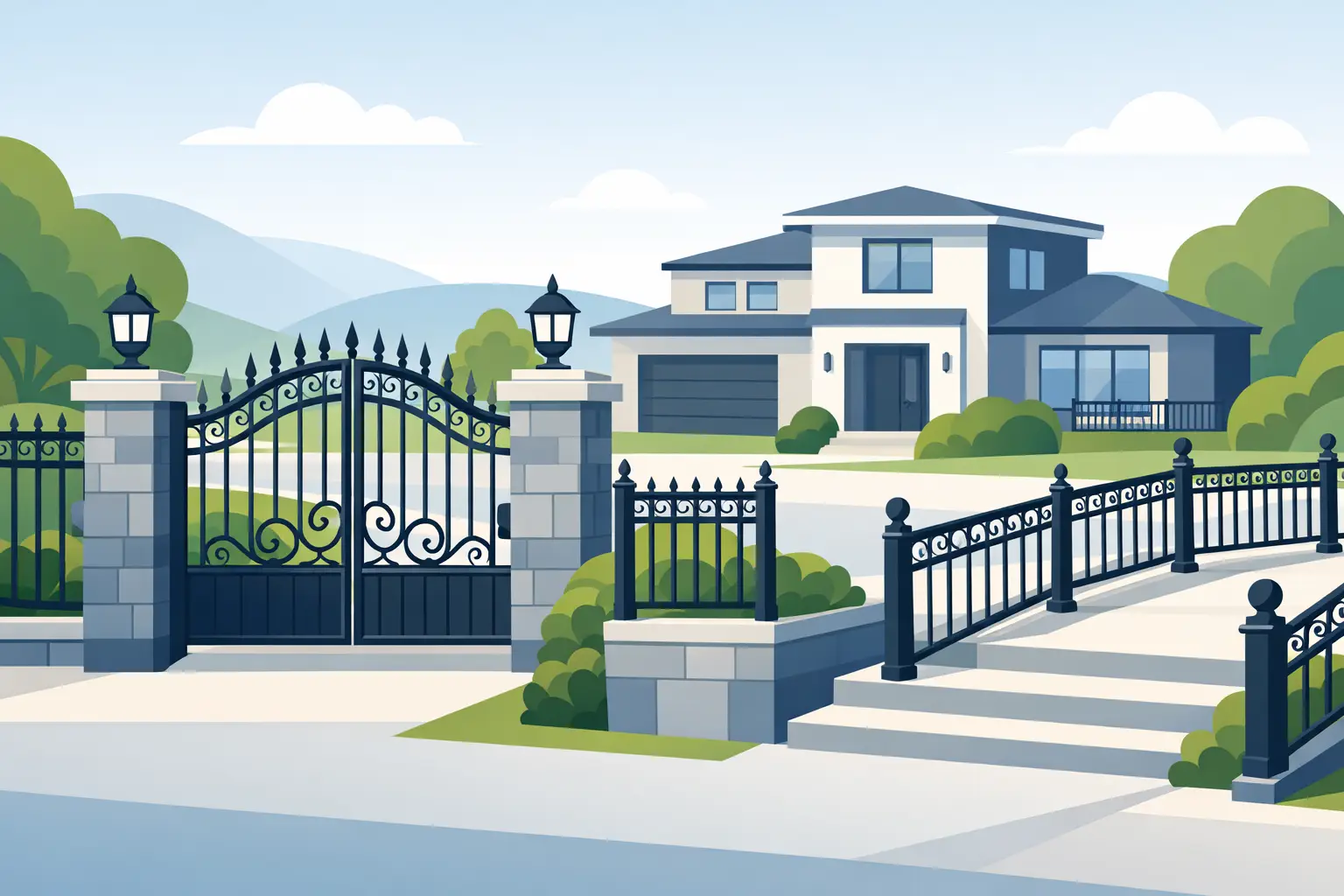
Best Driveway Gate Materials Compared

Best Driveway Gate Materials Compared

A driveway gate can look right on paper and still be the wrong choice once the weather, maintenance and day-to-day use start testing it. When customers ask us about the best driveway gate materials, they are usually trying to balance three things at once – appearance, security and how much effort the gate will need over the years.

That is where material choice matters most. The gate style, opening type and automation setup all matter too, but the material will shape how the gate performs in a British climate, how often it needs attention and how long it keeps its finish. For homeowners, developers and commercial buyers alike, the right answer is rarely just about what looks best on day one.

What makes the best driveway gate materials?

There is no single material that suits every property. A rural entrance, a modern new-build, a high-use commercial site and a period home will all have different priorities.

In practical terms, the best material is the one that fits the site conditions, desired look, budget and expected level of upkeep. Weight is a major factor, especially for wider openings and automated gates. So is resistance to rust, rot and movement over time. If a gate is being used several times a day, or if it is part of a security-led perimeter solution, strength and reliability become even more important.

For many buyers, maintenance is the deciding factor. A gate may be a long-term investment, but not everyone wants the long-term job of sanding, painting or treating it every year.

Aluminium driveway gates

Aluminium has become one of the strongest options on the market, particularly for customers who want a gate that is durable, smart-looking and easy to live with. It offers a combination that is difficult for other materials to match – it is lightweight, strong, resistant to corrosion and generally very low maintenance.

That lower weight has real practical value. It reduces strain on hinges, posts and automation equipment, which is especially helpful on larger driveway openings or frequently used gates. It can also make installation more straightforward compared with heavier alternatives.

From an appearance point of view, aluminium suits both contemporary and traditional properties. It is available in a wide range of styles, from simple modern designs to more ornate layouts, and powder-coated finishes provide good colour consistency and weather resistance. For buyers who want a timber-look finish without timber upkeep, aluminium can also offer that visual effect.

The main trade-off is that not all aluminium gates are equal. Build quality, frame construction and finish all matter. A well-made aluminium gate should feel solid and properly engineered, not flimsy. That is why specification and supplier support are important, especially for bespoke sizes, automation and commercial use.

For many UK properties, aluminium is one of the best driveway gate materials because it addresses the issues that cause problems over time – rust, weight and ongoing maintenance.

Timber driveway gates

Timber remains a popular choice because it has natural warmth and character that many properties suit beautifully. On cottages, period homes and rural entrances, a timber gate can feel entirely at home in a way some metal designs do not.

There is also plenty of flexibility in design. Timber can be made in traditional five-bar styles, boarded gates, framed ledged designs and more decorative formats. It can be painted or stained to match the surrounding property, fencing or joinery.

The challenge with timber is upkeep. In the British climate, exposure to rain, damp conditions and temperature changes will eventually take a toll. Even high-quality hardwood gates need regular treatment to help prevent swelling, warping, splitting and surface deterioration. Softwood options can come in at a lower upfront cost, but they usually require even more attention and may have a shorter lifespan.

Weight can be another issue. Large timber gates can be very heavy, which affects hardware, posts and automation. If the gate is wide or used often, that added load should be considered early in the specification process.

Timber is still a good option for the right property and for buyers who are happy to maintain it. If the aim is natural appearance above all else, it remains a strong contender. If the aim is minimal upkeep, it is usually not the first recommendation.

Steel driveway gates

Steel is often chosen for strength. It is a tough material and can work well for security-focused applications, commercial entrances and properties where a substantial gate is required.

It also allows for a broad range of styles. Depending on the design, steel gates can look sleek and modern or more traditional and decorative. When properly fabricated and finished, they can deliver a very solid, premium feel.

However, steel comes with some clear considerations. The biggest is corrosion. If protective coatings are damaged or wear down over time, steel can rust, particularly in exposed environments. That means maintenance and finish quality matter a great deal. Galvanising and powder coating can improve durability, but buyers should still expect more vigilance than with aluminium.

Weight is the other factor. Steel gates are heavy, which can be useful from a security perspective but more demanding for installation and automation. Heavier gates place more pressure on moving parts and support structures, so accurate specification is essential.

Steel can be the right answer where strength is the top priority, but it is not always the most practical choice for domestic buyers looking for a lower-maintenance solution.

Wrought iron driveway gates

Wrought iron is often discussed as a premium, decorative option, particularly for period properties and formal entrances. It has a distinctive appearance and can create real impact, especially in ornate designs with scrollwork and traditional detailing.

Strictly speaking, many gates described as wrought iron today are made from mild steel in a wrought style. From a buying perspective, the key point is not the label but the performance. These gates can be visually impressive and strong, but they are generally heavy and will require ongoing care to keep corrosion at bay.

That maintenance point should not be overlooked. If the finish chips or deteriorates, rust can develop and spread. For some owners, that is acceptable because the visual style is worth it. For others, particularly those who want a fit-and-forget solution, it becomes a drawback.

Wrought-style gates are best suited to projects where traditional design is leading the decision and the owner is prepared for regular upkeep.

Which driveway gate material is best for automation?

If automation is part of the plan, material choice becomes even more important. Gate motors, hinges, tracking systems and safety components all perform best when paired with a gate that is properly sized and not carrying unnecessary weight.

In many cases, aluminium is the most automation-friendly option because it combines strength with low weight. That can support smoother operation and reduce stress on the system over time. This is particularly valuable for wider driveway gates, sliding systems and entrances with frequent daily use.

Timber and steel can also be automated successfully, but they often require more careful structural planning because of their weight. That does not rule them out, but it can increase demands on the hardware and installation.

For commercial sites, flat developments or higher-spec residential projects, automation and access control should be considered from the outset rather than added later. The material, gate design and operating system need to work together.

Best driveway gate materials for UK weather

The UK climate is rarely gentle on external joinery or metalwork. Rain, damp air, frost and seasonal movement all test a gate over time.

That is one reason aluminium stands out. It does not rust in the way steel does, and it does not absorb moisture like timber. For coastal areas, exposed plots or customers who simply want fewer maintenance concerns, that makes a noticeable difference.

Timber can still perform well if it is high quality and properly maintained, but it needs consistent care. Steel and wrought-style gates can last well too, provided the protective finish remains in good condition and any damage is dealt with quickly.

In other words, British weather does not automatically rule out any one material, but it does make low-maintenance, corrosion-resistant options more attractive.

How to choose the right material for your property

The best approach is to start with the practical brief, not just the visual one. Think about how often the gate will be used, whether automation is needed, how much maintenance you are realistically willing to do and what style suits the property.

If you want a natural, traditional look and do not mind ongoing treatment, timber may be the right fit. If security and solidity come first and weight is not a concern, steel may suit. If you are aiming for an elegant traditional entrance and are comfortable with regular upkeep, wrought-style designs can work well.

But if you want a gate that offers long-term value, strong visual appeal and very little maintenance, aluminium will often come out ahead. That is why many homeowners, developers and trade buyers now see it as the practical modern answer for driveway gates.

At Aluminium Gates Direct, we see this decision every day across residential and commercial projects of all sizes. The right material is the one that keeps working for your property long after installation – not just the one that makes the strongest first impression.

A good driveway gate should make life easier, not give you another job to manage. Choose the material with the next ten years in mind, and the decision usually becomes much clearer.

Aluminium Gate Buying Guide for UK Buyers

Aluminium Gate Buying Guide for UK Buyers

A gate often looks straightforward until you have to buy one. Then the questions start quickly – swing or sliding, bespoke or readymade, manual or automated, solid privacy or open design, domestic or commercial grade. A good aluminium gate buying guide should make those decisions simpler, not more confusing, and that starts with understanding what matters most for your property, access needs and budget.

Aluminium has become a popular choice for a reason. It gives you the appearance and presence people want at the front of a home or site, without the ongoing upkeep that often comes with timber or the weight and corrosion issues that can come with some steel products. For many buyers, the appeal is practical as much as visual. You want a gate that looks right on day one and still performs well years later.

Why aluminium is often the right long-term choice

The biggest advantage of aluminium is that it offers a strong balance of durability, weight and maintenance. It is lightweight compared with steel, which can make a real difference for both installation and day-to-day operation, particularly on larger driveway gates or automated systems. Less weight can mean less strain on hinges, posts and motors when the system is properly specified.

It also suits the British climate well. A gate will spend its life exposed to rain, dirt, wind and changing temperatures, so the finish matters. Powder-coated aluminium is designed to stand up to that exposure with very little routine maintenance beyond normal cleaning. If you are replacing a timber gate because you are tired of sanding, painting or dealing with movement over time, aluminium is usually a very sensible upgrade.

That said, not every aluminium gate is equal. The quality of the profile, fabrication, finish and hardware all affect how well it performs. Buying purely on headline price can be a false economy if the gate is not suited to the opening or the level of use.

Aluminium gate buying guide: start with how the gate will be used

Before comparing styles, it helps to be clear about the job the gate needs to do. A front garden pedestrian gate has different requirements from a pair of automated driveway gates, and both are very different from a commercial entrance where access control and higher traffic volumes may be involved.

For residential buyers, the usual priorities are security, kerb appeal, privacy and ease of use. Some want a statement entrance with ornate detailing. Others prefer a simpler modern design that complements new windows, doors or fencing. If children or pets are part of the picture, containment may be just as important as appearance.

For developers, builders and commercial buyers, specification becomes more detailed. Clearance, frequency of use, automation compatibility, intercom access and overall site presentation all need to be considered early. In those cases, a gate is part of a wider perimeter solution rather than a standalone purchase.

The key point is simple: buy for the real use case, not just the photo that looks best.

Choosing between swing gates and sliding gates

This is one of the earliest decisions because it affects layout, installation and cost. Swing gates are a popular choice for domestic properties because they suit many driveways and can work well with both traditional and contemporary designs. They can be supplied as single or double leaf gates depending on the width of the entrance and the available space.

However, swing gates need room to open safely and correctly. Ground levels, rising driveways and vehicle parking positions all matter. If the driveway slopes sharply or space behind the opening is restricted, a sliding gate may be the better answer.

Sliding gates are often chosen where space is tight or where buyers want a more controlled opening path. They can also be a strong option for commercial premises. The trade-off is that they need enough run-back space to one side, and the groundwork and supporting setup can be more involved. In short, sliding gates solve some access problems but introduce their own practical requirements.

Bespoke or readymade?

If your opening is standard and your priorities are speed and value, a readymade gate can be a very good option. It can reduce lead times and keep the process straightforward, particularly for garden gates or more conventional driveway layouts.

Bespoke gates come into their own when the opening is unusual, the design needs to match existing fencing or railings, or the property calls for a more tailored finish. Many homeowners underestimate how much difference made-to-measure sizing can make to the final look. A gate that fits the opening properly and aligns with the property style will usually look far more considered than a close-enough alternative.

For trade and project buyers, bespoke manufacture is often less about appearance and more about specification. You may need a certain height, infill pattern, frame detail, access width or automation-ready design. In those situations, made-to-order is usually the right route.

Style, privacy and planning the look

The design of the gate should suit the building rather than compete with it. Modern properties often work well with clean horizontal lines, minimalist frames and solid or semi-solid infill. Period homes may suit more decorative or ornate styles. If there are existing railings, fencing or balconies nearby, it helps to think about the wider visual picture.

Privacy is another practical decision. An open design gives visibility and can feel lighter from the street, but it offers less screening. A more solid design creates privacy and can make an entrance feel more secure, though it may also block sightlines when vehicles are exiting. Sometimes a semi-open design gives the best compromise.

Colour should not be an afterthought either. Black, anthracite grey and other neutral shades remain popular because they suit a wide range of properties, but the right finish depends on the setting. A gate should look like it belongs to the property, not like a separate add-on.

Getting the measurements and specification right

Accurate measuring is where good gate projects are won or lost. Width and height are only the starting point. You also need to account for levels, hinge space, post requirements, clear opening width, ground clearance and whether automation will be fitted now or later.

On driveway gates, think carefully about the vehicles using the entrance. A gate that technically fits a car may still feel awkward if turning space is limited. For commercial sites, delivery access, pedestrian segregation and frequency of operation all need to be reflected in the specification.

This is where expert guidance matters. A reliable supplier will not just ask for rough sizes and send a price. They should help establish whether the chosen design is suitable for the opening, the usage and any automation plans.

Manual or automated operation

Automation can transform how a gate is used, especially on busy driveways or commercial entrances. It adds convenience, supports access control and can improve the overall experience of arriving at a property. Integrated intercom systems are also increasingly popular, particularly where security and visitor management are important.

But automation should be planned properly. The gate design, weight, hinge arrangement, opening method and power supply all influence what system is suitable. Retrofitting later is possible in some cases, but it is generally better to think ahead. Even if you install the gate as manual initially, preparing for future automation can save time and cost later.

There is also an honesty point here: automation adds cost, and not every site needs it. If a side gate is used occasionally, manual operation may be entirely practical. The right choice depends on frequency of use, convenience, security requirements and budget.

Budgeting without focusing only on the gate price

A gate quote should be looked at as part of the full project cost. Depending on the site, that may include posts, fittings, groundwork, automation, intercoms, delivery and installation. A cheaper gate can become expensive if it is not suitable and has to be adapted on site.

Value is usually found in buying the right specification first time. A well-made aluminium gate may cost more upfront than a lower-grade alternative, but the reduced maintenance and longer service life often make it the better financial choice over time. This matters particularly for buyers replacing timber gates repeatedly or managing several plots or units.

Transparent pricing also matters. Buyers should understand what is included, what is optional and what may depend on site conditions. Clear advice at quotation stage avoids disappointment later.

A final check before you buy

The best aluminium gate buying guide always comes back to fit for purpose. Does the gate suit the opening, the property and the way the entrance is used every day? Is the design right for the building? Is the specification strong enough for the level of use? And if automation is planned, has the gate been chosen with that in mind?

For UK buyers, aluminium is a strong all-round choice because it combines appearance, durability and low maintenance in a way that suits both homes and commercial sites. The real difference comes from choosing carefully and getting proper advice before the order is placed. If you take the time to match the product to the project, the finished result should feel less like a purchase and more like a long-term improvement to the property.

Are Aluminium Gates Maintenance Free?

Are Aluminium Gates Maintenance Free?

A gate that looks smart in January but needs sanding, repainting or rust treatment by July soon stops feeling like a good investment. That is why one of the first questions buyers ask is: are aluminium gates maintenance free? The honest answer is almost, but not quite. Aluminium gates are far lower maintenance than timber or steel, and for most homeowners and commercial buyers the ongoing upkeep is minimal. Still, no external gate is completely free from care.

Understanding that difference matters. If you expect to fit a gate and ignore it for decades, any material will disappoint. If you want a gate that keeps its appearance well, resists corrosion and avoids the regular repair cycle that comes with many traditional materials, aluminium is one of the strongest options available.

Are aluminium gates maintenance free in practice?

In practical terms, aluminium gates are designed to be low maintenance rather than literally maintenance free. The material itself does not rust, which is one of its biggest advantages in the UK climate. Rain, frost, coastal air and general exposure tend to cause far fewer problems than they do with untreated steel or timber.

Most quality aluminium gates are also powder coated. That finish helps protect the surface and keeps the colour stable over time. Unlike timber, you are not dealing with rot, warping or swelling. Unlike steel, you are not constantly watching for corrosion spots where moisture has found a way in.

What you do still need to do is basic care. Dirt builds up. Pollen, traffic film and bird droppings can mark the finish if they are left too long. Hinges, locks and automation components also benefit from occasional checks. So the right expectation is simple: aluminium gates remove most of the heavy maintenance, but they do not remove all responsibility.

Why aluminium needs less upkeep than other materials

The reason aluminium performs so well outdoors comes down to the material itself. Aluminium naturally forms a protective oxide layer when exposed to air. That helps it resist corrosion in a way plain steel cannot. When it is combined with a proper powder-coated finish, you get a gate that stands up well to everyday weather without needing repeated surface treatment.

That low upkeep is not just about appearance. It also affects how the gate works over time. Because aluminium is lightweight as well as strong, there is often less strain on hinges, posts and automation systems than there would be with a heavier alternative. That can help reduce wear, especially on driveway gates that open and close frequently.

For buyers comparing long-term ownership costs, this is often where aluminium proves its value. The upfront cost may be higher than some basic timber options, but the savings in repainting, repairs and replacement parts can make the overall picture much more attractive.

What maintenance do aluminium gates actually need?

For most properties, routine maintenance is straightforward. Washing the gate down with mild soapy water and a soft cloth a few times a year is usually enough to keep it looking its best. In areas with more traffic pollution, salt exposure or heavy tree cover, it may need cleaning a little more often.

It is also sensible to inspect the moving parts. Hinges, latches, locks, track systems and any automation equipment should be checked periodically to make sure everything is operating correctly. If your gate is automated, motors and access control systems may have their own servicing recommendations. That is not a weakness of aluminium itself, but it is part of owning a working gate system.

If the gate suffers accidental damage, such as a deep scratch or impact, it is worth dealing with it promptly. Powder coating is durable, but no finish is indestructible. A damaged section will not automatically fail, yet timely attention helps preserve both appearance and long-term performance.

Cleaning matters more in some locations

Not every site puts the same demands on a gate. A rural driveway may only need occasional washing. A coastal property, a roadside entrance or a commercial site with higher traffic levels may need a more regular cleaning schedule. Salt and grime are more demanding than ordinary rainwater.

That does not mean aluminium suddenly becomes high maintenance in these settings. It simply means location affects how often simple care is worthwhile.

Hardware still deserves attention

One point buyers sometimes miss is that the gate leaf and the gate hardware are not the same thing. Aluminium itself is highly resistant to corrosion, but hinges, fixings, locks and automation components can vary depending on specification. Choosing quality hardware and checking it from time to time makes a real difference.

This is especially relevant for larger driveway gates, sliding systems and commercial entrances where the gate may be used many times a day.

How aluminium compares with timber and steel

Timber gates can look excellent, particularly on period or rural properties, but they usually demand the most maintenance. They need regular treatment to protect against moisture, sun exposure and insect damage. Over time, timber can twist, split or soften, especially if maintenance is delayed.

Steel gates offer strength and a more traditional appearance in some designs, but they are heavier and more vulnerable to rust if the protective coating is damaged. Once corrosion begins, maintenance can become more frequent and more costly.

Aluminium sits in a very practical middle ground. It offers strength without excessive weight, modern manufacturing flexibility and a strong resistance to weather-related deterioration. For buyers who want kerb appeal without a long list of maintenance jobs, that balance is hard to ignore.

Are there any trade-offs?

There are always trade-offs, and it is better to be clear about them. Aluminium gates are low maintenance, but they are not maintenance proof. A poor-quality finish, weak fabrication or incorrect installation can reduce performance, whatever material you choose.

Design also matters. A large automated driveway gate has different demands from a simple pedestrian side gate. Bespoke sizes, solid infill styles and exposed locations all affect how the system should be specified. The gate might still be easy to maintain, but getting the right frame strength, posts, hinges and automation setup is essential.

Price can also be part of the conversation. A properly made aluminium gate with a strong finish and the right specification may cost more than entry-level alternatives. For many buyers, the lower upkeep and longer service life justify that spend. But it is still a decision that should match the property, usage level and budget.

What helps keep an aluminium gate low maintenance?

The best results usually come from getting the basics right at the start. Good manufacturing, a quality powder-coated finish and correct installation all help reduce future issues. So does choosing the right gate style for the opening and intended use.

For example, a lightweight yet strong aluminium swing gate can work very well on many domestic driveways, but some wider openings may suit a sliding design better. On commercial sites, usage frequency and access control requirements should shape the specification from the outset. The more accurately the gate matches the job, the less likely you are to face avoidable maintenance problems later.

This is where expert guidance matters. A gate is not just a panel on hinges. It is part of a wider entrance system that may include posts, automation, intercoms and safety features. When those elements are chosen properly, ownership becomes much simpler.

Who are aluminium gates best suited to?

They are a strong choice for homeowners who want to improve kerb appeal without committing to regular upkeep. They also suit landlords, developers and commercial buyers who need a smart, durable entrance solution that does not create unnecessary maintenance burden.

For busy households, that often means no annual painting schedule and far less worry about weather damage. For commercial settings, it can mean a more predictable ownership cost and less disruption from reactive repairs.

At Aluminium Gates Direct, this is often the reason customers move from timber or steel to aluminium. They want a gate that looks the part, performs reliably and does not create a new maintenance job every season.

The honest answer buyers should work with

So, are aluminium gates maintenance free? Not in the strictest sense. They still need cleaning, occasional inspection and proper care of hardware or automation. But compared with most alternatives, the maintenance demand is low enough that many buyers describe them that way in everyday conversation.

If your priority is a gate that combines appearance, durability and minimal upkeep, aluminium is one of the most dependable choices on the market. The key is to think in realistic terms. Not no maintenance, but very little – and often far less than you may be used to. That difference is usually what makes the investment worthwhile.

Akuvox Gate Intercom Review for UK Buyers

When a gate intercom works well, it quickly becomes part of the background. Visitors call, you see who is there, access is granted or refused, and the system simply does its job. That is why an akuvox gate intercom review needs to look beyond a spec sheet and focus on how these systems perform in real residential and commercial settings across the UK.

Akuvox has become a well-known name in smart access control, particularly for customers who want more than a basic audio call point. In most cases, the appeal is clear. You are not just buying a button on a post. You are buying a system that can combine video calling, app-based control, remote answering, keypad or card access, and integration with automated gates. For many buyers, that moves the gate from being a barrier to being a managed entry point.

Akuvox gate intercom review – what stands out

The first thing that stands out with Akuvox is its modern approach to access control. These are not old-style intercoms with limited function and dated appearance. Most Akuvox units are designed around IP-based communication, which gives more flexibility for video, app connection and integration with wider access systems.

For a homeowner, that often means answering a gate call from a handset indoors or through a mobile app when away from the property. For a commercial site, it can mean combining visitor communication with fob, PIN or card access in one tidy unit. That broad capability is one of Akuvox’s strongest points, especially when compared with simpler standalone intercoms that do only one job.

Build quality is generally good, and the visual design tends to suit contemporary gates and entrance settings. On aluminium gates in particular, Akuvox units usually look at home rather than appearing like an afterthought. That matters more than many buyers expect, especially on front entrances where appearance and first impressions count.

Where Akuvox works best

Akuvox is often a very good fit for automated driveway gates, pedestrian access gates and mixed-use residential or commercial entrances. If you want video verification, remote opening and a more connected user experience, it is a strong option.

For private homes, the main benefit is convenience. You can speak to visitors from inside the house, check deliveries when you are out and control access without walking down the drive. If your property has a long entrance, poor line of sight from the house or regular delivery traffic, that convenience becomes practical rather than just a nice extra.

For developers and commercial buyers, the appeal is usually the wider access control capability. Some Akuvox models support multiple methods of entry, making them useful where different users need different permissions. Residents, staff, trades and delivery drivers rarely need the same level of access, and systems like this allow for better control.

That said, not every project needs the full feature set. If you only need a simple one-gate audio system with no remote management, an advanced Akuvox setup may be more than is necessary.

Features that justify the price

A fair akuvox gate intercom review should address value, because these systems are not usually chosen on lowest upfront cost. They are chosen because they offer a more capable access solution.

Video quality is one of the strongest reasons buyers step up to Akuvox. Being able to see who is calling before opening the gate adds a layer of reassurance that audio-only systems cannot provide. This is especially useful on exposed entrances, shared access points and properties where unexpected callers are common.

Mobile app control is another major advantage. Remote answering is genuinely useful, not just a sales feature. If a courier arrives while you are out, or if a family member forgets their code, the ability to manage entry from your phone can save time and reduce hassle.

Many units also support keypad, RFID and integration with electric gate automation. That makes Akuvox more than an intercom in the traditional sense. It becomes part of a complete entrance control system. For customers already investing in aluminium gates and automation, that joined-up approach often makes financial sense over time.

The trade-offs buyers should know

No system suits every site, and this is where a balanced view matters. Akuvox is feature-rich, but that can mean a more involved setup than a very basic intercom. The more functions you want to use, the more important good system design becomes.

Network requirements are one consideration. Because many Akuvox systems rely on IP connectivity, the quality of the network and the way the system is configured can affect performance. On sites with weak Wi-Fi planning, inconsistent broadband or poorly considered cable routes, the user experience may fall short of expectations.

Installation also matters. A well-made intercom can still perform badly if paired with the wrong power supply, poor mounting position, inadequate weather consideration or weak integration with gate automation. In other words, the product is only part of the result.

There is also the question of whether all features will actually be used. Some buyers are attracted by app control, cards, codes and video, then find they only use one or two functions day to day. That does not make the system poor value, but it does mean the specification should match the real requirement rather than the longest possible feature list.

Akuvox gate intercom review – installation and setup considerations

For UK gate projects, installation planning is just as important as the intercom model itself. The best results usually come when the gate, automation and intercom are considered together rather than bought as separate items at different stages.

Positioning is one of the first things to get right. The camera needs a useful angle, the caller needs easy access, and the unit must be mounted at a practical height for everyday users. On vehicle entrances, it is also worth thinking carefully about whether the intercom is primarily for drivers, pedestrians or both.

Power and connectivity should be resolved early. On new projects this is often straightforward, but retrofit jobs can be more complicated, particularly on long driveways or existing brick piers where cabling routes are limited. Weather exposure also matters. While Akuvox units are designed for external use, exposed locations still benefit from sensible placement and proper installation detail.

This is where working with a supplier that understands the full gate system helps. Matching the intercom to the gate style, automation setup and user needs usually produces a better outcome than selecting an intercom in isolation.

Is Akuvox a good choice for homes?

For many homes, yes, provided the brief is clear. If you want a neat, modern intercom with video and remote access, Akuvox is a strong contender. It suits properties where security and convenience both matter, especially automated driveways and premium pedestrian gates.

It is particularly effective where the homeowner wants to manage access without unnecessary maintenance or old-fashioned hardware. That sits well with aluminium gate projects, where the wider aim is usually a cleaner-looking, lower-maintenance entrance overall.

The only caveat is complexity versus need. A straightforward domestic gate does not always require a system with multiple access modes and advanced integration. Some households will benefit from that flexibility, while others may be better served by a simpler setup.

Is Akuvox a good choice for commercial sites?

Again, often yes. Commercial and multi-user sites can get more value from the broader access options. If you need visitor management, staff access, auditability and compatibility with automated entrances, Akuvox can be a sensible choice.

It is well suited to offices, depots, flat-style developments and managed entrances where different users need controlled access. In these settings, the ability to combine communication and credential-based entry is useful rather than excessive.

The main question is not whether Akuvox has enough capability. It is whether the site needs a standalone gate intercom, a wider access control system, or a combination of both. That distinction affects product choice, layout and budget.

Final verdict

Akuvox is a capable, modern gate intercom option that suits buyers looking for more than a basic call button. Its strengths are clear video, app control, flexible access methods and good integration potential with automated gates. For the right property, that can make daily access more secure, more convenient and easier to manage.

The trade-off is that it rewards proper specification and installation. If you want a simple low-cost intercom, there are easier routes. If you want a smarter entrance system that complements a quality gate installation, Akuvox is well worth serious consideration. The best results come when the intercom is chosen as part of the whole entrance plan, not as the last item on the list.

Gate intercom systems for homes explained

Gate intercom systems for homes explained

A gate can look the part, protect your boundary and improve privacy, but it only does half the job if you still have to walk outside every time someone arrives. That is where gate intercom systems for homes make a real difference. They add control at the entrance point, help you manage visitors more confidently and can turn a good gate setup into one that feels practical every day.

For many homeowners, the decision is not simply about security. It is also about convenience, especially on larger driveways, busy family properties or homes where deliveries and visitors are frequent. For developers and specifiers, the intercom is often the detail that helps bring the whole access control package together.

Why gate intercom systems for homes matter

A gate intercom gives you a way to identify who is outside before granting access. That sounds straightforward, but the right system can change how a property works on a daily basis. Instead of relying on chance, sightlines from the house or separate phone calls, you have a dedicated method of communication at the entrance.

For some properties, audio is enough. If the driveway is short and visibility is good, speaking to a caller may be all that is needed. In other cases, video is the better fit. A longer driveway, a solid boundary wall or regular parcel deliveries often make visual verification more useful. Families with children, older residents and owners of more secluded homes also tend to value that extra reassurance.

There is also a design and specification point to consider. A gate, automation and intercom system should work together as one access solution, not as separate products chosen at different times. When these elements are planned together, you are far more likely to end up with reliable operation, a cleaner finish and a setup that suits the property rather than being added on as an afterthought.

Choosing gate intercom systems for homes

The best choice depends on how the gate is used, who needs access and how much control you want from inside the house or remotely. There is no single answer that suits every property.

Audio or video

Audio intercoms are often the more budget-conscious option. They can be perfectly suitable for straightforward residential use, particularly where the entrance is close to the house and the homeowner mainly wants a simple way to speak to visitors before opening the gate.

Video intercoms offer more certainty. You can see who is calling, which is especially useful when the person at the gate is unknown, when deliveries are left regularly or when background noise makes speech less clear. For many homeowners, video quickly becomes the preferred option once they consider how often they will actually use it.

Wired or wireless

Wired systems are generally chosen where reliability is the priority and cabling can be planned during installation. They are often well suited to new gate projects, major refurbishments or properties where trenching and power supply are already part of the works.

Wireless options can reduce disruption and may suit certain retrofit situations, but they are not always the easiest answer people expect. Signal strength, gate position, wall construction and distance to the house all matter. On larger plots, a wireless system may need more planning than a wired one.

Smartphone access or internal monitor

Some homeowners want a simple internal screen in the hall or kitchen. Others want to answer the gate from anywhere using an app on their mobile phone. Remote access can be particularly useful if you are expecting deliveries, tradespeople or family members while away from home.

That said, remote control should be set up carefully. Convenience is valuable, but so is making sure permissions, notifications and user access are managed properly. A good system should make life easier without feeling overcomplicated.

Matching the intercom to the gate itself

An intercom cannot be specified properly without considering the gate type and how it opens. A pedestrian gate, a pair of driveway swing gates and a sliding gate can all require a slightly different approach.

With swing gates, visitor positioning is important. The caller should be able to reach the intercom comfortably and stand clear of the gate movement. Sliding gates also need careful placement so the entry panel remains practical and protected. On pedestrian gates, the intercom may be doing most of the access-control work, so reader location, latch release and user flow matter even more.

Material and finish also come into play. A well-designed aluminium gate has a clean, modern appearance and low maintenance appeal, so the intercom should complement that rather than look bolted on. The best installations feel integrated from the start, with hardware, automation and entry control working visually as well as technically.

What to look for in a home intercom system

Security and convenience tend to drive the initial search, but day-to-day usability is what determines whether a system feels worth the investment.

Clear audio quality matters more than many people expect. If sound is distorted by traffic, wind or poor speaker performance, the intercom becomes frustrating quickly. Video quality should also be good enough to identify visitors properly, not just detect movement at the gate.

Night use is another practical point. A camera that works well in daylight but struggles after dark is a common disappointment. If your gate is used in the evening or during winter afternoons, low-light performance should be considered from the outset.

Durability is equally important. Outdoor entry panels need to cope with British weather, regular use and exposure over time. A system may look good in the brochure, but build quality and suitability for external use make all the difference once it is fitted.

Ease of use should not be overlooked either. A homeowner should not need a manual every time they want to admit a visitor. If there are multiple household members, cleaners, dog walkers or tradespeople using the system, simple operation becomes even more important.

Installation considerations that affect performance

A good intercom system can still disappoint if the installation is poorly planned. This is one reason specialist advice matters.

Power supply, cable routes, internet connectivity, gate automation compatibility and safe access positions all need to be checked early. On an existing property, there may be practical constraints that change the ideal specification. Long driveways, brick piers, limited ducting or established landscaping can all influence what will work best.

There is also the question of future use. A homeowner may initially want a basic call point and gate release, then later decide they want app control or additional user access. Choosing a system with sensible expansion potential can save time and cost later on.

This is where working with a supplier who understands gates, automation and intercoms together is valuable. At Aluminium Gates Direct, that joined-up approach helps customers choose systems that suit the gate design, the property layout and the level of access control required, rather than simply selecting a standalone unit.

Budget, value and where to spend wisely

Intercom pricing varies widely, and the cheapest option is rarely the best value if it causes frustration or needs replacing early. A more useful way to think about budget is to weigh the system against how often it will be used and what level of control the property actually needs.

If your gate is the main entrance to the home and used several times a day, reliability and ease of use deserve more weight. If it is for occasional visitor access on a secondary entrance, a simpler specification may be perfectly sensible.

Video, smartphone functionality, multiple indoor monitors and advanced access features will increase cost, but not every household needs every feature. The right specification is usually the one that feels proportionate to the property. A large automated driveway gate on a premium home often justifies a more capable system. A modest side entrance may not.

Getting the specification right from the start

The most successful home gate projects usually begin with a few clear questions. Who needs access? How far is the gate from the house? Do you want to see visitors, speak to them, or both? Will the gate be automated now, or later? Are you prioritising security, convenience, appearance or a balance of all three?

Once those points are clear, the specification becomes far easier. You can narrow down whether you need audio or video, wired or wireless, internal monitor or mobile app access, and how the intercom should integrate with the gate and automation.

A gate intercom should not feel like a gadget added for the sake of it. It should make the entrance to your property easier to manage, more secure and better suited to the way you actually live. If you choose with that in mind, you are far more likely to end up with a system that still feels right long after the installation is complete.

If you are planning a new gate or upgrading an existing entrance, it is worth taking the time to look at the whole picture. The right intercom is not just about answering a call at the gate. It is about creating an entrance that works properly, looks right and gives you confidence every time someone arrives.

Electric Aluminium Gates for Modern Properties

Electric Aluminium Gates for Modern Properties

A gate that looks right on day one but becomes a constant maintenance job after year three is rarely a good investment. That is one reason electric aluminium gates have become such a practical choice for UK homeowners, developers and commercial buyers. They combine automated access with a material that is lightweight, strong and far less demanding than timber or traditional steel.

For some buyers, the appeal starts with convenience. Press a fob, use an intercom or set up controlled entry, and the gate opens without leaving the car. For others, it is more about appearance, durability and keeping future upkeep to a minimum. In reality, most projects need all of those things to work together.

Why electric aluminium gates are in demand

Automated gates are no longer viewed as a niche upgrade for large homes alone. They are now a realistic option for standard residential driveways, shared developments, commercial yards and managed sites. Aluminium has helped widen that appeal because it solves a number of practical problems at once.

It is lighter than steel, which matters when you add motors, hinges, track systems and repeated daily use. Lower weight can reduce strain on automation components and support a smoother opening cycle, whether you choose swing gates or sliding gates. At the same time, aluminium does not rust in the way steel can, and it does not swell, rot or need regular repainting like timber.

That low-maintenance advantage is often underestimated at the buying stage. A gate may look similar in photographs, but ownership feels very different over five or ten years. If you want an entrance solution that keeps its finish and continues to perform without constant treatment, aluminium is a sensible material to start with.

What makes aluminium a strong choice for automation

Not every gate material works equally well with automation. The gate and the operator need to be compatible, and the overall system needs to suit the space, usage level and access requirements.

Aluminium lends itself well to automation because it offers a good balance of strength and manageable weight. That helps with installation planning and can be especially useful on wider openings or where frequent use is expected. It also gives more flexibility in design. A gate can be contemporary and minimal, decorative and ornate, or made to reflect the character of a period property without becoming unnecessarily heavy.

Finish matters too. Powder-coated aluminium is popular because it provides a durable, clean appearance in a broad range of colours. For homeowners, that means matching the gate to windows, doors, fencing or railings. For commercial settings, it allows a more consistent and professional perimeter finish.

Choosing the right type of electric aluminium gate

The best gate is not always the most expensive or the most complex. It is the one that suits the property layout, access needs and budget.

Swing gates

Swing gates are a popular choice for domestic driveways and entrances where there is enough room for the leaves to open safely. They can create a traditional look or a very modern one, depending on the design. They are often well suited to properties where symmetry and kerb appeal matter just as much as access control.

The main consideration is space. If the drive slopes sharply or there is limited clearance, a swing system may need more planning or may not be the best fit.

Sliding gates

Sliding gates are often chosen where space is tighter or where opening arcs would be impractical. They are common on commercial sites, larger private entrances and properties where maximising usable driveway space is important.

They can offer excellent security and efficient operation, but they do require the right run-back area and ground conditions. If the site cannot accommodate that movement, another solution may be better.

Pedestrian access and integrated entry

In many projects, the gate is only one part of the entrance. A separate pedestrian gate, fencing line, railing section or intercom system may also be needed. Thinking about the full perimeter from the start usually leads to a better result than treating each element separately.

Design, security and day-to-day use

A well-designed electric gate should do more than open and close. It should feel proportionate to the property, provide the right level of privacy and support secure access without making everyday use awkward.

For residential customers, privacy is often a major factor. A more solid infill design can screen the driveway and front boundary, while a more open design can preserve visibility and a lighter visual feel. There is no universal right answer. A rural home, a suburban driveway and a multi-unit development will all have different priorities.

For commercial and managed sites, the focus often shifts towards controlled entry, durability and reliable operation. Intercom integration, vehicle access management and clearly defined perimeter lines become more important. In these settings, appearance still matters, but it is usually balanced against frequency of use and security requirements.

This is where bespoke design can make a real difference. Standard sizes and ready-made options are useful for straightforward openings and faster lead times, but some projects need made-to-order dimensions, specific infill styles or a coordinated gate and fencing package. Getting that balance right can improve both the look and performance of the installation.

What to consider before buying electric aluminium gates

Buying an automated gate is partly about the product and partly about the project. The gate itself matters, but so do the opening width, ground levels, power supply, access method and installation environment.

Start with the site. Measure the opening properly and consider what happens around it. Is there room for a pair of swing leaves? Is a sliding gate possible? Are there walls, piers, slopes or limited run-back areas to account for? These details affect what is realistic.

Then think about how the gate will be used. A private driveway with a handful of daily openings is different from a commercial entrance with regular traffic. The frequency of use influences the type of automation, safety features and long-term expectations.

Budget should also be approached realistically. A lower upfront price is not always better value if the gate demands more maintenance or compromises on suitability. Equally, not every project needs a fully bespoke system. In some cases, a readymade aluminium gate with the right automation package is the most cost-effective route.

Support matters too. Buyers often need help deciding between swing and sliding, choosing a style, understanding automation options and planning installation. Working with a specialist supplier can make that process more straightforward because it brings product knowledge and practical guidance together.

Installation and long-term value

Good installation is central to performance. Even a high-quality gate can disappoint if it is poorly specified or badly fitted. Alignment, motor selection, safety devices and control setup all need to be considered carefully.

That is why many customers prefer a supplier that can support both product choice and installation planning. On larger or more complex projects, it is particularly useful to have access to a network of experienced installation partners. It helps ensure that the gate is not just attractive on paper, but workable on site.

From a value point of view, electric aluminium gates often justify their cost through durability and reduced upkeep. Timber may need repainting or restaining. Steel may need ongoing treatment to prevent corrosion. Aluminium generally asks much less of the owner, which is a practical advantage if you want a gate that remains presentable with minimal effort.

At Aluminium Gates Direct, that is a key part of the conversation with customers across residential and commercial projects. The right gate is not simply the one that looks good in a brochure. It is the one that suits the property, the usage and the budget without creating avoidable problems later.

A smart option for homes and commercial sites

Electric aluminium gates suit a wide range of properties because they combine three things buyers consistently ask for: reliable access control, strong visual appeal and low maintenance. They are modern without being limited to modern buildings, and they can be tailored from simple and functional to fully bespoke.

As with any gate purchase, the details matter. The opening, the design, the automation and the installation all need to line up. When they do, the result is not just a better entrance. It is a solution that works properly every day and continues to look the part long after the installation is complete.

If you are considering a new gate, it helps to think beyond the first impression. Choose a system that suits the way the property is used now and will still make sense years from now.