

Best Commercial Perimeter Solutions UK

Best Commercial Perimeter Solutions UK

A perimeter problem usually shows up in one of three ways – too easy to breach, too expensive to maintain, or not fit for the way the site actually operates. When buyers start comparing the best commercial perimeter solutions, they are rarely choosing a single product. They are deciding how security, access, appearance and long-term maintenance need to work together on a live site.

For commercial properties, there is no one-size-fits-all answer. A school, warehouse, office development, trade counter and managed residential block all have different pressures. Vehicle volume, pedestrian access, opening times, site exposure and budget all affect the right specification. The strongest result usually comes from a joined-up approach, where gates, fencing, railings, automation and entry systems are considered as one perimeter rather than separate purchases.

What makes the best commercial perimeter solutions?

The best commercial perimeter solutions balance deterrence, access control, durability and presentation. Security matters, but so does how the entrance performs every day. A gate that looks impressive but slows deliveries, or fencing that is secure but creates ongoing maintenance costs, can become a poor investment quite quickly.

That is why material choice matters early on. Steel has long been used for commercial perimeters, but many buyers now look at aluminium because it offers strength without the weight, resists corrosion and avoids the regular upkeep associated with some traditional materials. For sites that need a professional appearance as well as practical performance, that can make a genuine difference over time.

The best systems are also matched to risk level. Some sites need a clear physical barrier and controlled access points. Others need more emphasis on appearance, traffic flow or safe separation between public and private space. In practice, most commercial buyers need a perimeter that does a bit of everything.

Gates are often the key decision point

A commercial perimeter is only as effective as its access points. Fencing defines the boundary, but gates control movement. That is why commercial gate choice often drives the wider specification.

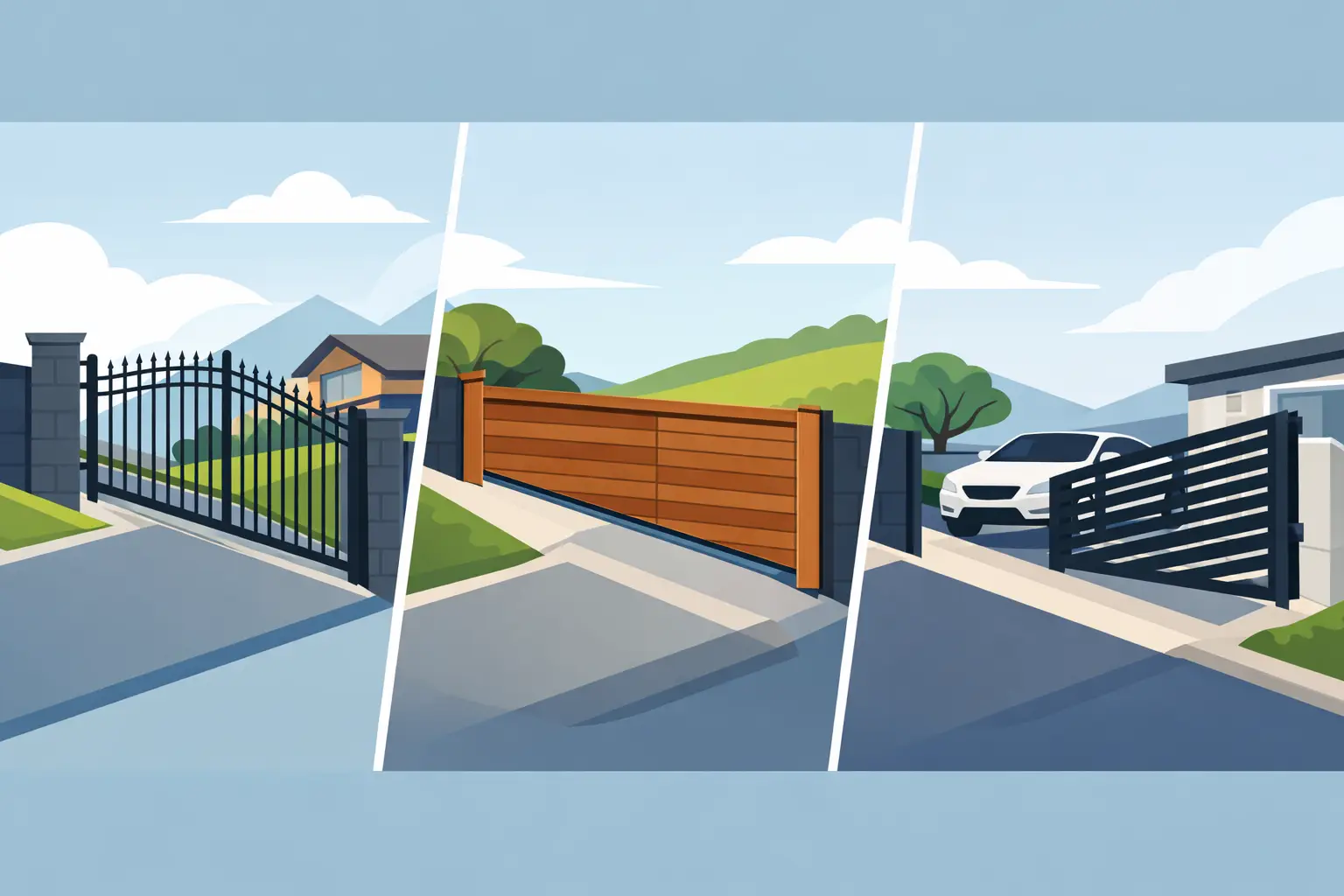
Sliding gates are often suited to sites where space is tight or where a strong, controlled vehicle entrance is needed. They work well for industrial premises, depots and commercial compounds, especially where there is regular vehicle traffic and a need for automation. Swing gates can be the better option where there is room to operate them safely and where the appearance of a more traditional entrance matters.

Pedestrian gates should not be treated as an afterthought. If people are using the vehicle entrance because the foot access is inconvenient or poorly controlled, the perimeter is already underperforming. A properly planned pedestrian gate with intercom or access control can improve both security and day-to-day use.

For many sites, aluminium gates offer a sensible commercial balance. They are lightweight, which can support smoother automated operation, and they do not demand the same maintenance burden as timber or untreated steel. That matters for busy sites where downtime and upkeep both cost money.

Fencing and railings still do most of the perimeter work

Gates attract attention, but the surrounding boundary usually covers far more ground. The right fencing or railings system should suit the risk level, site layout and visual standard expected by the business or development.

Palisade-style security fencing may suit high-risk or industrial environments where deterrence is the priority. On other sites, vertical bar railings or more architectural perimeter systems can provide definition and protection without making the frontage look harsh. For office premises, schools, flat developments and mixed-use sites, appearance can carry almost as much weight as security performance.

This is where buyers need to be realistic about trade-offs. A more open style can improve visibility and look more welcoming, but it may offer less privacy. A heavier-duty system may increase security, but if it feels overly defensive for the setting, it can work against the wider presentation of the site. The best choice depends on how the perimeter is expected to function, not just how strong it looks on paper.

Automation and access control are part of the perimeter, not extras

A commercial perimeter stops being effective when access relies too heavily on manual control. If staff are constantly leaving buildings to open gates, or if deliveries back up because entry systems are unreliable, the setup is not doing its job.

Automation allows gates to support the pace of the site. For commercial buyers, that can mean safer vehicle entry, reduced waiting times and better control over who comes in and out. Combined with intercom systems, keypads, fobs or managed credentials, automation turns a boundary into an active access system.

This is especially useful on sites with multiple user groups. Staff, residents, visitors, couriers and contractors often need different levels of access. A well-planned system can handle those needs far more effectively than a basic manual entrance. It also creates a more professional first impression, which matters for offices, developments and customer-facing premises.

Of course, automation needs to be chosen properly. Gate size, frequency of use, power supply, safety requirements and traffic flow all affect what is suitable. There is little value in over-specifying a system for a light-use site, but under-specifying for a busy entrance usually leads to frustration and avoidable repair costs.

Why aluminium is increasingly popular for commercial sites

When buyers compare perimeter materials, aluminium often stands out for practical reasons rather than trends. Commercial property managers and developers usually want something that looks smart at handover and still performs years later without constant attention.

Aluminium is well suited to that brief. It is resistant to rust, lightweight compared with steel and available in a wide range of styles and finishes. For coastal areas or exposed locations, corrosion resistance can be particularly valuable. For automated gates, lower weight can support smoother operation and reduce strain on motors and hardware.

There is also the issue of maintenance. Commercial sites are busy enough without adding repainting, treatment or regular remedial work to the list. A low-maintenance perimeter can reduce ongoing cost and simplify asset management, especially across multi-site portfolios or developments with managing agents involved.

That does not mean aluminium is the answer to every project. Very high-security environments may still require specialist systems designed for more extreme risk levels. But for a broad range of commercial applications, it offers a strong mix of durability, appearance and long-term value.

The best commercial perimeter solutions depend on the site type

The phrase best commercial perimeter solutions only really makes sense when tied to the site itself. A retail park entrance has different priorities from a logistics yard. A school may place more emphasis on controlled pedestrian access and safe separation. A business park may need a cleaner, more design-led frontage that still protects private parking and service areas.

For developers, kerb appeal and consistency often matter alongside security. The perimeter needs to support the scheme visually and hold up well after completion. For builders and contractors, programme, availability and ease of installation can matter just as much. For facilities managers, reliability and low upkeep tend to rise to the top very quickly.

This is why bespoke design can be so useful. Not every opening is standard, and not every project can be solved with an off-the-shelf product. Some sites need made-to-measure gates, integrated access control or specific architectural styling. Others need a ready-made solution that meets budget and timescale without unnecessary complexity. Good perimeter planning leaves room for both.

What to consider before specifying a system

Before choosing products, it helps to look at how the entrance and boundary will be used every day. How many vehicles arrive on a typical day? Are there HGVs, staff cars and pedestrians all using the same point? Does the site need to look open and welcoming, or clearly private and controlled? Is the main concern theft deterrence, unauthorised access, privacy, or simply replacing an ageing perimeter with something more durable?

It is also worth thinking beyond purchase price. A cheaper system can become more expensive if it requires regular maintenance, frequent repairs or early replacement. The same applies to appearance. A perimeter sits at the front of the property and shapes how customers, tenants, staff and visitors judge the site before they even step inside.

Support during selection matters too. Commercial buyers often need more than a product list. They need help matching gate type, material, automation and access control to the realities of the site. That is where a specialist supplier can add real value, especially when bespoke options, transparent pricing and installation support are available.

At Aluminium Gates Direct, that practical approach is central to helping buyers choose solutions that suit both immediate needs and long-term site performance.

A good perimeter should make life easier, not add another problem to manage. The right solution is the one that fits the site, works reliably every day and still looks the part years down the line.

How to Measure for Garden Gates Properly

How to Measure for Garden Gates Properly

A garden gate can look straightforward until the measurements are taken and the finished gate arrives a little too wide, too short or awkward against a slope. That is why knowing how to measure for garden gates properly matters before you choose a style, material or opening type. A few careful checks at the start can save time, extra cost and fitting problems later.

For homeowners, builders and trade buyers alike, the goal is simple – get a gate that fits the opening, works smoothly and looks right on the property. The best approach is to measure the actual opening rather than guess from an old gate, and to take those measurements with the gate posts, hinges, latch position and ground levels in mind.

How to measure for garden gates without guesswork

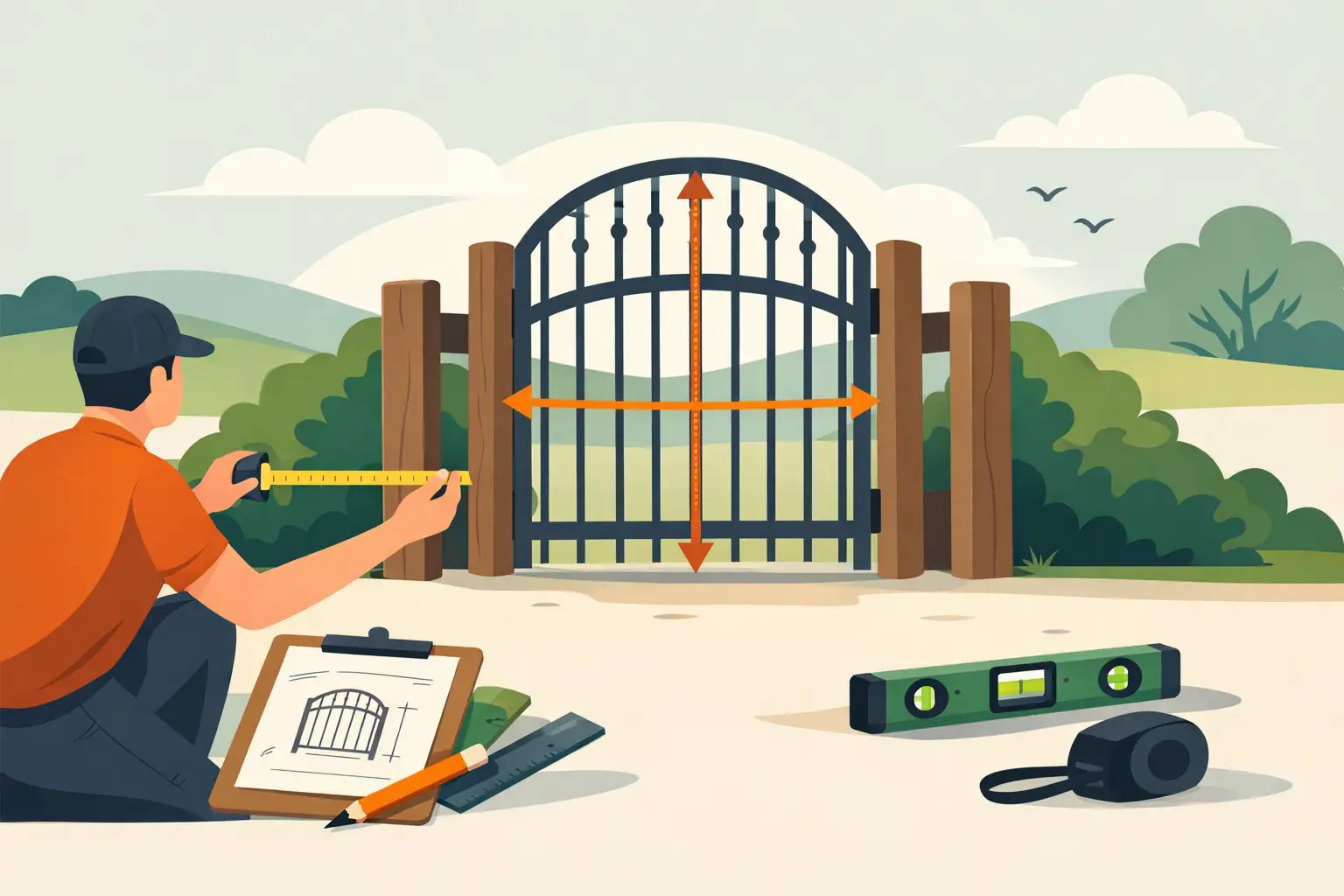
Start with the opening itself. If there is no gate in place yet, measure the clear distance between the inside faces of the posts, walls or pillars where the gate will sit. Take that width in millimetres, not centimetres, as this gives a more precise basis for manufacture or selection.

If you are replacing an existing gate, do not rely on the old gate size alone. Existing gates are often undersized to allow for warped timber, worn hinges or uneven posts. Measure the opening independently, then compare that figure with the current gate only as a reference.

Width should be checked in three places – near the top, middle and bottom of the opening. This matters because many openings are not perfectly square. Brick piers can taper slightly, timber posts can shift over time and older boundaries are rarely exact. Use the narrowest width as your working measurement unless a supplier advises otherwise.

Height needs the same care. Measure from the finished ground level up to the desired top of gate, and take this on both sides of the opening. If the ground slopes, record the difference. A gate installed across a level threshold behaves differently from one fitted over a rising path, uneven paving or soft garden ground.

The measurements that matter most

When customers ask how to measure for garden gates, they often focus only on the opening width. In practice, there are several dimensions that affect the final fit.

Opening width

This is the clear structural gap between the supports. For a single garden gate, it is usually the main starting point. For a pair of gates, measure the full width between posts and note whether you want equal leaves or one active leaf and one fixed or secondary leaf.

Gate height

This is not always the same as fence height. Some customers prefer the gate to line through with adjacent fencing. Others want a slightly taller gate for privacy or security, or a lower gate at the side of a property to keep the front aspect more open. Measure to the practical finished height, not simply to the top of a nearby panel.

Post sizes and positions

If posts are already in place, note their dimensions and material. If posts are still to be installed, that changes the measuring process slightly, as the finished opening can be planned around the gate rather than the other way round. This can be useful when ordering bespoke aluminium gates, as it allows better control over proportions and fitting tolerances.

Ground clearance

A gate needs enough clearance at the bottom to open freely. Gravel, block paving, grass and sloping paths all affect this. Too little clearance and the gate may catch. Too much and you may be left with an unattractive gap or reduced privacy. The right allowance depends on the site and the gate style.

Check the site, not just the tape measure

A technically correct width can still lead to problems if the site conditions are ignored. Before ordering, stand in the opening and look at how the gate will actually operate.

Ask yourself which way the gate should open. Inward opening is common for residential side gates, but the available space inside the boundary matters. If there is a step, raised patio, parked car area or uneven path behind the gate, the opening arc needs checking. Outward opening may be possible in some settings, but not where it interferes with public footpaths or access.

Also look at the hinge side. The structure carrying the gate must be sound enough for the gate weight and frequent use. Aluminium has a real advantage here because it is lightweight as well as strong, which reduces strain on posts and hardware compared with heavier materials. Even so, the fixing point still needs to be stable and suitable.

Latch position is another detail people often leave until later. If the gate is fitted between brick piers, for example, make sure there is enough practical space for the latch, keep and any lock or access control hardware.

Measuring openings on a slope

Sloping ground is one of the most common reasons for ordering delays or installation adjustments. If the path rises across the gate opening, a standard square-bottomed gate may not clear the ground once it begins to swing. That does not mean the project is a problem, but it does mean the slope must be measured clearly.

Place a straight edge or string line across the opening and measure the change in ground level from one side to the other. Then check how much clearance is needed at the high point and low point. In some cases, a gate with increased underclearance will work. In others, a raked bottom or an alternative hinge setup may be more appropriate.

It depends on how steep the slope is, the width of the gate and the direction of opening. A narrow pedestrian gate over a slight fall is very different from a wider side access gate opening across sharply rising paving. This is where accurate site details help a supplier recommend the right solution rather than forcing a standard fit into an awkward opening.

Single gates, pairs and made-to-measure options

For a simple side gate, measuring is usually straightforward once the opening and levels are confirmed. Pair gates need a little more planning. You will need the full opening width, but also a decision on leaf split, meeting point and whether a centre stop is needed.

Readymade gates can be a good fit where the opening closely matches standard sizes and the site is relatively straightforward. Bespoke gates are often the better choice where dimensions are unusual, where visual proportion matters or where the property needs a more tailored finish.

That is especially relevant with aluminium. Because the material is durable, low maintenance and available in a wide range of designs, many customers want the measurements to support both function and appearance. A gate that fits perfectly but looks too squat or too narrow for the opening may still feel like the wrong choice. Good measuring supports both the practical side and the finished look.

Common measuring mistakes to avoid

The most common mistake is measuring the old gate instead of the opening. The second is taking just one width measurement and assuming the posts are parallel. The third is forgetting to allow for fittings, clearances and ground movement.

Another issue is measuring before the groundworks are finished. If paving, resin, gravel grids or a new path level are still to come, your current height and clearance figures may change. It is usually better to measure from the final intended ground level rather than what is there mid-project.

Customers also sometimes overlook whether the posts are plumb. If a timber post leans slightly, the opening may appear wider than it really is in one section. Measuring at several points helps reveal this.

Finally, avoid rounding too generously. A few millimetres can matter with gate manufacturing and installation. Record exact figures and note anything unusual rather than smoothing it out.

What to have ready before you ask for a quote

A good quote starts with good information. Ideally, have the opening width at top, middle and bottom, the intended gate height, the direction of opening and a note on the ground surface. If the site is sloped, include the level change. If posts already exist, note their size and material.

Photos can also help identify details that dimensions alone do not show, such as returns on brick piers, awkward hinges from a previous gate or restricted space behind the opening. For projects involving automation, intercoms or commercial access control, the surrounding layout becomes even more important.

This is where a specialist supplier adds value. The right advice is not only about selling a gate in a given size. It is about making sure the measurement suits the gate type, the fixing method and the way the gate will be used every day. At Aluminium Gates Direct, that practical support is part of helping customers choose the right solution rather than the nearest option.

If you are unsure about a measurement, pause before ordering. A careful recheck now is far easier than correcting a gate that has been made to the wrong size, and a well-measured opening gives you the best chance of a gate that fits cleanly, works properly and looks right for years to come.

How to Plan Gate Automation Properly

How to Plan Gate Automation Properly

A gate that looks right on paper can become awkward very quickly once automation is added. Posts may be in the wrong place, the ground may not allow a smooth swing, or the access system may not suit how the property is actually used. That is why knowing how to plan gate automation early matters. It helps you avoid costly changes later and makes sure the finished system is secure, practical and built around the site.

How to plan gate automation from the start

The best time to think about automation is before the gate is ordered, not after it has been installed. Automation affects the gate style, the size of the opening, the hinge positions, the space available for motors and the way vehicles and pedestrians enter the site.

For a homeowner, that may mean deciding whether you want the gate to open into the drive, slide to one side or work with an intercom for deliveries. For a developer or commercial buyer, it often means balancing security, traffic flow, compliance and ease of use. In both cases, the same principle applies – the gate, automation and access control should be planned as one system.

If you treat automation as an add-on, you can still make it work, but choices become narrower. Planning ahead gives you more control over design, performance and budget.

Start with the site, not the motor

Many buyers begin by asking which automation kit they need. In reality, the site tells you far more than the motor catalogue does. The width of the opening, the slope of the driveway, the available run-back space and the position of boundary walls all influence what is possible.

A swing gate is often a good choice for residential properties where there is enough room for the leaves to open safely. It can be a clean, elegant option and suits many driveway layouts. However, if the driveway rises steeply behind the gate, outward or inward swing may be restricted. In that case, a sliding gate may be the better answer, provided there is enough lateral space for the gate to travel.

Ground conditions matter too. Uneven surfaces, poor drainage or limited foundations can affect reliability over time. If the entrance is exposed to heavy wind, that should also be considered, especially with taller solid-panel designs. Aluminium helps here because it is lightweight compared with many alternative materials, reducing strain on hinges, motors and support structures.

Choose the right gate style for automation

When planning gate automation, the gate design itself is not just a visual choice. Weight, infill style, width and method of operation all affect how the automation performs.

Swing gates are common for driveways and private entrances. They can work very well where there is clear opening space and properly positioned posts. They are often simpler in appearance and can suit both traditional and contemporary properties. The trade-off is that they need room to move and can be less suitable where the ground levels are awkward.

Sliding gates are often preferred for wider openings, busier sites or locations where space behind the gate is limited. They can offer strong perimeter control and are popular on commercial sites. That said, they usually require more civil preparation, including a suitable track or cantilever arrangement and enough side room for the gate to park.

The gate material also plays a part. Aluminium is well suited to automation because it combines strength with lower weight and minimal maintenance. That can help improve long-term performance and reduce wear on moving parts. It also makes bespoke design more practical without automatically creating a heavier gate that needs a more demanding motor setup.

Think carefully about how the gate will be used

A gate at a family home is used differently from a gate at a development entrance or trade yard. That sounds obvious, but it is often missed. Good planning means thinking beyond the opening size and considering the day-to-day pattern of use.

Ask how many times the gate is likely to open each day, who needs access and whether entry needs to be controlled at all times. A private driveway may only need remote fobs, keypad access and occasional intercom use. A commercial site may need timed access, vehicle detection, staff credentials, delivery management and integration with wider security systems.

You should also consider who will use the entrance on foot. If pedestrians regularly pass through, a separate access point is often safer and more convenient than relying on the main vehicle gate. This is particularly important on busy sites, shared entrances and family homes where children may be present.

Plan the access control at the same time

Automation is only one part of the system. The other part is deciding how the gate will be opened, monitored and managed. This is where access control and intercom choices come in.

Some properties only need a straightforward setup with remote controls and a keypad. Others benefit from audio or video intercom systems, smartphone-based access or multi-user entry management. The right option depends on the property type, the number of users and the level of oversight required.

This is also where future-proofing helps. If you are carrying out a wider entrance upgrade, it can make sense to allow for intercoms, additional control points or cabling routes even if you do not install every feature on day one. It is usually easier and more cost-effective to make provision early than to reopen the entrance later.

Safety is not optional

Any automated gate must be planned with safety in mind. This is not only about good practice. It is a core part of getting the installation right.

A proper specification should consider safety devices such as photocells, obstacle detection and emergency release arrangements. The force applied by the gate, the stopping behaviour and the presence of pinch points all need attention. On commercial sites and shared-use settings, this becomes even more important because usage is higher and the range of users is wider.

This is another reason to involve specialists early. Safe automation depends on the relationship between the gate, the motor, the control setup and the site conditions. It is not simply a case of attaching an operator to a gate and hoping for the best.

Allow for power, cabling and groundwork

One of the most common planning mistakes is underestimating what sits behind the finished gate. Automation needs more than a pair of motors. It may require mains power, ducting, safe cable routes, control housings, intercom posts and suitable foundations.

If the property is being built or renovated, this stage should be coordinated with the wider works. That gives you the opportunity to position services correctly and keep the entrance looking tidy. If the gate is being added to an existing property, it is still worth mapping out where power will come from and how cabling will be protected.

Solar can be an option in some situations, but it is not always the best choice for every site in the UK. Usage levels, available sunlight and battery performance all need to be considered realistically.

Budget for the full system, not just the gate

When customers first price a project, they often focus on the gate itself. The final investment usually includes more than that: the gate, posts, automation equipment, safety devices, access control, groundwork, electrical preparation and installation.

That does not mean automation is poor value. It means the budget should reflect the complete system from the outset. A cheaper starting point can become expensive if parts of the specification have been missed and need correcting later.

There is also a balance to strike between upfront cost and long-term value. A well-made aluminium gate with a properly matched automation setup can offer low maintenance, strong kerb appeal and dependable operation for years. Cutting corners on specification may save money initially, but it often creates avoidable service issues down the line.

Work with specialists who can match product to project

Every entrance has its own constraints. Some customers need a readymade solution with a straightforward automation package. Others need a bespoke gate, intercom integration and support across supply and installation. The right advice should reflect that, rather than pushing a one-size-fits-all answer.

This is where working with a specialist supplier makes a real difference. A team that understands gate design, automation requirements and installation practicalities can spot issues early and guide you towards the right combination of gate type, control system and site preparation. For customers across the UK, Aluminium Gates Direct supports this process by helping match each project to the right product and installation route.

A simple checklist before you commit

Before placing an order, make sure you can answer a few key questions clearly. What type of gate suits the site best? How much space is available for movement? How will vehicles and pedestrians access the property? Where will power and cabling run? What level of control, security and convenience do you actually need?

If any of those points are still vague, it is worth pausing. A little more planning at this stage usually saves time, money and frustration later.

The best automated gate systems feel easy to use because the hard thinking happened early. Get the planning right, and the gate will not just open and close – it will fit the property, the people using it and the demands of everyday life.

Commercial Gate Specification Guide UK

Commercial Gate Specification Guide UK

A gate that looks right on paper can still be wrong for the site. That is usually where a commercial gate specification guide proves its value – not as a box-ticking exercise, but as a practical way to avoid delays, unsafe layouts, costly changes and a gate system that falls short once the site is live.

For commercial projects, the gate is rarely a standalone purchase. It sits within a wider perimeter strategy that may include fencing, pedestrian access, intercoms, automation, delivery traffic, staff movement and ongoing maintenance responsibilities. A good specification makes sure those parts work together from the start.

What a commercial gate specification guide should cover

At its core, the specification should define what the gate needs to do, not just what it should look like. Security level, opening frequency, available space, user type and method of control all matter. A busy industrial entrance with regular vehicle movements needs a very different solution from a gated block of flats, school entrance or service yard.

This is where many projects go off course. Width and height are often treated as the main decisions, when the real question is how the gate will perform every day. Will it open hundreds of times a week? Does it need to restrict unauthorised access while allowing timed entry? Is there enough run-back for a sliding gate, or is a swing gate more realistic? Those answers should shape the specification early.

Material choice matters too. Aluminium is often specified for commercial gates because it gives a strong combination of durability, low weight and low maintenance. In practice, that can make installation easier, reduce strain on automation equipment and help maintain a clean appearance without the corrosion concerns associated with some steel systems.

Start with the site, not the catalogue

The most reliable specifications begin with the site conditions. Clear opening width is only one measurement. Ground levels, gradients, surface finish, nearby walls, fencing lines and vehicle turning space all affect what can be installed safely.

A sliding gate can be an excellent choice where security and controlled access are priorities, particularly on sites with enough lateral space. It avoids the arc of a swing leaf and can suit entrances where vehicles queue close to the opening. However, it does need room to travel and a layout that supports the track or cantilever design. If the site is tight or uneven, a swing gate may be simpler, but only if there is enough clearance and the gate leaves will not obstruct traffic or pedestrians.

Pedestrian movement should never be an afterthought. On many commercial sites, the best answer is not to make every user pass through the main vehicle gate. A separate pedestrian gate can improve safety, reduce wear on the main entrance and make access control easier to manage.

Choosing the right gate type

Swing or sliding in a commercial gate specification guide

There is no universal winner between swing and sliding gates. It depends on traffic flow, space and the level of control required.

Swing gates often suit smaller commercial premises, private developments and lower-frequency entrances. They can offer a neat appearance and straightforward operation, particularly where there is sufficient internal space for the leaves to open fully. But they are more affected by slopes, wind loading and the need to keep the opening area clear.

Sliding gates are frequently preferred for sites with heavier traffic or stricter perimeter control. They can be better for wider openings and do not need the same swing clearance, which helps in areas where vehicles wait close to the entrance. The trade-off is that they need the right side room and support structure, and the specification must account for that rather than assuming it can be added later.

If the project includes both security and presentation requirements, the visual design should still support the practical brief. The gate style, infill detail and finish all need to reflect the building and perimeter without compromising visibility, privacy or access performance.

Security, access and daily use

Commercial gates are specified for more than appearance. Most buyers are balancing at least three priorities: security, convenience and reliability. The specification should be honest about which of those leads the decision.

For example, a gate intended for a logistics yard may prioritise frequent automated opening and clear vehicle movement. A gate for a residential development may place more emphasis on controlled entry, intercom integration and a polished finish. A school or healthcare setting may need a stronger focus on safeguarding, pedestrian separation and predictable operating behaviour.

Access control should be defined early. That may include keypads, fobs, GSM entry, timed access, vehicle detection loops or intercom systems. If the gate will be automated, the system should be chosen as part of the wider specification rather than added as an afterthought. Power requirements, usage cycles and user convenience all need to align.

Intercom integration is increasingly common on commercial and mixed-use sites. Systems such as Akuvox can support more flexible visitor management, but only if the specification considers cabling, network requirements, user permissions and how the site team will operate it in practice.

Safety and compliance cannot be vague

A commercial gate that is poorly specified can become a safety risk very quickly. Powered gates in particular need proper risk assessment, suitable safety devices and professional installation. The specification should make clear how the gate will operate safely for vehicles, staff, residents or visitors.

That means considering photocells, safety edges, force settings, emergency release and the way users approach the entrance. A gate may be technically compliant in isolation and still create a poor real-world outcome if the surrounding layout encourages unsafe behaviour.

It is also worth being realistic about usage. A lightly used gate and a high-cycle entrance should not be specified in the same way. Duty cycle affects automation choice, component life and maintenance planning. Under-specifying to save money at purchase stage often costs more once breakdowns and callouts begin.

Finish, design and long-term maintenance

Commercial buyers are often under pressure to think beyond capital cost, and rightly so. A cheaper gate that needs frequent repainting, heavier maintenance or earlier replacement is not always the better-value option.

This is one reason aluminium continues to appeal across commercial and multi-property settings. It offers a clean, modern appearance and strong resistance to weathering, while reducing the ongoing upkeep associated with traditional materials. Powder-coated finishes also give flexibility on colour and design, which matters where the gate needs to match branding, architecture or surrounding perimeter products.

The right finish is not only about appearance. Coastal exposure, urban pollution, high-use environments and the expected cleaning regime should all be considered. A specification that ignores those factors may still look acceptable at handover, but less so after a few winters.

Bespoke or readymade

Not every commercial project needs a fully bespoke gate, but many benefit from at least some level of customisation. If the opening is non-standard, the site has awkward levels, or the gate must align with an existing fence line, readymade options may create compromises elsewhere.

That said, bespoke is not automatically better. If the site requirements are straightforward and timescales are tight, a standardised solution can offer good value and quicker progress. The key is to decide based on fit for purpose rather than assumption.

Experienced suppliers will usually help identify where standard options work well and where custom manufacture will avoid downstream issues. That support can be particularly useful for developers, builders and site managers balancing specification, budget and programme pressures at the same time.

Common mistakes in commercial gate specification

Most avoidable problems come back to one issue: the gate was chosen before the full site requirement was understood. That can show up in different ways. Clear opening widths may be based on occasional car traffic when service vehicles need more room. Automation may be selected for light use on an entrance that becomes a daily bottleneck. A visually strong design may reduce sight lines where visibility is needed.

Another common mistake is treating installation as separate from specification. In reality, fixing details, ground conditions, power supply and safety setup all affect what should be ordered. Early coordination usually saves both time and money.

For UK buyers, it also helps to work with a specialist who understands the full picture, from product selection to automation and installation support. Aluminium Gates Direct works with customers nationwide on exactly these kinds of requirements, helping match the gate system to the site rather than forcing the site to fit the product.

Getting the specification right first time

A strong specification is clear, practical and grounded in how the entrance will actually be used. It covers gate type, dimensions, materials, finish, automation, access control, safety features and installation conditions in one joined-up plan.

If you are comparing options, ask simple questions. Who uses the entrance each day? How often will it open? What space is really available? What happens during a power cut? How much maintenance is acceptable over five or ten years? Those answers usually lead to a better decision than starting with style alone.

The right commercial gate should secure the site, support daily access and continue to look the part without becoming a maintenance burden. When the specification reflects the real demands of the project, the buying process becomes much more straightforward – and so does the result.

Best Gates for Sloped Driveways

Best Gates for Sloped Driveways

A driveway that rises or falls across its opening changes the whole gate decision. Gates for sloped driveways need more than the right look – they need the right opening method, clearances, hinge setup and automation plan, otherwise a smart entrance can become awkward to use very quickly.

For many property owners, the main concern is simple: will the gate actually open properly without catching the ground, leaving large gaps or creating problems for vehicles and pedestrians? The answer depends on the direction and degree of the slope, the available space and whether you want manual or automated operation. Get those details right at the start and the finished result can look clean, work reliably and add genuine value to the property.

What makes gates for sloped driveways different?

On a level driveway, most gate styles are straightforward to specify. On a slope, the geometry changes. A standard pair of swing gates opening across a rising drive may need significant ground clearance at the lower edge, which can leave an uneven gap underneath. That affects both appearance and security.

The steeper the incline, the more careful the design needs to be. A mild slope may still allow a conventional swing arrangement with adjusted hinge positions or a reduced gate height at the lower end. A more pronounced slope often points towards a tracked sliding gate, cantilever sliding gate or a specially designed rising hinge setup.

This is why there is rarely a one-size-fits-all answer. The best option is the one that suits the site conditions first, then matches the style of the property and the intended budget.

Swing or sliding gates for sloped driveways?

This is usually the first major choice, and in many cases the slope itself narrows the options.

Swing gates on a slope

Swing gates can work well on sloped driveways, but only in the right circumstances. If the drive slopes upwards away from the road, inward-opening gates may foul the ground unless enough clearance is built in. That can create a visible gap beneath the gate, particularly at one end. On a shallow incline, this may be acceptable. On a steeper one, it can look unbalanced and reduce privacy.

Outward-opening gates are sometimes considered, but they are not always practical or compliant where the gate would encroach onto a pavement or public highway. For many homes, that rules them out immediately.

There are technical ways to improve swing gate performance on a slope. Rising hinges can lift the gate slightly as it opens, and split gate designs can reduce the swing arc. Even so, swing gates tend to be best where the slope is modest and the driveway layout gives enough room to work with.

Sliding gates on a slope

Sliding gates are often the cleaner solution for sloped driveways because they move sideways rather than swinging into the incline. That avoids the issue of the gate bottom catching the drive surface. For properties with a noticeable rise, this can make sliding gates the more practical and more polished choice.

There are two common approaches. A tracked sliding gate runs along a ground track, while a cantilever gate is supported without a track across the opening. Tracked systems can be cost-effective, but the track must be kept clear of debris. Cantilever systems avoid that issue and are popular where reliability and lower ground interference matter, though they usually need more run-back space and can carry a higher initial cost.

If the site allows lateral space for the gate to travel, sliding designs are often the strongest contender.

Why aluminium is well suited to sloping entrances

Material choice matters on any gate project, but it matters even more on a slope. Heavier gates place more demand on hinges, posts, motors and structural supports. That is one reason aluminium is such a good fit.

Aluminium gates combine strength with relatively low weight, which helps with smoother operation and reduces strain on moving parts. On a sloped driveway, that can be a real advantage whether the gate is manual or automated. It also makes bespoke sizing and design adjustments more manageable, especially where a gate needs to be tailored to awkward site dimensions.

There is also the maintenance factor. Timber can move over time, and steel may need more attention to protect against corrosion. Aluminium is resistant to rust and requires very little ongoing upkeep, which appeals to homeowners and commercial buyers alike. For anyone investing in a gate system on a challenging entrance, low maintenance and long-term reliability are not small benefits.

Measuring the slope properly

A surprising number of gate problems begin with inaccurate site assumptions. A driveway can look only slightly sloped, yet the change in level across the gate opening may be enough to affect operation.

The important point is not just that there is a slope, but how much fall or rise occurs across the width of the opening and how quickly it changes. A gentle, consistent incline is very different from a driveway that dips near the threshold and then levels out. The second case may allow more flexibility than the first.

This is where expert advice makes a difference. Proper measuring should account for opening width, gate height, hinge side levels, vehicle clearance, post positioning and the available space for gate travel. If automation is planned, the motor position and safety equipment also need to be considered early rather than added as an afterthought.

Design choices that affect appearance and performance

A practical gate does not need to look compromised. In fact, some of the best solutions for sloped driveways are the ones where the engineering has been considered carefully enough that the result looks deliberate rather than adapted.

One choice is whether the bottom of the gate follows the line of the slope or stays level. A gate with a raked bottom edge can reduce the visual gap and create a neater fit to the driveway. That is often attractive on residential properties where appearance is just as important as function. A level-bottom design may still be suitable in some settings, particularly where the slope is slight or the style of the entrance is more contemporary and minimal.

The gate infill also plays a part. Solid or semi-solid designs offer privacy but make any bottom gap more noticeable. Open-board or railed styles can be more forgiving visually. For developers and commercial sites, this can become a balance between presentation, privacy and security.

Colour, finish and surrounding fencing should also be considered as part of the whole entrance scheme. A gate on a slope already has a technical challenge to solve, so the design should feel cohesive rather than pieced together.

Automation on sloped driveways

Automation can work very well on sloped driveways, but the gate type and motor setup need to match the site. This is not an area where a generic kit should simply be applied.

For swing gates, slope affects ram geometry, opening angles and safety zones. For sliding gates, the track, support structure and run-back area all need to be right. In either case, reliable automation depends on sound groundwork and accurate specification.

Safety is especially important. Photocells, obstacle detection and controlled force settings all need to be planned around the movement path of the gate. If pedestrians use the same entrance, access control should be arranged with that in mind. Intercom systems and smart entry options can be integrated neatly, but only if they are considered as part of the full project.

For many customers, the most cost-effective route is not the cheapest gate at the start, but the gate that is designed correctly for the slope and therefore avoids later remedial work.

When bespoke is the better option

Readymade gates can be excellent value where the opening is straightforward and the slope is minimal. Once the site becomes more complex, bespoke often becomes the smarter choice.

A made-to-order gate can be sized precisely, designed with the correct bottom rake, matched to the required opening method and prepared for automation from the outset. That level of accuracy tends to produce a better fit and a better finish, especially on properties where kerb appeal matters.

For trade buyers, developers and architects, bespoke specification also helps avoid site delays. A gate that has been designed around the actual conditions is far less likely to need awkward adjustments during installation.

This is where a specialist supplier such as Aluminium Gates Direct can add real value – not simply by supplying the gate, but by helping customers choose a solution that suits the slope, the style of the property and the practical demands of day-to-day use.

The right question is not just what gate you like

It is natural to start with appearance. Most people have a preferred style in mind before they ask about hinges, tracks or clearances. But with sloped driveways, the better starting point is how the gate will operate on the site you have.

Once that is clear, the design options become much easier to narrow down. In many cases, the best result comes from balancing three things: the shape of the driveway, the level of privacy or security you want and the amount of maintenance you are prepared to take on over time.

If your driveway slopes, that does not limit you to an unattractive or compromised entrance. It simply means the gate needs to be chosen with more care. A well-specified aluminium gate can handle the technical demands, look right on the property and stay easy to live with for years to come.

The simplest next step is to treat the slope as the starting point, not a problem to work around later.

Choosing Commercial Gates for Your Site

Choosing Commercial Gates for Your Site

A gate at a commercial entrance does two jobs at once. It has to control access properly, but it also says something about the site behind it. For a warehouse, school, office block, industrial yard or flat development, the right commercial gates can improve security, traffic flow and first impressions without creating unnecessary maintenance problems later.

That balance matters more than many buyers expect. A gate that looks right on paper can become inconvenient in daily use if vehicle access is frequent, space is limited or automation has not been planned properly. The most effective solution usually comes from matching the gate type, material and access control system to the way the site actually operates.

What commercial gates need to do

Commercial gates are not one-size-fits-all products. A private business park has different priorities from a busy logistics yard, and a block management company will usually need a different specification again. Some sites need high levels of perimeter control. Others are more focused on managing visitor access, protecting parking areas or improving the appearance of the frontage.

In practice, most buyers are looking for a combination of security, reliability and ease of use. The gate should be strong enough for the setting, suitable for the traffic levels involved and straightforward to operate every day. It should also fit the visual standard of the property. For customer-facing premises in particular, appearance is not a secondary issue. A smart, well-finished gate can reinforce the professionalism of the business.

This is where material choice becomes important. Traditional steel has long been used for commercial applications, but it brings weight and ongoing maintenance into the conversation. Timber can work in certain settings, though it generally demands more upkeep and may not be the right fit where durability and long-term consistency are priorities. Aluminium offers a practical alternative because it is lightweight, strong and resistant to rust, which makes it particularly attractive for sites that want dependable performance without constant repainting or treatment.

Types of commercial gates

The right style depends on the entrance layout, available runback space and the type of traffic using the site.

Swing commercial gates

Swing gates remain a popular option for many commercial properties. They can suit offices, residential developments, schools and smaller private car parks where there is enough space for the gates to open safely. They offer a traditional, balanced appearance and can work well in both modern and more decorative schemes.

The main limitation is space. If the site entrance slopes sharply, opens directly onto a busy road or has limited room behind the gate line, swing gates may be less practical. They also need careful planning where frequent use is expected, because opening arcs and vehicle waiting areas must be properly considered.

Sliding commercial gates

Sliding gates are often the stronger practical choice for busier or more restricted sites. Because the gate moves sideways rather than opening in or out, it can suit industrial yards, business premises and developments where saving space is a priority. Sliding systems can also offer a good level of security and controlled access, particularly for wider openings.

That said, they need adequate room across the fence line for the gate to travel. Ground conditions, track design and maintenance access all need attention during specification. If the entrance layout does not allow for this, a sliding system may not be viable.

Pedestrian access gates

On many sites, vehicle control is only part of the job. Separate pedestrian gates help organise movement more safely and reduce the need for people to use the main vehicle entrance. This can be especially useful for schools, offices, blocks of flats and mixed-use developments.

When pedestrian gates are designed to complement the main entrance, the whole perimeter feels more coherent. They can also be integrated with access control, intercoms and self-closing hardware depending on the level of control required.

Why aluminium makes sense for many sites

For commercial buyers, lifetime value usually matters more than the lowest upfront figure. Aluminium stands out here because it combines strength with low maintenance. It does not rust in the way steel can, and it does not ask for the routine treatment that timber often requires. Over time, that can reduce maintenance costs and minimise disruption.

The lighter weight of aluminium also has practical benefits. It can place less strain on hinges, motors and moving parts, which is useful for gates that open and close regularly. This does not remove the need for correct specification, but it can support smoother operation and long-term reliability when paired with the right hardware.

Appearance is another factor. Commercial sites increasingly want perimeter solutions that look clean and professional rather than purely functional. Aluminium gates are available in a wide range of styles, from simple contemporary designs to more ornate or privacy-focused options. That flexibility helps buyers meet planning requirements, branding preferences or architectural schemes without compromising on practicality.

Automation and access control

For many commercial gates, automation is not an extra. It is part of making the entrance work properly. If staff vehicles, deliveries, residents or approved visitors need regular access, a manual gate can quickly become inconvenient and inconsistent.

Automated systems can be configured around the site’s day-to-day needs. That may include keypads, fobs, GSM entry, safety devices or intercom integration. On higher-traffic sites, quick and reliable opening matters because delays at the entrance can disrupt operations. On residential or mixed-use sites, the focus may be more on convenience, controlled entry and a tidy user experience.

This is also an area where it pays to think ahead. If a site is likely to need expanded access control later, it makes sense to discuss that at the start rather than treating automation as an afterthought. Gate design, motor choice and cabling routes are all easier to plan early. Aluminium Gates Direct supports projects with both gate supply and automation options, which helps customers keep the product and access side of the specification aligned.

Questions worth asking before you buy

The best commercial gate decisions are usually shaped by practical site details rather than broad assumptions. Width of opening is only the starting point. Buyers also need to think about vehicle types, frequency of use, ground levels, wind exposure, required privacy and who will be using the gate each day.

A distribution yard that sees constant van and lorry movement needs a different setup from a managed car park with scheduled access. A school may place greater emphasis on safe pedestrian separation and controlled entry times. A prestige office development may need the gate to reflect the quality of the building as much as the perimeter security.

Budget matters too, but the cheapest route is not always the most economical. A lower-cost gate that needs frequent upkeep or is not suited to the site can become expensive in the long run. Bespoke options may cost more initially, yet they often solve layout, access or appearance issues more effectively than trying to force a standard product into an awkward opening.

Bespoke or readymade?

There is no single right answer here. Readymade gates can be a sensible choice when the opening is straightforward, the design brief is clear and timelines are tight. They can offer good value and a quicker route to installation.

Bespoke gates are often the better fit where the site has unusual dimensions, specific aesthetic requirements or integrated access needs. They allow more control over layout, infill style, height and finish, which can be important for architects, developers and commercial clients working to a specification. If the gate forms part of a larger perimeter package including fencing, railings and pedestrian access, custom design usually brings a more consistent end result.

Installation and long-term support

Even a well-made gate can underperform if installation is poor. Commercial gates need accurate fitting, proper safety consideration and the right groundwork. Automation adds another layer, because motors, safety edges, control systems and entry devices all need to work together reliably.

This is why supplier support matters. Buyers often benefit from dealing with a specialist that can help from the selection stage through to installation planning. Nationwide coverage and access to experienced installation partners can make a real difference, especially for developers and site managers who need confidence in both product quality and project coordination.

A good supplier should also be clear about pricing, lead times and what is included. That transparency makes it easier to compare options properly and avoid unwanted surprises once the project is under way.

Getting the right result for your site

The best commercial gates are not simply the strongest or the most expensive. They are the ones that suit the entrance, support daily operations and continue to look the part with minimal fuss. For some sites that means a smart automated swing gate. For others, it means a space-saving sliding system with integrated access control and separate pedestrian entry.

If you are planning a new installation or replacing an outdated gate, the most useful starting point is a clear conversation about how the site works now and what it will need in a few years’ time. Get that part right, and the gate becomes more than a barrier – it becomes a dependable part of how the property runs every day.