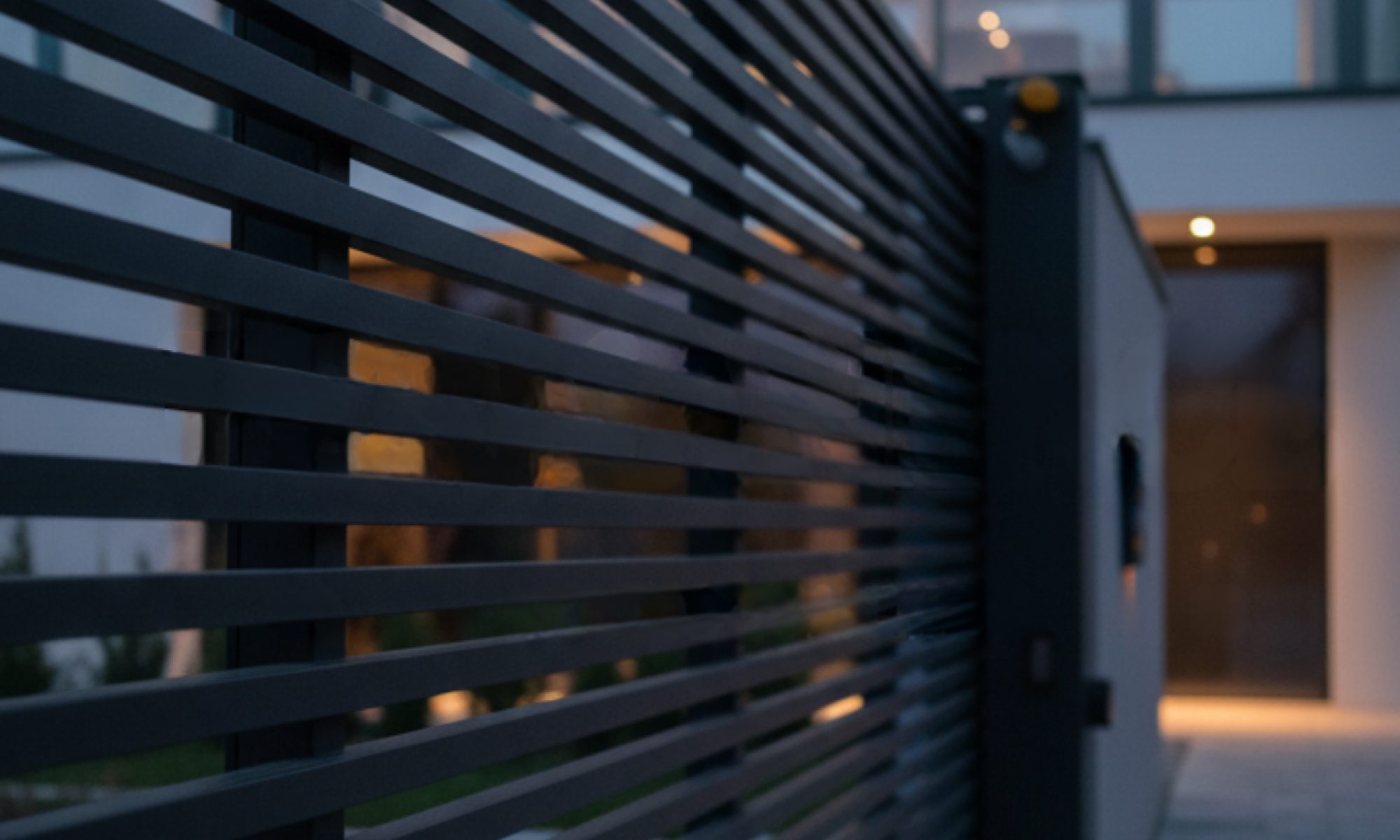

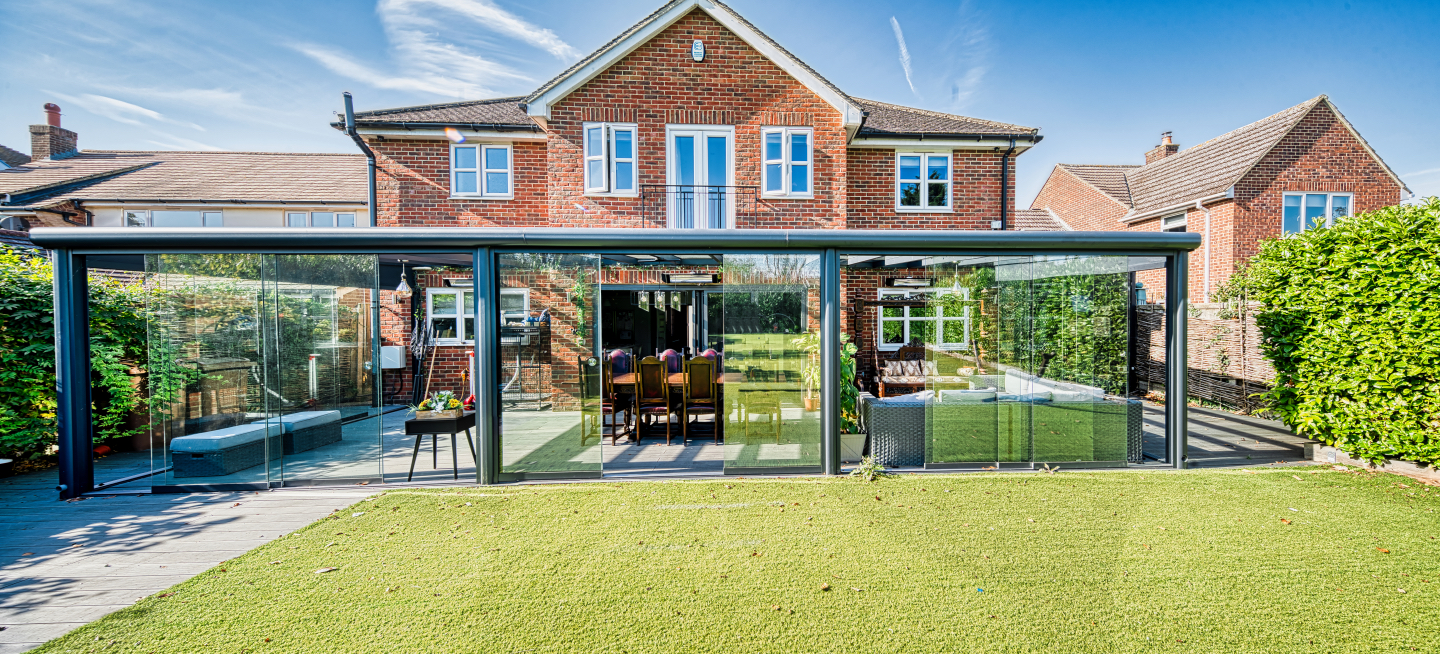
Just launched – Premium Aluminium Verandas
Introducing Our New Premium Aluminium Veranda, Pergola & Canopy Range
Outdoor living has evolved. It’s no longer just about having a garden or patio space – it’s about creating a seamless extension of your home. A place to relax, entertain, and enjoy every season in comfort and style.
At Aluminium Gates Direct, we’re proud to introduce our new premium range of aluminium verandas, pergolas, and canopies – designed to transform the way you experience your outdoor space.
Designed to Extend Your Home
Our latest collection has been developed with one goal in mind: to help you make more of your home. Whether you’re looking to create a sheltered dining area, a shaded lounge space, or a stylish cover for your patio or entrance, our new range offers the perfect solution.
Each structure is designed to blend effortlessly with your home’s architecture, creating a natural flow between indoors and outdoors.
Built Around Flexibility and Choice
No two homes are the same – and your outdoor space shouldn’t be either.
That’s why our aluminium veranda, pergola, and canopy systems are fully customisable. With a wide selection of sizes, configurations, colours, and finishes, you can design a solution that suits your space and lifestyle perfectly.
Optional side panels, lighting, glazing, and shading systems allow you to take your outdoor living experience even further.
Premium Aluminium, Built to Last
Crafted from high-quality aluminium, our new range is designed for strength, durability, and long-term performance.
Unlike traditional timber structures, aluminium offers a low-maintenance solution that won’t warp, rot, or require constant upkeep. It is weather-resistant, colour-stable, and built to withstand the changing seasons – year after year.
Create a Space for Every Season
Rain or shine, your outdoor space should always be usable and inviting. Our verandas, pergolas, and canopies provide shelter from the elements while still allowing you to enjoy natural light and fresh air.
From summer gatherings to cosy autumn evenings, your garden becomes a space you can enjoy all year round.
A New Standard in Outdoor Living
This new range represents more than just a product launch — it’s a new way of thinking about outdoor space. A way to add value, comfort, and lifestyle to your home.
At Aluminium Gates Direct, we’re here to help you design outdoor spaces that feel as good as they look.
Discover the Collection
Explore our new premium aluminium veranda, pergola, and canopy range today and start transforming your outdoor living experience.
Find out more and download our brochure here
Aluminium Gates Direct
Elevating outdoor living.

Driveway Gate Automation Guide for UK Buyers
A gate that looks right but opens slowly, struggles in bad weather or does not suit the way you use your driveway soon becomes a daily frustration. A good driveway gate automation guide should do more than list motor types. It should help you choose a system that suits your property, traffic levels, budget and long-term expectations.
For some buyers, automation is mainly about convenience. For others, it is about security, access control or presenting a more finished entrance to a home or commercial site. In practice, it is usually a mix of all three. The right setup depends on how the gate will be used, who needs access and what the entrance can physically accommodate.
What a driveway gate automation guide should cover first
Before looking at motors or intercoms, start with the gate itself. Automation works best when the gate design, weight, size and opening method have been considered from the outset. Retrofitting automation to an existing gate is often possible, but it is not always the most cost-effective route if the gate is poorly aligned, too heavy or nearing the end of its serviceable life.
This is where material choice matters. Aluminium is a strong option for automated gates because it is lightweight, durable and low maintenance. Lower weight can reduce strain on motors and hardware, which is helpful over time. It also avoids the regular upkeep associated with timber and the corrosion concerns that can arise with some steel gates if coatings become damaged.
The next decision is whether you need a swing gate or a sliding gate. Neither is universally better. The right option depends on space, ground conditions and how vehicles approach the entrance.
Swing or sliding – which suits the site?
Swing gates are a popular choice for domestic driveways and suit many traditional and contemporary properties. They can be single or double leaf and often provide an elegant entrance. They do, however, require clear space to open. If the drive slopes sharply, if vehicles regularly stop close to the gate line or if available opening room is limited, a swing system may become less practical.
Sliding gates are often the better answer where space behind the entrance is restricted. They move laterally rather than opening into the driveway, which can make them more suitable for shorter drive approaches or busier sites. They are also commonly specified for commercial premises because they can handle wider openings and heavier use. The trade-off is that sliding gates need sufficient run-back space and careful attention to track or cantilever design.
In simple terms, swing gates tend to suit properties with room to open and a straightforward layout. Sliding gates tend to suit tighter sites, wider entrances or higher-traffic applications. A proper site assessment is the best way to decide.
Choosing the right automation for driveway gates
Once the gate format is fixed, the automation package can be matched to it. Swing gate systems usually use ram motors, articulated arm motors or underground operators. Sliding gates use a motor that drives the gate along its track or guide system.
Ram motors are widely used and can offer a neat, reliable solution, especially where gate posts and hinge positions are suitable. Articulated arm motors can be helpful when post dimensions or hinge geometry make installation more awkward. Underground motors are often chosen where appearance is a priority because much of the mechanism is hidden, but they can involve higher installation complexity and more groundwork.
For sliding gates, motor selection is largely about gate weight, duty cycle and site conditions. A domestic system used a few times a day has different demands from a shared entrance or commercial site with frequent movements. Choosing too small a motor can shorten service life. Over-specifying without reason can add cost without delivering real value.
A dependable supplier should ask practical questions: how often will the gate open each day, how wide is the opening, what is the gate weight, what safety devices are needed and do you want intercom or remote access? Those answers shape the right system far more than a simple preference for one motor brand over another.
Power supply, access control and day-to-day use
Most automated driveway gates in the UK use a mains power supply, and that remains the standard choice for reliability. In some locations, especially where running power is difficult or costly, solar-assisted setups may be considered. They can work well in the right circumstances, but performance depends on usage levels, battery capacity and available light. They are not the right fit for every site.
Think carefully about how people will actually use the gate. Remote controls are common, but many customers now want keypad entry, GSM access, smart controls or an integrated intercom. For larger homes, flat entrances or commercial premises, an audio or video intercom can make access management much easier.
That is also where a joined-up specification matters. A gate, automation kit and intercom should not be treated as separate purchases if they all need to work together. It is better to plan the full system at the start than to add parts later and hope compatibility issues can be solved afterwards.
Safety and compliance are not optional
Any driveway gate automation guide worth following needs to address safety properly. An automated gate is a powered entrance system, not just a manual gate with a motor attached. Safety edges, photocells, force settings and correct installation all matter.
In the UK, automated gates should be supplied and installed with appropriate risk assessment and safety measures. The exact specification depends on the gate type, usage and environment. A private residential gate and a commercial access point may have different risk profiles, but both need to be considered carefully.
This is one area where cutting corners can be expensive and dangerous. Cheap automation packages may look attractive initially, but if the system is not matched correctly to the gate and installed to the right standard, the long-term cost can be far higher than the upfront saving. Reliability, safety and aftercare support are worth paying for.
Planning for installation and groundwork
Automation is not just about the operator. Posts, foundations, hinge positions, levels, drainage and cable routes all affect the finished result. Many problems blamed on the motor are actually caused by poor groundwork or an unsuitable gate structure.
For swing gates, installers will look at hinge geometry, post stability and the travel arc. For sliding gates, they will focus on foundation quality, track alignment or cantilever support, and clear run-back space. If the entrance is being built from scratch, it makes sense to plan automation before masonry, surfacing and service routes are finalised.
This is particularly relevant on bespoke projects. Custom sizes, decorative finishes and integrated access control can all be achieved, but they work best when the project is specified as one complete package. Aluminium Gates Direct often supports buyers at this earlier stage because it helps avoid costly changes later.
What affects the cost of gate automation?
Prices vary because no two entrances are exactly alike. The biggest cost factors are usually gate size, gate type, material, automation method, access control requirements and site preparation. A standard domestic swing gate with basic automation will sit in a different price bracket from a bespoke sliding gate with intercom, keypad, safety upgrades and extensive groundwork.
It is also worth separating product cost from project cost. Buyers sometimes compare motor prices alone and assume that tells them the whole story. It does not. Fabrication quality, finish, accessories, cabling, control equipment, installation labour and commissioning all form part of the real investment.
Transparent pricing matters here. A good quotation should make clear what is included and what could change if site conditions require additional work. That helps homeowners budget sensibly and gives trade or commercial buyers a clearer basis for specification.
Common mistakes buyers can avoid
One of the most common mistakes is choosing a gate style first and only thinking about automation afterwards. Another is underestimating how often the gate will be used. What seems like light domestic use can quickly become more demanding when multiple drivers, deliveries and regular visitors are factored in.
It is also easy to focus too heavily on appearance and not enough on layout. A beautiful gate still has to open safely and reliably every day. That may mean adjusting the design, changing from swing to sliding or selecting a more suitable access control setup.
Finally, do not overlook aftercare. Even low-maintenance aluminium gates and quality automation systems benefit from periodic checks, servicing and prompt attention if performance changes. A system that is supported properly will generally give better long-term value than one bought on price alone.
Getting the specification right from the start
The best approach is to treat gate automation as a property access solution rather than a single product. That means considering the gate, the operating method, the users, the site and the budget together. For a homeowner, that may mean balancing kerb appeal with ease of use. For a developer or site manager, it may mean balancing presentation with traffic flow, compliance and durability.
If you are comparing options, ask practical questions rather than chasing the cheapest headline figure. Will the system suit the site? Is the gate material appropriate for automation? How will visitors gain access? What support is available after installation? Those are the details that shape whether the finished entrance feels dependable or problematic.
A well-specified automated gate should make arrival and access simpler, not add another maintenance issue to the list. If you start with the realities of the site and the way the entrance will be used, the right solution usually becomes much clearer.
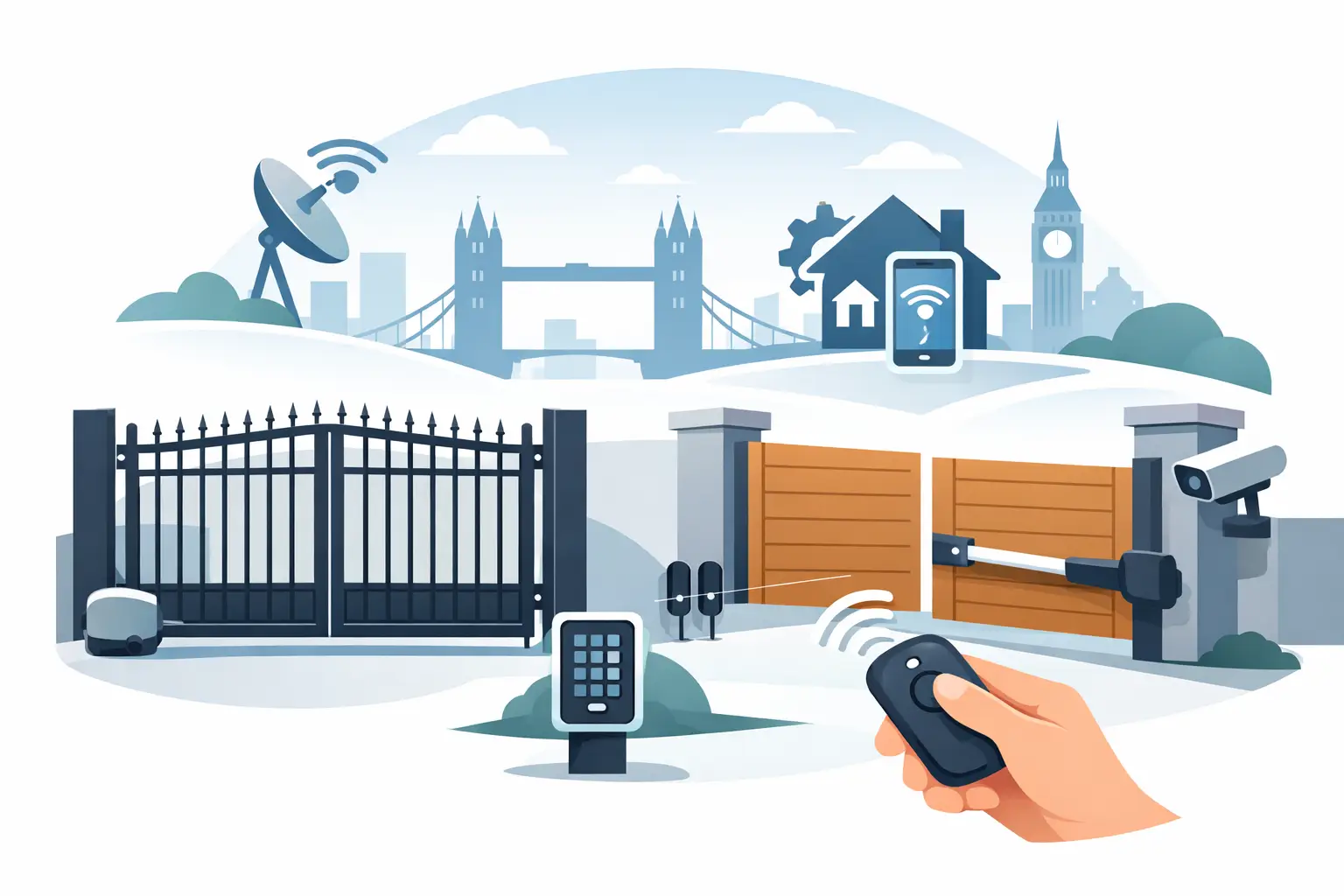
Best Gate Automation Systems for UK Gates
A gate can look the part in daylight and still be a nuisance in the rain if the automation is wrong. That is why choosing the best gate automation systems is not really about picking the most expensive motor or the brand with the biggest brochure. It is about matching the system to the gate, the site, the level of use and the kind of access control you actually need.
For some properties, a straightforward residential setup with remote fobs is enough. For others, especially shared entrances, commercial yards or busy driveways, the right answer includes safety devices, intercoms, access logs and hardware designed for frequent daily cycles. The detail matters because a well-chosen automation system should feel reliable, safe and easy to live with for years.
What makes the best gate automation systems?
The best systems tend to have four things in common. They are suited to the gate type, sized correctly for the weight and dimensions of the gate, supported by dependable safety features and built with components that can be serviced and adjusted over time.
That sounds simple, but this is where many buying decisions go wrong. A lightweight aluminium gate does not place the same demand on automation as a heavy steel gate, and a level driveway does not behave like a sloping entrance exposed to wind. Two properties can look similar on paper and still need very different motor arrangements.
A good automation package should also fit the way the entrance is used. A family home may prioritise quiet operation and convenient entry from the car. A development or commercial site may care more about duty cycle, controlled access and integration with intercom systems. Neither is better in absolute terms. The better choice is the one that suits the real job.
Swing and sliding gates need different automation
If you are comparing the best gate automation systems, the first distinction is whether the gate swings or slides. That choice shapes the entire setup.
Swing gate automation
Swing gates are common on residential driveways and can work extremely well with above-ground or underground motors. Above-ground automation is often more practical and cost-effective. It is easier to access for servicing and usually the simpler option when budgets matter.
Underground motors are chosen more for appearance. They keep the mechanism out of sight and preserve clean gate lines, which appeals to homeowners investing in a premium entrance. The trade-off is that installation can be more involved, and future maintenance access needs to be planned properly from the outset.
Swing gate automation also needs careful attention to hinge geometry, opening angles and any rise in the drive. A gate that opens perfectly by hand can still need a more specific motor arrangement once automation is added.
Sliding gate automation
Sliding gates are often the stronger option where space behind the gate is limited or where security is a priority. Because the gate moves laterally, they avoid the swing arc that can be awkward on shorter drives or tighter commercial entrances.
Their automation generally centres around a track or cantilever system and a sliding motor matched to the gate weight and frequency of use. For high-traffic sites, sliding gates can offer very controlled operation, but they also depend on good groundwork and precise installation. Debris, drainage and track condition all matter more here than many buyers expect.
Motor type is only part of the decision
It is easy to focus on motors because they are the headline item, but the wider system is what determines how well the gate performs day to day. Control boards, photocells, safety edges, flashing lights, release mechanisms and access devices all contribute to reliability and safety.
A cheaper package can look appealing until you compare what is included. Some systems are priced around the motor alone, while others are specified as a complete working solution. That difference matters when you want realistic costs rather than a low starting figure followed by add-ons.
For most buyers, a sensible approach is to ask not just what powers the gate, but how the whole system handles safety, entry, power cuts and regular use.
Safety should never be treated as an extra
Any discussion about the best gate automation systems should include safety from the start, not as an optional upgrade. Automated gates are moving machines. They must be designed, installed and set up to reduce risk to people, vehicles and property.
Photocells are a common part of this, helping detect obstructions in the gate path. Safety edges can add another layer of protection by responding to contact. Force settings, stopping distances and obstacle detection also need proper calibration.
This matters on every gate, but especially where children, shared access or public-facing entrances are involved. Residential customers often think in terms of convenience first, while commercial buyers may focus on security. In practice, both need the same disciplined approach to safe automation.
Access control can change the value of the system
The gate motor opens and closes the entrance, but access control determines how useful the system is. A remote-only setup may be perfectly suitable for a private home with a single household. Once deliveries, tradespeople, visitors or multiple users are involved, the picture changes.
Intercoms, keypads, GSM entry and app-based controls can all improve day-to-day use. Video intercom systems are especially useful where you want to see who is at the entrance before granting access. For larger homes, flat-style developments or commercial premises, this can make the whole setup far more practical.
There is also a budget question here. Spending more on access control can sometimes deliver more real benefit than upgrading to a less visible motor option. It depends on how the gate is used, but convenience is often driven by the controls rather than the mechanics.
Best gate automation systems for homes
For most UK homeowners, the best system is one that combines dependable operation, straightforward controls and sensible long-term maintenance. Aluminium gates are especially well suited to automation because they are lightweight, strong and resistant to rust. That lower weight can reduce strain on components compared with heavier alternatives, while still providing a smart and secure entrance.
A typical residential setup might include above-ground motors for a pair of swing gates, photocells, manual release, remotes and a video intercom. That covers what many households need without overcomplicating the system.
If appearance is the main priority, underground operators may be worth considering. If value and ease of servicing matter more, above-ground automation is often the stronger choice. Neither answer is universal. It depends on the gate design, the driveway layout and how much importance you place on visible hardware.
Best gate automation systems for commercial sites
Commercial and multi-user sites usually need more from automation. A motor that works well on a private driveway may not be suitable for repeated daily cycles at a depot, office entrance or managed development.
Here, duty cycle, speed, integration and durability become more important. Sliding gates are often preferred for security and control, though swing gates still suit many layouts. Access control may need to include intercoms, keypads, timed opening, vehicle access management or multiple user permissions.
The best setup is usually one that balances traffic demands with predictable maintenance. Over-specifying can waste budget, but under-specifying leads to downtime, wear and frustration. For commercial buyers, dependable performance is often the real saving.
Installation quality matters as much as product quality
Even the best gate automation systems can disappoint if the installation is poor. Motor alignment, gate geometry, stops, cabling, drainage, foundations and safety setup all affect how the gate performs.
This is one reason why early specification is useful. If the gate, posts, automation and access control are considered together, fewer compromises are needed later. Retrofitting automation can work very well, but it sometimes reveals site constraints that would have been easier to handle at the design stage.
That joined-up approach is where specialist support adds real value. Aluminium Gates Direct helps customers align gate choice, automation and access control so the finished system works as a complete entrance solution rather than a collection of separate parts.
How to choose with confidence
If you are weighing up the best gate automation systems, start with the facts of the site. Gate type, width, weight, usage levels, power supply, driveway gradient and preferred access method should all be clear before products are compared.
After that, think in terms of ownership rather than just purchase price. The right system should be reliable, serviceable and suited to the way you will use it in winter, at night, in poor weather and over repeated daily operation. A lower upfront cost is not always better value if it brings more maintenance or less convenient access.
The most successful projects usually come from a straightforward brief and honest advice. When the gate, automation and intercom are chosen to work together, the result is simpler, safer and better suited to the property. That is what turns an automated gate from a nice feature into something you genuinely rely on every day.
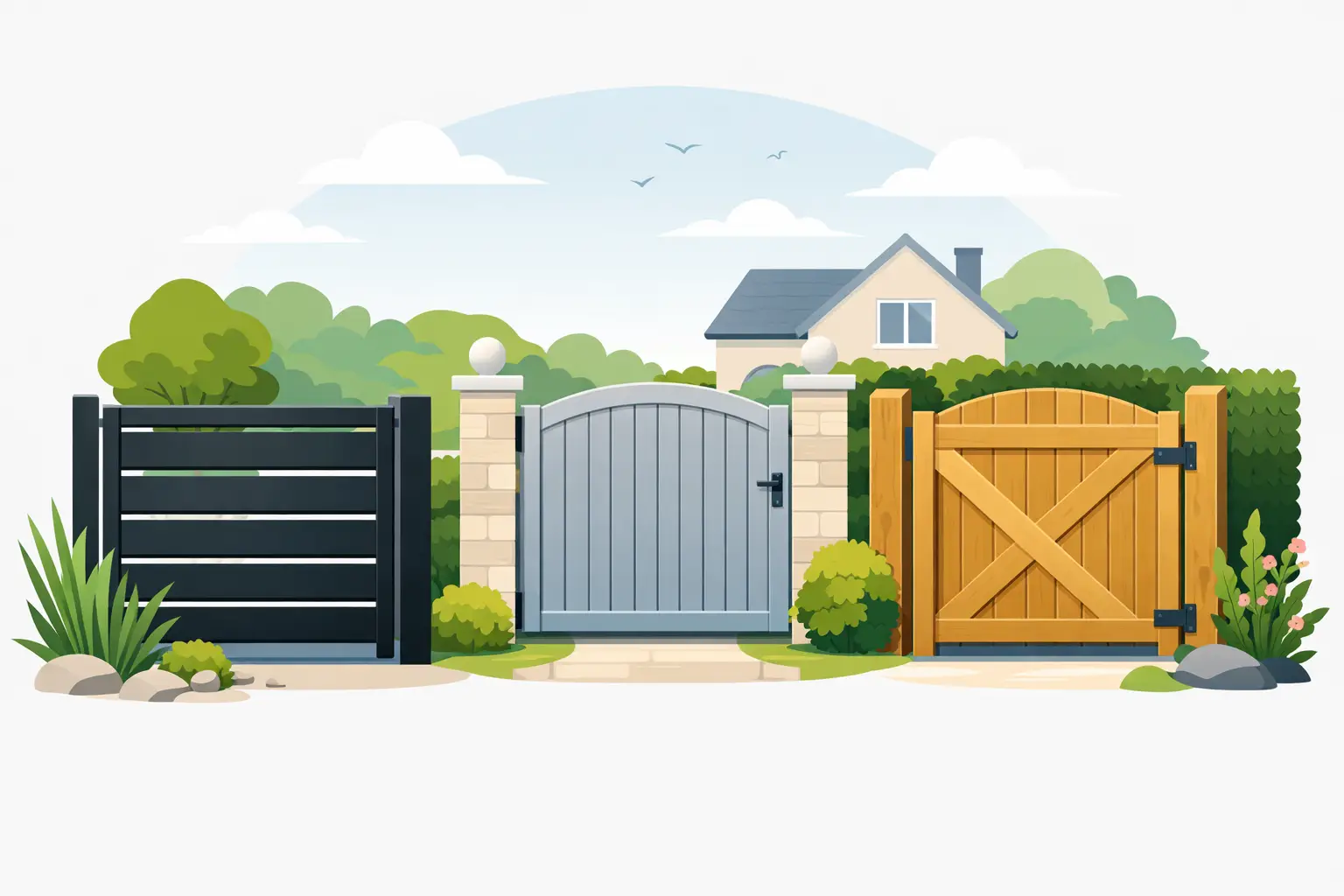
Best Low Maintenance Garden Gates in the UK
A garden gate should not become another job on your weekend list. If you are comparing the best low maintenance garden gates, the real question is not just which style looks right. It is which material will still look smart, work properly and need very little attention after years of British weather.
That is where many buyers get caught out. A gate can appear good value at first, but once repainting, warping, rust treatment or hinge issues start to build up, the long-term cost looks very different. For homeowners, developers and trade buyers alike, low maintenance usually means choosing a gate that stays secure, presentable and reliable without constant upkeep.
What makes a garden gate genuinely low maintenance?
Low maintenance does not simply mean a gate that needs less painting. It means a gate that resists the most common causes of deterioration in the UK – rain, frost, UV exposure, swelling, corrosion and general wear from daily use.
A truly low maintenance garden gate should hold its shape, keep its finish and avoid frequent repair work. It should also be easy to clean with basic washing rather than specialist treatments or seasonal refinishing. The frame, infill, fixings and finish all matter here. A strong material with a poor coating can still become a problem, just as a good-looking design with weak hardware can create avoidable maintenance later on.
That is why material choice comes first.
Best low maintenance garden gates by material
Aluminium garden gates
For most residential and mixed-use projects, aluminium is the strongest option when low maintenance is the priority. It does not rust, it is lightweight compared with steel, and it will not rot, crack or absorb moisture like timber. In practical terms, that means less strain on hinges, fewer movement issues over time and no need for annual sanding or repainting.
Powder-coated aluminium is especially well suited to UK conditions. The finish is designed to be durable and colour-stable, so normal upkeep is usually limited to occasional washing with mild soapy water. For customers who want a gate that keeps a clean, modern appearance with minimal effort, this is usually the benchmark.
There is also flexibility in design. Aluminium garden gates are available in contemporary slatted styles, solid privacy designs, decorative options and bespoke formats that can be matched to fencing, railings or larger entrance gates. That makes them a practical choice without forcing a compromise on appearance.
The main trade-off is upfront cost. Aluminium often costs more than entry-level timber options at the point of purchase. However, when you factor in lifespan, reduced maintenance and lower likelihood of repair, it often proves better value over time.
Steel garden gates
Steel remains a strong and popular material, especially where a more traditional or security-led appearance is required. It offers excellent strength and can work well for side entrances, commercial boundaries or decorative garden access points.
The maintenance picture is more mixed. Galvanised and properly coated steel performs far better than untreated steel, but if the finish becomes damaged and exposed metal is left unchecked, rust can become an issue. In coastal areas or locations with high moisture exposure, maintenance demands can increase.
For some buyers, steel is still the right solution, particularly when weight and a more substantial feel are part of the brief. It simply requires more awareness around finish protection than aluminium.
Timber garden gates
Timber suits period properties and softer garden settings, and many buyers still prefer its natural look. The difficulty is that timber and low maintenance rarely go hand in hand. Even pressure-treated timber needs ongoing care if you want it to stay straight, sound and visually consistent.
In the UK climate, timber gates can swell in wet conditions, dry out in summer, and gradually warp or split. They normally need staining, painting or sealing at intervals, and ironmongery can loosen as the timber moves.
That does not make timber a poor choice in every case. If character is your top priority and you are happy to keep up with treatment, it can still be a good fit. But if your aim is to reduce upkeep as much as possible, timber is rarely the best answer.
Why aluminium usually comes out on top
When customers ask which of the best low maintenance garden gates offers the most dependable long-term performance, aluminium is usually the clear front-runner. The combination of corrosion resistance, low weight and finish durability solves many of the problems that affect other gate materials.
Weight matters more than people often expect. A lighter gate places less stress on posts, hinges and latches, which can help preserve smooth operation over time. That is particularly useful for frequently used pedestrian gates, side access gates and family gardens where the gate is opened and closed multiple times a day.
There is also the visual benefit. Powder-coated aluminium can deliver a crisp, premium finish in a wide range of colours, from classic black and anthracite grey to more bespoke shades. If you want a gate that complements windows, doors, fencing or railings, aluminium gives you more consistency with less maintenance attached.
At Aluminium Gates Direct, this is exactly why aluminium is such a strong fit for homeowners and trade buyers who want a practical solution without losing design flexibility.
Style still matters with low maintenance garden gates
Choosing a low maintenance gate does not mean settling for a basic design. In many projects, the right gate needs to balance upkeep, privacy, access and appearance.
Slatted aluminium gates are a popular choice for modern homes because they offer a clean look and can be tailored for either partial visibility or greater screening. If privacy is more important, a solid panel design may be a better fit, especially for side paths and rear garden access. For more traditional properties, ornate detailing or framed designs can create a softer look while still keeping maintenance to a minimum if the material is right.
The best choice depends on where the gate sits and how it is used. A decorative gate at the front of a property may prioritise kerb appeal. A side gate may need to focus more on security, bin storage screening or child and pet safety. A commercial or shared access gate may need to combine low upkeep with controlled access and higher usage levels.
What to check before you buy
Even the best material can underperform if the specification is wrong. Size, ground levels, post strength, hinge quality and latch type all affect how well a gate performs over time.
A made-to-measure gate can often save trouble later, especially where the opening is not standard or where the gate needs to align with existing fencing or walls. Readymade options can work well for straightforward openings and tighter budgets, but they need careful measuring. A poor fit can lead to dragging, misalignment and unnecessary stress on the hardware.
Finish quality is another point worth checking. With metal gates, not all coatings are equal. A properly powder-coated finish gives stronger long-term protection than a basic painted surface. Buyers should also look at the quality of fixings and hinges, as these are often the first areas to show wear if corners have been cut.
If the gate is part of a wider scheme, it also helps to think beyond the gate itself. Matching fencing, railings and access control can improve the final result and reduce the need for piecemeal upgrades later.
Best low maintenance garden gates for different needs
For a typical homeowner who wants an attractive side or front garden gate with as little upkeep as possible, powder-coated aluminium is usually the strongest all-round option. It offers durability, reliable daily performance and a finish that stays smart with minimal cleaning.
For buyers focused on a more traditional look, steel can still work well if it is properly treated and maintained, although it will normally need more attention over time. For those drawn to natural materials, timber remains appealing aesthetically, but it is best chosen with a clear understanding that maintenance will be part of ownership.
Developers, architects and commercial buyers often lean towards aluminium for the same reason residential customers do – it is dependable, consistent and easier to specify across multiple plots or access points. Lower aftercare demands are valuable not only for the end user, but also for long-term asset management.
A good garden gate should make life easier, not add another maintenance cycle to manage. If you start with the right material and the right specification, you can get a gate that looks the part from day one and keeps doing its job quietly for years.
Can Aluminium Gates Be Automated?
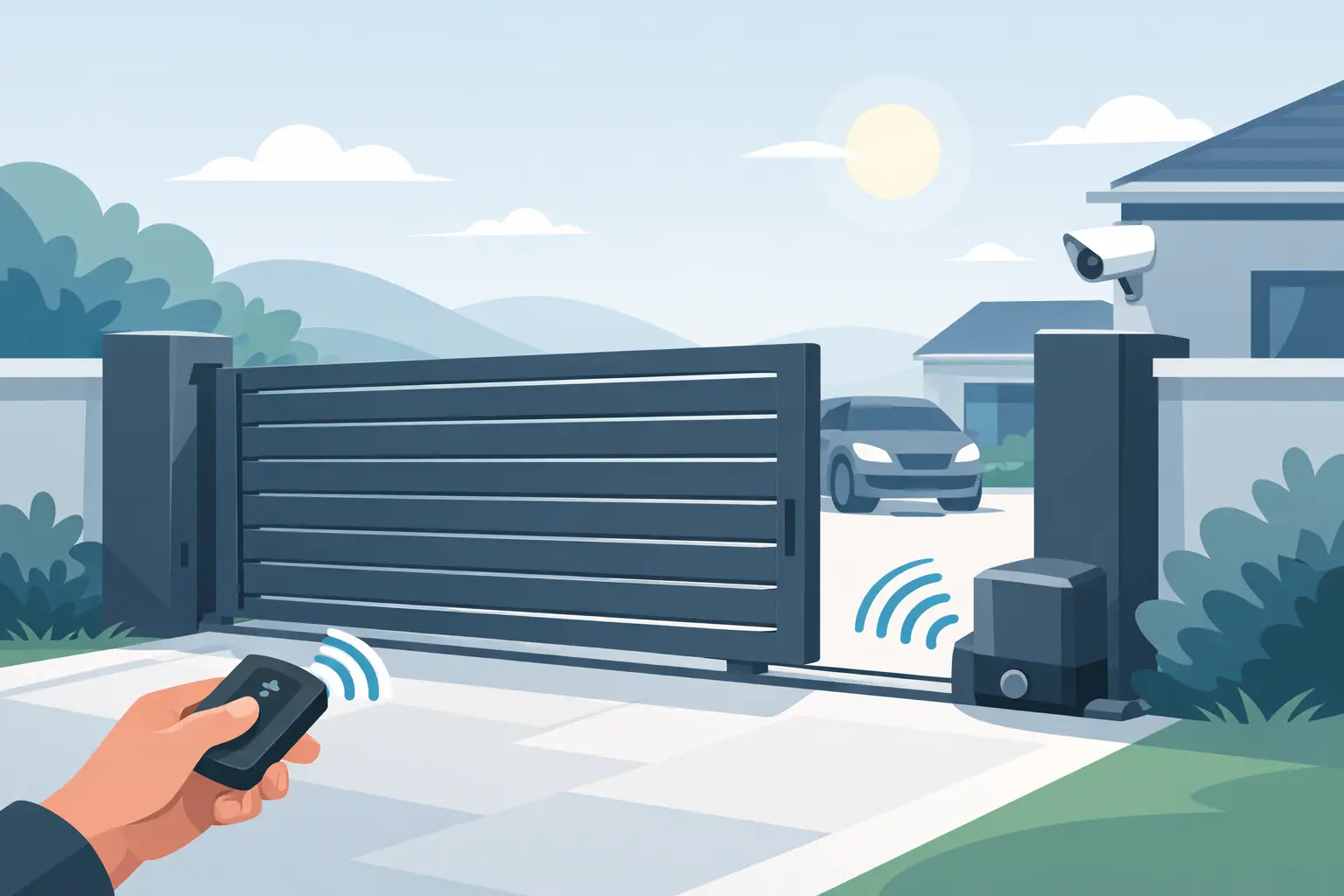
If you are planning a new entrance gate or upgrading an existing one, one question usually comes up early – can aluminium gates be automated? The short answer is yes. In many cases, aluminium is an excellent material for gate automation because it is lightweight, strong and resistant to rust, which helps the system work efficiently over time.
That said, successful automation is not only about the gate material. The gate style, opening method, site layout, ground levels, usage levels and access control all affect what is possible. A well-made aluminium gate can be a very good candidate for automation, but the right setup still depends on the property and how the gate will be used.
Why aluminium gates work well with automation
One of the main reasons aluminium gates are so often paired with automation is weight. Compared with many steel gates, aluminium gates are lighter, which can reduce strain on motors, hinges, rollers and support posts. That can be especially helpful on wider domestic driveway gates or on entrances that are used several times a day.
Lighter does not mean flimsy. A properly designed aluminium gate can still offer the strength and rigidity needed for secure, long-term use. For homeowners, that means the gate can look smart and operate smoothly without the ongoing upkeep that often comes with timber or untreated steel. For commercial sites, it can mean a practical combination of appearance, durability and dependable access control.
Another benefit is low maintenance. Automation systems rely on consistent movement. When gates begin to swell, warp, corrode or drag, motors have to work harder and faults become more likely. Aluminium avoids many of those common issues, which makes it a sensible long-term option when automation is part of the plan.
Can aluminium gates be automated on any property?
In principle, yes, but the better answer is that automation needs to be matched to the site. Some properties are straightforward. Others need more planning.
A level driveway with good pillar positions, clear opening space and a nearby power source is usually simple to automate. A sloping drive, restricted entrance, exposed coastal setting or high-traffic commercial site may require a more tailored approach. That does not mean automation is off the table. It means the gate and motor system need to be chosen properly from the start.
This is where many buyers benefit from specialist advice. The gate itself might be suitable, but the wrong operator, poor hinge geometry or unsuitable access controls can create unnecessary problems later.
Swing or sliding – which automated aluminium gate is right?
Automated aluminium swing gates
Swing gates are a popular choice for residential driveways and private entrances. They can be automated with above-ground motors, underground motors or articulated arm systems, depending on the gate design and the available space.
They work best where there is enough room for the gates to open freely and where ground levels allow smooth movement. If the driveway rises sharply behind the gate, this may affect the opening arc and the type of automation that can be used. In some cases, opening outwards may be considered, but that depends on the site and must be assessed carefully.
For many homeowners, swing gates offer a traditional appearance with straightforward automation. Aluminium makes them easier for motors to handle, particularly on larger leaf sizes.
Automated aluminium sliding gates
Sliding gates are often the better option where space is tight or where a driveway slope makes swing gates impractical. Instead of opening inwards or outwards, the gate runs across the entrance on a track or cantilever system.
For commercial premises, larger properties and sites with frequent vehicle movement, sliding gates can be very effective. They are often chosen for their practical operation and controlled access. Aluminium is well suited here too, as reduced gate weight can support smoother travel and efficient motor performance.
The key consideration is side room. A sliding gate needs enough space to retract fully, so the layout of walls, fencing and landscaping matters.
What is needed to automate an aluminium gate?
If you are asking can aluminium gates be automated, it helps to understand what the full system includes. The gate is only one part of it.
A typical automated setup will involve the gate leaves or gate panel, the posts or support structure, hinges or track hardware, motors, control board, safety devices and a method of entry. That entry method could be remote controls, keypad access, GSM entry, fobs or an intercom system.
Power supply is another key factor. Mains-powered automation is common, but solar can be considered on some sites if conditions are right and usage is suitable. Solar is not always the best option in the UK, especially where gate use is frequent or sunlight is inconsistent, so it needs realistic assessment rather than guesswork.
Safety is essential. Automated gates should include the correct safety measures, such as photocells, obstacle detection and force settings that meet current requirements. This is not an area for shortcuts.
Retrofitting automation to existing aluminium gates
It is often possible to automate existing aluminium gates, provided the gates are in good condition and were made or installed with automation in mind. The posts need to be secure, the gates must be aligned correctly and the hardware must be suitable for powered operation.
If an existing gate is too light in structure, poorly braced or badly fitted, adding motors may not solve the real issue. In those cases, replacing the gate or adjusting the support structure may be the better long-term choice.
This is particularly relevant when buyers already have manual gates and want to upgrade later. Retrofitting can work well, but it depends on build quality and site preparation. A proper assessment is worth having before ordering automation equipment.
Access control options for automated aluminium gates
Automation is not only about opening and closing the gate. It is also about how people use it day to day.
For a private home, simple remote controls may be enough. If parcels, visitors and deliveries are common, an audio or video intercom can make access more convenient and secure. On larger homes or multi-user properties, keypad entry, app-based access or GSM calling systems may be more useful.
For commercial sites, access control usually needs more planning. Staff entry, timed access, delivery management and visitor screening can all shape the specification. A gate that looks right but lacks the right control system can become frustrating very quickly.
That is why gate design and automation should be considered together. The best result is usually a complete entrance solution, not separate parts chosen in isolation.
Common concerns about automating aluminium gates
One concern is whether aluminium is strong enough for heavy-duty use. In practice, well-manufactured aluminium gates are used successfully across residential and commercial settings. The strength comes from the design, fabrication and installation, not just the raw material alone.
Another question is whether automation makes maintenance more complicated. In reality, aluminium can make gate ownership simpler because the gate itself needs very little routine upkeep. The automation system still requires servicing and occasional checks, but the gate is less likely to create avoidable issues through rust or movement.
Buyers also ask about appearance. Some worry that automated gates will look overly industrial. That depends entirely on the design. Aluminium gates can be modern, traditional, ornate or minimal, and automation can often be integrated without spoiling the overall look.
When automation may need a more bespoke approach
Some entrances are straightforward and others are not. Very wide openings, uneven ground, heavy commercial use, awkward brickwork or exposed rural locations can all affect the final specification. In those situations, bespoke aluminium gates are often the better route because dimensions, infill style, frame strength and automation compatibility can all be designed to suit the site.
This is one of the main advantages of working with a specialist supplier. Instead of trying to force a standard gate into an unsuitable opening, the gate and automation can be planned around the actual requirements. For buyers across the UK, that can save time, reduce installation problems and lead to a better result overall.
At Aluminium Gates Direct, this is usually the most practical way to approach automation – start with the property, the usage and the customer’s budget, then match the gate type and control system accordingly.
So, can aluminium gates be automated reliably?
Yes – and very often they can be automated very effectively. Aluminium is one of the most practical materials for automated gates because it combines strength with lower weight and minimal maintenance. That gives both homeowners and commercial buyers a strong starting point.
The key is making sure the gate is properly specified for the opening, the automation is suited to the way the entrance will be used, and the installation is handled correctly. If you get those parts right, an automated aluminium gate can offer convenience, security and a clean, durable finish for many years.
If you are weighing up manual versus automated options, the best next step is not guessing based on the gate alone. It is looking at the full entrance setup and choosing a system that fits your property properly from day one.
Sliding vs Swing Gates: Which Suits You?
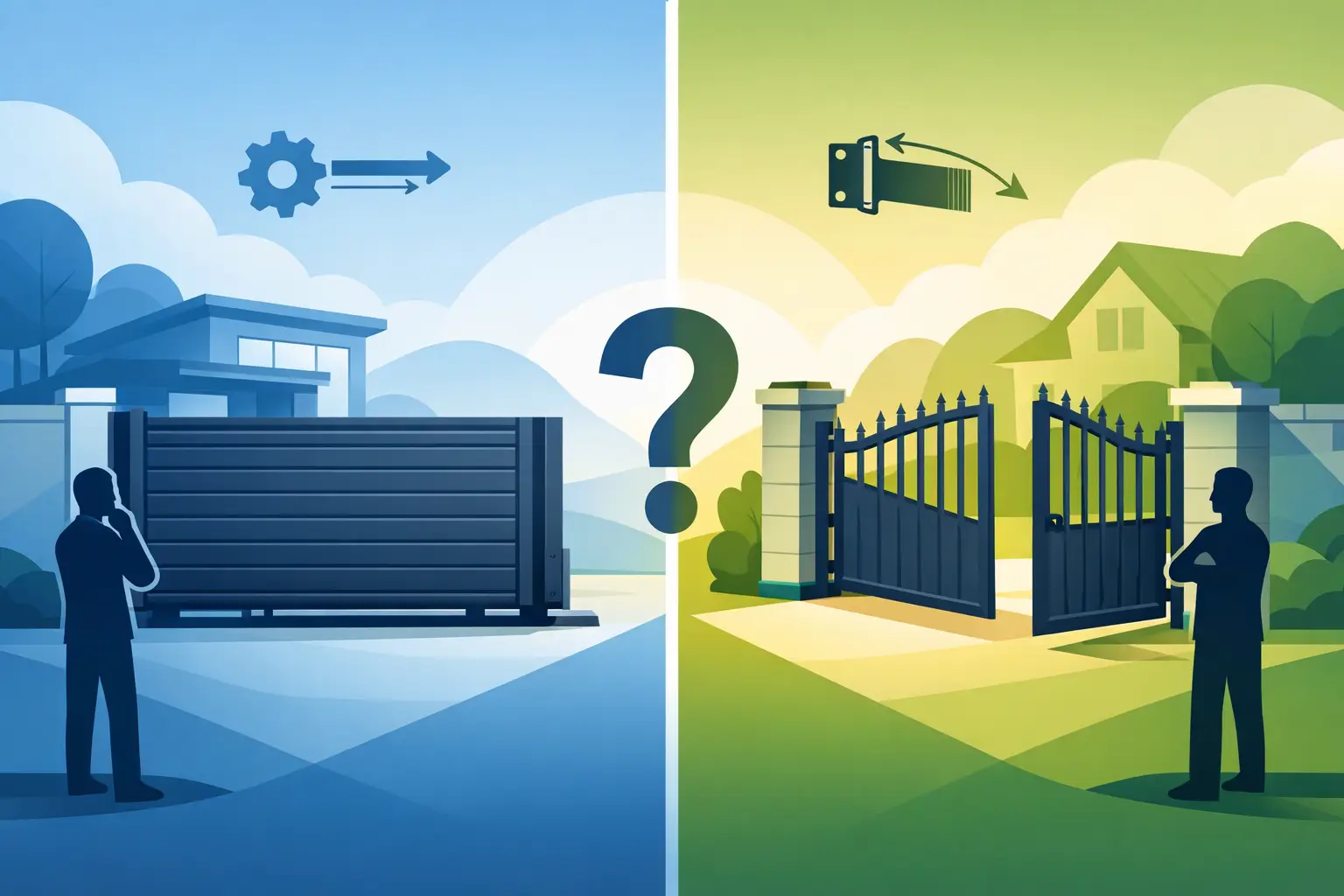
The wrong gate choice usually shows itself on a wet Tuesday morning. A car is waiting on the drive, the entrance is tighter than it looked on paper, and suddenly the question of sliding vs swing gates stops being theoretical.
If you are planning a new entrance for a home, development or commercial site, the gate style matters just as much as the material. Both options can look smart, improve security and work well with automation, but they behave very differently once installed. The best choice depends on your space, your ground conditions, how often the gate will be used and what kind of access experience you want every day.
Sliding vs swing gates: the key difference
A swing gate opens inwards or outwards on hinges, much like a large door. A sliding gate moves sideways along the boundary line, usually running on a track or cantilever system depending on the design and site requirements.
That sounds simple enough, but the practical difference is significant. A swing gate needs a clear arc to open into. A sliding gate needs run-back space to one side so the gate can travel fully open. In other words, neither option is universally better. It comes down to which kind of space your entrance can realistically provide.
For many buyers, this is the first major filter. If your driveway rises sharply behind the gate opening, a swing gate can become problematic. If you have short side returns or obstructions such as walls, fencing, planting or parking spaces, a sliding gate may be harder to accommodate. Good gate selection starts with the site, not just the look.
When swing gates make more sense
Swing gates are often the natural choice for residential driveways. They offer a traditional entrance style, suit a wide range of property types and can be a very cost-effective solution where space allows.
From a design point of view, swing gates are versatile. They work well on period properties, modern homes and garden entrances, and they are available in single or double leaf layouts depending on width and appearance. For many homeowners, they also feel familiar. The operation is straightforward, and visually they create a classic driveway entrance.
Installation can also be simpler in the right setting. If the ground is level and there is enough clearance for the leaves to open safely, a swing system may involve less groundwork than a sliding alternative. That can help with budget control, particularly on straightforward domestic projects.
There are limits, though. Swing gates need space behind the opening, and that space must stay clear. If vehicles are parked too close, if the drive slopes up too quickly, or if the entrance sits close to a public highway, the opening arc can create complications. Wind exposure can also be a factor, especially with wider solid-panel designs.
When sliding gates are the better option
Sliding gates come into their own where space in front of or behind the gate is restricted. Because the gate moves sideways rather than swinging through an arc, they are often a strong solution for shorter driveways, commercial entrances and sites where vehicle positioning needs to be tightly controlled.
They can also feel more secure in operation. A sliding gate is generally harder to force than a swing gate because of the way it is supported and guided. For commercial sites, flat schemes, schools and higher-traffic entrances, that can be a real advantage.
Another benefit is consistency in tighter layouts. If vehicles stop near the entrance, a sliding system is less likely to be obstructed by the car itself. That is useful on busy driveways and access points where users may not always leave perfect clearance.
The trade-off is space at the side. A sliding gate needs enough room to retract fully when open. It also tends to involve more structural planning, particularly if a track, guide posts or cantilever hardware is required. On some sites, the extra engineering is exactly what makes the gate work well. On others, it can add complexity that a swing gate avoids.
Space and ground conditions matter more than style
Many customers start by choosing the look they prefer, then work backwards. In reality, the available space and the site levels should lead the decision.
A level driveway with generous depth often suits swing gates perfectly. A steep incline from the entrance can make them impractical unless design adjustments are made. Sliding gates are often better on rising driveways because they do not need floor clearance in the same way while opening through an arc.
Ground conditions also affect long-term reliability. A tracked sliding gate depends on a clean, correctly installed running surface. Debris, poor drainage or movement in the ground can create issues if the system is not specified properly. Swing gates place more emphasis on strong posts, hinge alignment and sufficient clearance. Neither type is difficult when properly planned, but both need the right foundation.
Automation and day-to-day use
Both swing and sliding gates can be automated successfully, and both can be paired with access control such as intercoms, keypads and remote entry. The better option depends on how the entrance will be used.
For lower to moderate domestic use, automated swing gates are often a very practical answer. They open smoothly, can look elegant and usually suit private driveways well. For higher-traffic sites or entrances where vehicles may queue close to the gate, sliding gates can be more predictable in operation.
Safety is part of this conversation too. Automated gates must be specified and installed correctly, with suitable safety devices and controls. That is especially important on family homes, shared developments and commercial premises. A well-made aluminium gate helps here because the material is lightweight without compromising strength, reducing strain on automation and supporting smoother operation over time.
Cost: the honest answer
If you are comparing sliding vs swing gates on price alone, swing gates are often the lower-cost option at the outset. They can require less specialist hardware and, on straightforward sites, installation may be less involved.
Sliding gates often cost more because the system itself is more complex. There may be additional groundwork, track installation, support structures or more advanced automation requirements. That does not mean they are poor value. In the right setting, they can solve access problems that a swing gate cannot.
The more useful way to look at cost is total suitability. A cheaper gate that is awkward to use, vulnerable to site conditions or expensive to alter later is not really the economical choice. The right gate is the one that works properly for the setting and continues to do so with minimal fuss.
Appearance and kerb appeal
Visually, both styles can be impressive. The difference is more about character than quality.
Swing gates often create a more traditional entrance presence. They can feel balanced and formal, particularly as a pair of driveway gates. Sliding gates tend to look more contemporary and can suit modern architecture and clean-lined perimeter designs very well.
Material choice has a big influence here. Aluminium offers a strong advantage for both styles because it combines durability with low maintenance. It will not rot like timber and it avoids many of the upkeep issues associated with mild steel. For homeowners and site managers who want a gate that keeps its appearance without regular treatment, that makes a genuine difference.
So which should you choose?
If your entrance has enough depth, level ground and room for leaves to open comfortably, a swing gate is often an excellent option. It is practical, attractive and frequently more budget-friendly.
If your driveway is tighter, the ground rises behind the opening, or the site sees frequent use and needs controlled access, a sliding gate may be the stronger choice. It can make better use of limited space and offer a very secure, efficient entrance solution.
For some projects, the answer becomes obvious after a site survey. For others, there is a genuine choice, and that is where expert guidance matters. A gate should not only fit the opening. It should suit the way the property works, the level of traffic, the design brief and the budget.
At Aluminium Gates Direct, that is usually where the best decisions are made – not by pushing one gate type over another, but by matching the product to the property.
If you are weighing up your options, start with the practical questions first: how much space do you really have, how will the gate be used every day, and what will make access easier five years from now, not just on installation day.
Do Aluminium Gates Rust? The Straight Answer
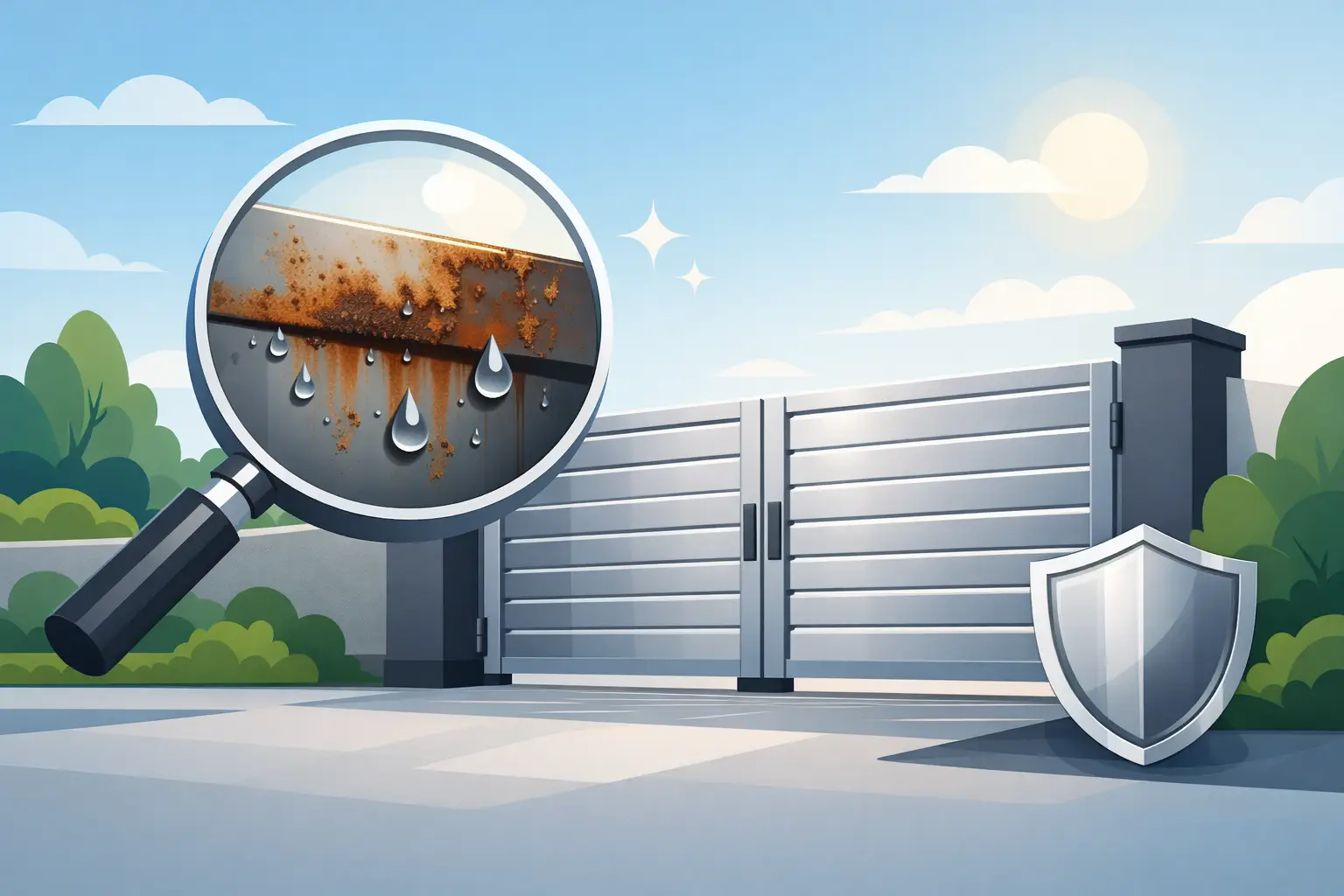
If you are comparing gate materials for a driveway, garden entrance or commercial perimeter, one question usually comes up early – do aluminium gates rust? The straight answer is no. Aluminium does not rust in the way iron or steel does, which is one of the main reasons it has become such a popular choice for low-maintenance gates across UK homes and sites.
That said, there is a bit more to it than a simple yes or no. While aluminium will not develop the red-brown rust you see on untreated steel, it can still react to weather, pollution, salt and general wear over time. Understanding that difference helps you choose the right gate and look after it properly.
Do aluminium gates rust or corrode?
Aluminium gates do not rust because rust is a specific form of corrosion that affects iron and steel. Aluminium contains no iron, so it cannot produce rust in the traditional sense.
What aluminium does instead is form a very thin oxide layer when exposed to air. This happens naturally and, unlike rust on steel, that oxide layer actually helps protect the metal underneath. In practical terms, that means the surface creates its own barrier against further deterioration.
This is one reason aluminium is so widely used outdoors. It is well suited to UK weather, where gates have to cope with rain, frost, changing temperatures and damp conditions for much of the year. For homeowners and site managers who want something that keeps its appearance without constant upkeep, that built-in resistance is a real advantage.
Why aluminium performs differently from steel
Steel is strong, but unless it is properly treated and maintained, moisture can get through scratches or damaged coatings and start the rusting process. Once rust begins, it can spread, stain surrounding areas and weaken the material if left unchecked.
Aluminium behaves differently. Its protective oxide layer forms quickly and helps slow further corrosion. That makes it a reliable option for gates, railings and fencing where long-term outdoor exposure is unavoidable.
This does not mean every aluminium gate is identical. The quality of the aluminium, the fabrication, the finish and the installation all affect how well it performs over time. A well-made powder-coated gate from a specialist supplier will generally offer much better long-term appearance and durability than a poorly finished product built to a lower standard.
What can happen to aluminium gates over time?
Although the answer to do aluminium gates rust is no, aluminium is not completely immune to surface change. Over the years, you may see signs of weathering depending on location and exposure.
In most cases, this is cosmetic rather than structural. Dirt can build up. The finish may dull slightly if it is not cleaned. In coastal areas, airborne salt can be harder on any external metalwork, including aluminium. In industrial areas, pollutants can also leave deposits on the surface.
If the gate has a powder-coated finish, which is common for modern aluminium gates, the coating plays an important part in protecting the look of the gate. A high-quality powder coating helps resist fading, chipping and general wear. If that finish is damaged through impact or improper handling, the underlying metal can become more exposed to the elements, though it still will not rust like steel.
There are also specific cases where corrosion can occur, especially if aluminium is placed in contact with incompatible metals in the presence of moisture. This is known as galvanic corrosion. It is not usually a problem in a properly designed and installed gate system, but it is one reason expert specification matters.
Powder coating makes a difference
For most buyers, the finish is just as important as the base material. Aluminium gates are often powder coated in a wide range of colours and styles, from simple contemporary designs to more traditional and ornate options.
A good powder-coated finish does three jobs. It improves appearance, adds another layer of protection and reduces maintenance demands. It also allows customers to choose a gate that suits the property rather than settling for the limited look of a purely functional product.
However, not all finishes are equal. Thicker, better-applied coatings with proper pre-treatment tend to last longer and perform more consistently. If a gate is being installed in a harsher setting, such as a coastal property or an exposed commercial site, it is worth discussing that environment before ordering. The right specification at the start usually saves time and cost later.
Are aluminium gates really maintenance-free?
You will often see aluminium described as maintenance-free, and in comparison with timber or untreated steel, that is broadly fair. You do not need to sand it, stain it or deal with recurring rust treatment. For many customers, that is a big part of the appeal.
Still, low maintenance is not the same as no maintenance at all. Any external gate benefits from occasional cleaning and routine checks. Dust, grime, traffic film and organic matter can collect on the surface, especially in busy or exposed areas. Washing the gate down with mild soapy water and a soft cloth every so often is usually enough to keep it looking smart.
It is also sensible to inspect hinges, fixings, locks, automation components and track systems if fitted. In many cases, the moving parts of a gate need more attention than the aluminium panels or frame themselves.
Where aluminium makes the most sense
For residential driveways and garden gates, aluminium is a strong all-round choice because it combines appearance, durability and reduced upkeep. It works particularly well for customers who want a smart finish without the ongoing work associated with timber or mild steel.
For commercial properties, schools, developments and managed sites, the benefits are often even clearer. A lighter gate can help reduce strain on automation systems, while corrosion resistance supports a better long-term appearance at entrances and perimeters. Where security and presentation both matter, aluminium can offer a practical balance.
That said, the right gate is always about more than material alone. Size, usage level, privacy needs, style preference and whether the gate is manual or automated all need to be considered. A wide driveway gate used several times a day has different demands from a small side access gate, even if both are made from aluminium.
Common concerns buyers have
Some buyers worry that because aluminium is lightweight, it must be weak. In reality, well-designed aluminium gates are both lightweight and strong. That lower weight is often an advantage, especially for larger gates and automated systems.
Others assume that if aluminium does not rust, it will never mark or age. That is not quite right either. Like any outdoor product, it still needs sensible care and a good-quality finish. The benefit is that you are far less likely to face the kind of recurring repair cycle associated with rust-prone materials.
There is also the question of cost. Aluminium can cost more upfront than some basic alternatives, but many buyers find the lower maintenance and longer service life make it better value over time. When you factor in painting, repairs and replacement cycles, the gap often narrows.
So, do aluminium gates rust in the UK climate?
No, aluminium gates do not rust in the UK climate. They are well suited to British weather because they resist the moisture-related problems that affect iron and steel. Rain, cold temperatures and damp air are much less of a concern with aluminium than with more rust-prone materials.
What matters more is choosing the right product for the setting. A gate for a sheltered suburban driveway may not need the same finish or hardware specification as one installed near the coast or on a busy commercial site. Good design, correct finishing and proper installation are what turn a good material into a reliable long-term solution.
This is where specialist advice is useful. Whether you need a bespoke driveway gate, a readymade garden gate or an automated entrance solution, it helps to work with a supplier that can match the product to the site rather than offering a one-size-fits-all answer.
At Aluminium Gates Direct, that usually means talking through size, style, usage and environment before recommending the best option. It is a practical approach, and it tends to lead to better results.
If you are weighing up materials, the main thing to remember is simple. Aluminium does not rust, and that alone removes one of the biggest long-term headaches of owning an outdoor gate. Choose a well-made gate with the right finish, look after it sensibly, and it should stay attractive and dependable for years.

Choosing the Right Home Gate Access Control
A gate that looks the part but slows down daily life soon becomes frustrating. That is why home gate access control needs to do more than add security. It should suit how your household actually arrives, leaves, receives visitors and manages deliveries, while working reliably in all weathers and without adding unnecessary complexity.
For some homes, a simple keypad and electric gate are enough. For others, video intercom, app-based entry, timed access and integration with pedestrian gates make far more sense. The right choice depends on the layout of the property, who uses the entrance, how often access is needed and how much control you want when you are away from home.
What home gate access control really needs to do
At its most practical, home gate access control has three jobs. It should help you manage entry, improve security and make access more convenient for the people who belong there. The balance between those three points matters.
A family home on a busy road may prioritise quick vehicle access and clear visitor screening. A larger rural property may need long-range communication from the gate to the house and reliable operation over a greater distance. A development project may focus on a smarter appearance, lower maintenance and a system that future owners can use without a learning curve.
That is where many buying decisions go wrong. People often start with the control method – keypad, fob, intercom or app – before looking at the gate itself, the opening style and the day-to-day use case. In reality, the access control system should be specified as part of the wider gate setup, not added as an afterthought.
Matching home gate access control to the gate type
The way a gate opens has a direct effect on the access control options that are practical. Swing gates and sliding gates can both be automated and controlled remotely, but site conditions shape what works best.
Swing gates are often a good fit for driveways with enough clearance and a traditional residential look. They work well with intercom entry, keypads and remote controls, and they can be designed to suit both contemporary and more ornate properties. Sliding gates are often chosen where space is tighter, where the entrance is on a slope, or where a more compact opening movement is needed.
The gate material matters too. Aluminium is particularly well suited to automated access because it is lightweight, strong and low maintenance. That lower weight can reduce strain on automation components over time compared with heavier alternatives, while still giving a high-end finish. For homeowners and developers, that usually means a better long-term balance between appearance and practicality.
The main types of home gate access control
There is no single best system for every property. The better question is which method gives you the right level of control without making everyday access awkward.
Keypads and coded entry
A keypad is one of the simplest and most familiar options. It allows residents or approved visitors to enter using a code, which makes it useful for households that do not want to hand out multiple remotes or keys.
The advantage is straightforward access and relatively simple operation. The trade-off is that codes can be shared more easily than physical credentials, so they may need changing from time to time, especially if builders, cleaners or short-term visitors have used them.
Remote controls and fobs
Remote entry remains popular because it is fast and convenient, particularly for regular vehicle access. Pressing a button from the car is still one of the easiest ways to use an automated driveway gate.
The downside is that remotes can be lost, damaged or left in the wrong vehicle. They are often best used as part of a wider setup rather than as the only access method.
Audio and video intercoms
An intercom system adds a more controlled layer of access. Instead of simply entering a code, visitors can call through to the house and request entry. Video intercoms go further by letting you see who is at the gate before opening it.
For many homeowners, this is where convenience and security meet properly. It is especially useful for deliveries, unknown callers and homes where the gate is some distance from the front door. Akuvox intercom systems, for example, are often specified where customers want a more modern and dependable way to manage visitors.
App-based and smart access
Smart access systems let you open the gate from your phone, receive alerts or manage entry when you are not at home. This can be very useful if children arrive home before you, a delivery is expected, or access needs to be granted to a contractor.
It can also introduce extra reliance on connectivity and user confidence with technology. For that reason, smart access is usually best when paired with a backup method such as a keypad, remote or manual release.
Where homeowners should be careful
Good home gate access control is not about choosing the most advanced kit on the market. It is about avoiding the points where inconvenience, poor specification or weak installation create problems later.
One common issue is underestimating usage. A gate used a few times a day has different demands from one opening constantly for family members, visitors and deliveries. Another is overlooking the need for safe, separate pedestrian access. If people are regularly walking through the main driveway gate because there is no better option, the setup may not be working as well as it should.
There is also the question of power, cabling and communication. Long driveways, older properties and retrofit projects can all affect the installation approach. Wireless options can help in some cases, but they are not always the right answer. It depends on the site, the distances involved and how reliable the system needs to be over the long term.
Safety, compliance and day-to-day reliability
Any automated gate setup needs to be treated seriously from a safety perspective. Access control is only one part of the picture. The gate, motor, control equipment and safety devices all need to work together correctly.
That means proper specification, suitable safety features and professional installation. Photocells, safety edges and obstacle detection are not optional extras in a well-planned system. They are fundamental to safe operation.
Reliability matters just as much. A system that looks impressive on day one but becomes temperamental in winter or awkward for guests will not feel like a good investment. Low-maintenance materials, quality automation components and sensible control choices usually outperform overcomplicated setups.
Cost versus value in home gate access control
Budget matters, but the cheapest route is not always the most economical. A lower-cost gate with basic control may be right for one property, while another may benefit from a bespoke aluminium gate, integrated automation and video entry from the start.
The real value comes from choosing a system that suits the property and reduces compromise. If access is easier, the entrance looks better, maintenance is minimal and the equipment is built to last, the investment tends to make more sense over time.
This is especially true when the gate is a visible part of the frontage. Security is one factor, but so is presentation. A well-designed automated aluminium gate can improve kerb appeal while giving homeowners far better control over who enters the property.
Getting the specification right from the start
The best results usually come from asking practical questions early. Who needs access every day? How many vehicles use the entrance? Is there a separate pedestrian route? Do you want to answer calls from inside the house only, or remotely as well? Is the gate primarily for privacy, security, appearance or all three?
Those answers shape the right system far better than choosing equipment based on trends. They also help determine whether a readymade option will do the job or whether a bespoke gate and access control package is the better fit.
For customers planning a new entrance or upgrading an older one, expert guidance makes the process far more manageable. Aluminium Gates Direct supports homeowners, developers and trade buyers with product selection, automation options and installation support through a nationwide partner network, helping each project land on a solution that fits both budget and site requirements.
A well-chosen access control system should feel easy from the first week and stay that way years later. If the gate suits the property, the controls suit the people using it and the installation has been properly planned, you are far more likely to end up with an entrance that works as well as it looks.
Gate Safety Compliance Checklist for UK Sites
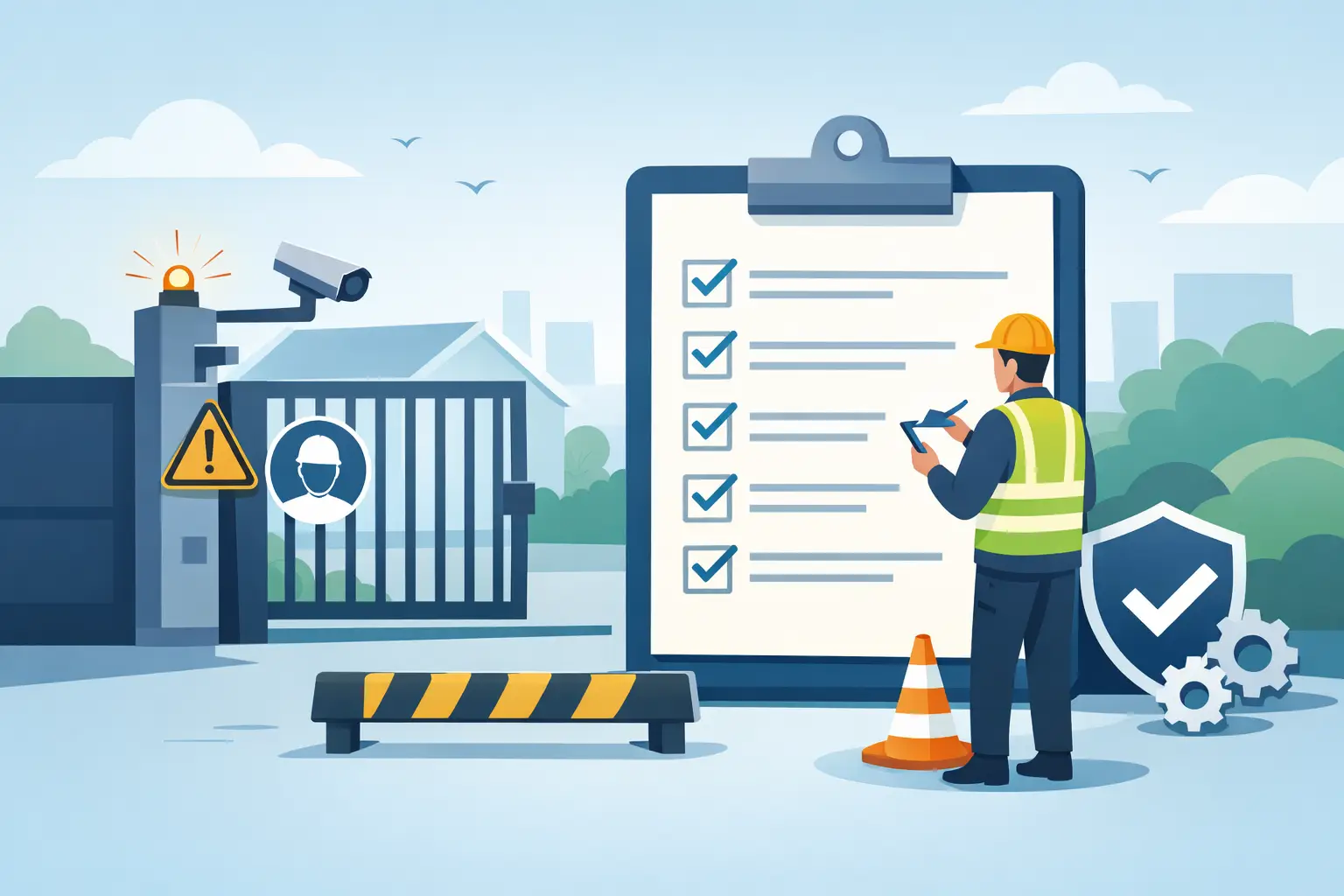
A gate that looks right on paper can still create problems on site. We see this most often when a manual or automated gate is chosen for appearance first, then the safety details are left until installation day. A proper gate safety compliance checklist helps avoid that. It gives homeowners, developers and site managers a clearer way to assess risk, meet UK expectations and choose a gate system that works safely in daily use.
Why a gate safety compliance checklist matters
Gate safety is not just about whether the gate opens and closes. It is about how it moves, who uses it, what sits around it, and what could go wrong when the gate is in operation. That applies to residential driveways, shared developments, schools, commercial yards and managed properties alike.
The main issue is that every site is slightly different. A domestic driveway with occasional use has different demands from a busy commercial entrance with delivery traffic, pedestrians and access control. That is why a checklist matters. It turns a broad safety duty into practical questions that can be answered before a gate is ordered, automated or handed over.
For many buyers, the safest route is to think about compliance at the specification stage, not after the gate has been manufactured. Material choice, gate size, hinge positions, automation type and control systems all affect the finished result.
Start with the type of gate and how it will be used
The first part of any gate safety compliance checklist should cover the basics of the opening. Is the gate manual or automated? Is it a swing gate or a sliding gate? How often will it be used, and by whom?
Those questions sound simple, but they shape almost every other safety decision. A manually operated pedestrian gate may need little more than sound construction, stable posts, suitable hinges and safe latch positioning. An automated driveway gate serving multiple users needs much more careful planning, especially where vehicles and pedestrians share the same space.
Usage matters as much as gate style. A private gate used by one household is different from a gate at a block entrance, a warehouse yard or a school. Higher traffic levels usually mean greater wear, more chance of misuse and a stronger need for controlled access and routine maintenance.
Site layout is where many risks begin
Before installation, the physical environment should be checked properly. This includes the width of the opening, available run-back space for sliding gates, ground levels, drainage, wall positions and any nearby structures.
For swing gates, you need to know whether the leaves can open safely without entering a public footpath or creating a hazard for parked vehicles. For sliding gates, the travel area must be clear and designed so fingers, hands or clothing cannot become trapped.
Pedestrian routes deserve special attention. If people are likely to walk near or through the same entrance used by vehicles, separation should be considered wherever possible. In some cases, a separate pedestrian gate is the safest option. It often improves convenience as well.
Visibility is another point that is easy to overlook. If drivers cannot see approaching pedestrians, cyclists or road users clearly, the gate layout may need rethinking. Safety is not only about the gate leaf itself. It is also about what users can and cannot see while the gate is operating.
The gate structure must be fit for purpose
A compliant installation starts with a gate that is suitable for the opening and the level of use. The frame, infill, posts, hinges, track system and fixings all need to be strong enough for the job.
This is one reason aluminium is often a practical choice. Its lighter weight can reduce strain on hinges, posts and automation equipment when compared with heavier materials, while still providing strength, durability and low maintenance. That does not remove the need for proper design, but it can support a safer, more manageable installation over time.
Attention should also be paid to sharp edges, gaps and climbing points. Decorative features may suit the design of a property, but they should not introduce unnecessary risk. The same applies to gate height and infill spacing, particularly where children may be present.
Automated gates need a higher level of checking
If the gate is powered, the safety review becomes more detailed. Automation introduces moving forces, control systems and the potential for impact, crushing, trapping or shearing hazards. A gate should never be automated as an afterthought without reviewing whether the original design is suitable.
A practical gate safety compliance checklist for automated systems should look at hazard zones across the full travel of the gate. That includes hinge areas, closing edges, run-back areas, support posts and any points where a person could be drawn in, trapped or struck.
The control method matters too. Keypads, fobs, intercom entry, push buttons and timed closing all affect how safely the gate is used. For example, an automatic closing feature may be convenient, but if the site has slow-moving pedestrians or regular delivery access, settings and safety devices need to reflect that reality.
Safety devices should be selected based on the actual risks present. Depending on the system, this may include photocells, safety edges, force limitation and emergency stop arrangements. The right combination depends on the gate type and site conditions. There is no single setup that suits every entrance.
Installation quality is part of compliance
Even a well-made gate can become unsafe if it is installed poorly. Posts set incorrectly, misaligned hinges, inadequate foundations or badly positioned motors can all create safety issues from day one.
That is why installation should be treated as part of compliance, not a separate practical step. Gates need to be fitted squarely, supported properly and tested through their full movement. Automation equipment should be commissioned carefully, with safety devices checked and settings verified.
For commercial and higher-risk sites, documentation is especially important. Buyers should expect clarity on the system supplied, the safety measures included and the responsibilities for ongoing inspection and maintenance. A reliable supplier and installation partner should be able to explain this in plain English.
Maintenance and inspection cannot be ignored
Compliance does not end once the gate is installed. Wear, weather, impact damage and changes in site use can all affect safety over time. A gate that was suitable at handover can become unreliable if maintenance is delayed.
Manual gates should be checked for movement, hinge wear, loose fixings, latch function, post stability and signs of distortion or corrosion on associated components. Automated gates require a broader inspection that includes motors, controls, safety devices and operating forces.
The more heavily a gate is used, the more important a planned maintenance routine becomes. Commercial sites, multi-user developments and managed properties should not rely on a reactive approach. Regular servicing is a practical way to reduce risk and protect the life of the system.
It is also sensible to record inspections and repairs. This is particularly relevant where duty of care sits with a landlord, managing agent, employer or site operator.
A practical gate safety compliance checklist for buyers
When reviewing a new or existing installation, the key questions should be straightforward. Is the gate type right for the opening and traffic levels? Is the structure suitable for safe daily use? Have pedestrians been considered properly? Are pinch points, crushing areas and other hazards identified and addressed? If the gate is automated, are the control methods and safety devices appropriate to the site? Has the system been installed and tested correctly? Is there a realistic plan for maintenance and inspection?
If any of those answers are uncertain, more review is needed before moving ahead. That is particularly true where a gate is being retrofitted with automation or where site use has changed since the original installation.
Compliance is easier when specification comes first
Many safety problems begin with a mismatch between the gate, the opening and the way the entrance will actually be used. Choosing a system purely on style or price can lead to compromises later, especially if automation, access control or heavy daily use is involved.
A better approach is to specify the gate around the site. That means considering width, clearance, gradients, frequency of operation, user type, privacy, access control and maintenance expectations before final design decisions are made. It often saves time and cost in the long run because fewer changes are needed once installation starts.
At Aluminium Gates Direct, that early-stage thinking is a big part of getting the right result. Whether the project is a domestic driveway gate or a commercial entrance with automation and intercom access, the safest option is usually the one that has been matched properly to the site from the outset.
If you are reviewing a gate project now, treat the checklist as a decision tool rather than a paper exercise. The right questions asked early can make the whole installation safer, simpler and more dependable for years to come.
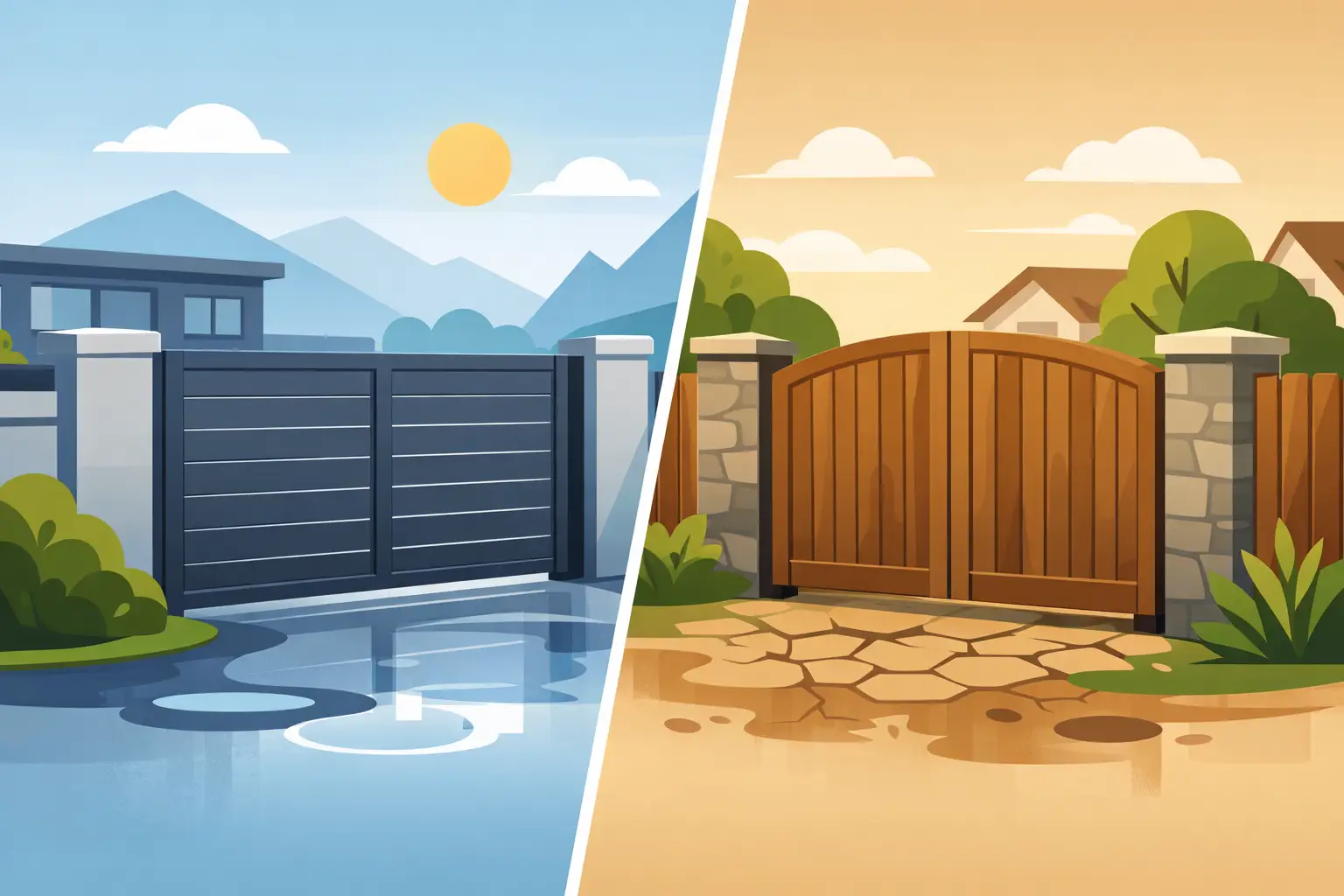
Aluminium vs Wooden Gates: Which Lasts Better?
Choosing a new gate often starts with appearance, but the real difference between aluminium vs wooden gates shows up after installation. A gate has to do more than look right on day one. It needs to cope with British weather, daily use, security demands and the level of maintenance you are realistically willing to take on.
For some properties, timber still has strong appeal. It can feel warm, traditional and familiar, especially in rural settings or period homes. Aluminium, however, has become the practical choice for many homeowners, developers and commercial buyers because it offers a cleaner long-term proposition – less upkeep, strong performance and more design flexibility than many people expect.
Aluminium vs wooden gates: the biggest differences
The clearest distinction is maintenance. Wooden gates need ongoing care to stay looking good and structurally sound. That usually means staining, painting or sealing, along with regular checks for moisture damage, movement and wear. Aluminium gates are far less demanding. A quality powder-coated finish is designed to cope with the elements without the same cycle of repainting and repair.
Weight is another major factor. Timber gates can be heavy, particularly on wider driveways. That extra weight affects hinges, posts, automation and general wear over time. Aluminium is lightweight but still strong, which makes it easier to handle and often better suited to automated systems.
Lifespan matters too. Wood can last well if it is high quality and carefully maintained, but that condition comes with effort. Aluminium is naturally resistant to rust and does not absorb moisture in the same way, so it generally offers a more predictable long-term result.
Appearance and kerb appeal
Wooden gates have a natural charm that many buyers still value. On cottages, farmhouses and more traditional homes, timber can look immediately at home. Grain, texture and variation in tone are part of that appeal, and some customers prefer the softer, more organic finish that only real wood provides.
That said, aluminium is no longer limited to plain or overly modern styles. Contemporary aluminium gates are available in a wide range of designs, from sleek horizontal slats to more classic boarded and framed looks. Wood-effect finishes have also improved significantly, giving buyers the appearance of timber without the same maintenance burden.
For developers and commercial sites, aluminium often offers more consistent presentation. The finish is uniform, colours are stable and the gate continues to look tidy without the fading, cracking or patchiness that can affect timber over time. If presentation matters across multiple plots or a larger perimeter project, consistency becomes a genuine advantage.
Maintenance is where the decision often gets made
This is usually the point where preferences become practical. A wooden gate can look excellent when new, but it rarely stays that way without attention. British rain, changing temperatures and general exposure all take their toll. Even treated timber can warp, swell, split or discolour as time passes.
That does not mean wood is a poor choice. It means the buyer needs to be honest about upkeep. If you are happy to sand, repaint or re-treat the gate when needed, timber may still suit your property. If you want the gate to keep its appearance with minimal intervention, aluminium is the more straightforward option.
For landlords, busy homeowners and commercial buyers, reduced maintenance is not just a convenience. It is a cost and time saving over the life of the gate. A low-maintenance material can remove repeated decorating costs and reduce the likelihood of avoidable repairs.
Durability in UK weather
A gate in the UK has to handle wet winters, bright summer sun, wind and constant temperature shifts. That is where material behaviour really matters.
Timber is vulnerable because it is porous. It takes on moisture, dries out, expands and contracts. Over time, this movement can affect alignment, create cracks and weaken joints. In exposed areas, especially coastal or high-rainfall locations, the weathering process can be faster than many buyers expect.
Aluminium does not rot, and it does not suffer from insect damage. It is also resistant to rust, which makes it particularly useful for long-term external use. When finished properly, it stands up very well to typical UK conditions. That reliability is one of the main reasons more customers are moving away from timber for driveway and garden gates.
Security and strength
There is a common assumption that heavier means stronger. In practice, gate security depends on the overall design, frame construction, locking setup, posts and installation quality – not simply on weight.
A well-made aluminium gate can provide excellent security. Because aluminium is strong relative to its weight, it allows for rigid, dependable gate construction without placing excessive strain on hardware or motors. This is especially useful for wider entrances and automated gates, where balance and mechanical reliability are important.
Wood can also be secure, but it is more susceptible to gradual degradation. If boards loosen, frames shift or moisture affects the structure, the gate may become less stable over time. For residential security, both materials can work well when properly specified. For higher-use entrances or commercial applications, aluminium often offers the more dependable long-term performance.
Aluminium vs wooden gates on cost
Upfront cost is only part of the picture. In some cases, a basic timber gate may appear cheaper at the start. That can make it attractive for buyers working to a strict initial budget. However, a cheaper purchase price does not always mean lower overall value.
Wooden gates can bring added costs later through treatment products, repainting, repairs, hinge adjustments and eventual replacement if weathering becomes severe. Aluminium gates may cost more initially depending on size, style and whether the design is bespoke, but they often work out better over time because upkeep is so much lower.
This is particularly relevant for developers, landlords and site managers who need predictable long-term costs. The less a product demands after installation, the easier it is to budget for.
Automation and everyday use
If you are considering electric gates, material choice becomes even more important. Heavier gates place greater demand on motors and moving parts. That does not mean timber cannot be automated, but it does mean the specification needs careful planning.
Aluminium is often the easier option for automation because its lower weight helps reduce strain on the system. Opening and closing can be smoother, hardware wear may be lower and installation can be more straightforward. For frequent-use driveways, shared entrances and commercial access points, that matters.
It also gives more flexibility when integrating access control such as intercom systems. A gate should not just open and close. It should work reliably as part of the wider entrance setup.
Which suits different property types?
Traditional homes may still lean towards timber, particularly where natural materials are central to the property’s character. If the owner is committed to maintaining that look, a wooden gate can be entirely appropriate.
Modern homes, new-build developments and many renovated properties often suit aluminium very well. The design range is broad enough to complement minimalist architecture, heritage-inspired exteriors and everything in between.
For commercial premises, schools, apartment blocks and managed sites, aluminium usually makes more sense. The lower maintenance requirement, cleaner finish and compatibility with automation are difficult to ignore when the gate is part of a working perimeter rather than a purely decorative feature.
The right choice depends on how you want to live with it
This is the part many buyers overlook. The best gate is not simply the one that looks best in a brochure. It is the one that still suits your property, budget and routine years after it is fitted.
If you enjoy the character of timber and are prepared for the upkeep, wood can still be a good option. But if you want a gate that stays smart, performs reliably and asks very little in return, aluminium is hard to beat. That is why so many customers now choose it for driveways, gardens and commercial entrances alike.
At Aluminium Gates Direct, we often speak to buyers who begin by assuming timber is the more traditional or cost-effective route, only to realise that long-term maintenance changes the equation. Once the full picture is clear, aluminium tends to offer the better balance of appearance, durability and value.
A gate is one of the first things people see when they approach a property, but it is also something you have to live with. Choosing the material that fits not just the building, but the day-to-day reality, usually leads to the better result.